How UnityCharge Enables Localized Energy Storage Scheduling Without Cloud Dependency
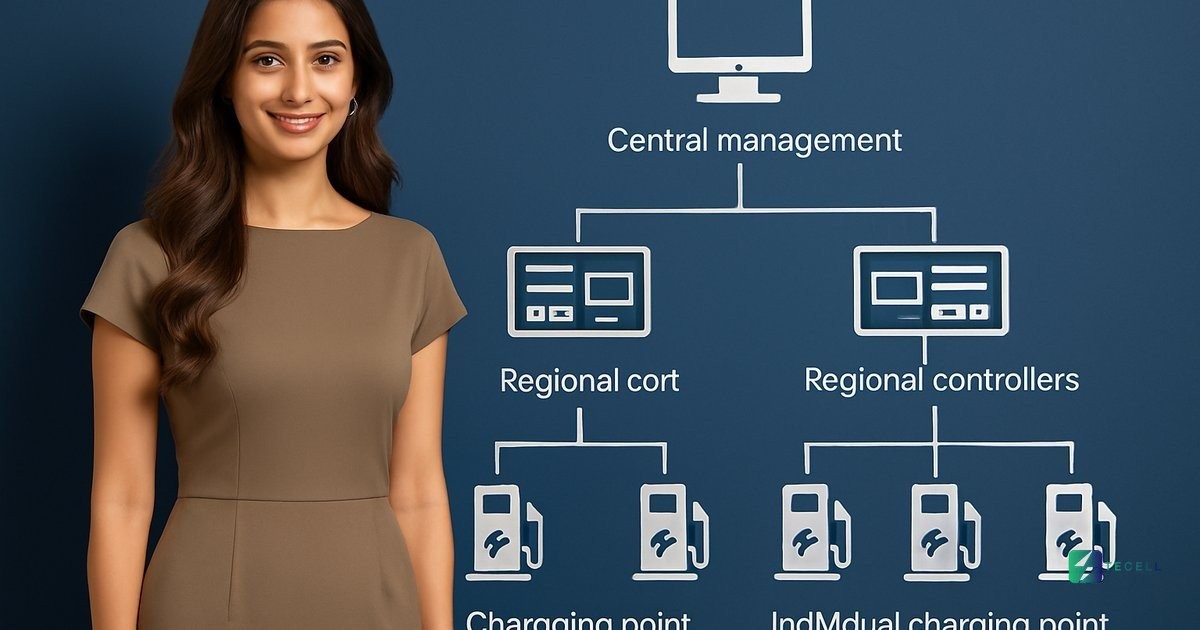
When managing EV charging infrastructure, operators often face a critical challenge: how to efficiently schedule energy storage systems across multiple chargers without relying on constant cloud connectivity. UnityCharge, Tecell’s cloud-based Charging Management System, addresses this through a unique architecture that supports decentralized site-level energy storage scheduling. This approach allows for real-time grid interaction and local control, even when network connectivity is limited or unavailable.
By integrating with Saha-Edge and ChargeSphere, UnityCharge enables operators to maintain control over their charging networks while optimizing energy usage and reducing strain on the electrical grid. This setup is particularly valuable for fleet operators, commercial facilities, and utility-scale installations where consistent performance and local responsiveness are essential.
Understanding how this system works requires a look at its core components: the CMS architecture, OCPP 2.0.1 integration, IEEE 1547 compliance, and the role of edge computing. These elements work together to deliver a robust, scalable solution that supports both local and remote operations.
UnityCharge’s Core Architecture for Decentralized Control
UnityCharge’s architecture is designed to support distributed decision-making at the site level. Instead of requiring all data to be sent to a central cloud server, it allows local systems to make intelligent decisions based on real-time conditions. This is especially important in environments where network outages or latency can disrupt operations.
The system uses a hybrid model that combines local processing with cloud-based analytics. This ensures that critical functions like load balancing, energy scheduling, and fault detection continue to operate smoothly, even during periods of limited connectivity.
For example, a logistics company managing 40 electric vehicles at a distribution center can rely on UnityCharge to dynamically adjust charging schedules based on current energy prices and grid demand, without needing to wait for cloud-based instructions.
OCPP 2.0.1 Integration and Its Role in Localized Scheduling
Open Charge Point Protocol (OCPP) 2.0.1 plays a crucial role in enabling UnityCharge’s decentralized capabilities. This version of the protocol supports more granular control over charging sessions and allows for better communication between chargers and management systems.
With OCPP 2.0.1, UnityCharge can send detailed commands to individual chargers, such as adjusting power levels or initiating specific charging profiles. These commands are processed locally by the charger, reducing the need for constant cloud coordination.
This level of control is essential for managing energy storage systems that must respond quickly to changes in grid conditions or user demand. It also supports more accurate forecasting and scheduling, which improves overall efficiency.
IEEE 1547 Compliance and Grid Interaction
IEEE 1547 is a standard that governs the interconnection of distributed energy resources with the electrical grid. UnityCharge ensures compliance with this standard, allowing charging networks to interact safely and effectively with utility systems.
By adhering to IEEE 1547, UnityCharge enables charging stations to participate in grid services like demand response and voltage regulation. This means that even in a multi-charger network, each station can contribute to grid stability while maintaining its own operational goals.
For instance, during peak demand periods, a commercial facility using UnityCharge can reduce its energy consumption by adjusting charging schedules, helping to stabilize the grid and potentially earning revenue through demand response programs.
Saha-Edge: The Foundation of Localized Control
Saha-Edge, Tecell’s edge computing platform, is the backbone of localized control in UnityCharge deployments. It provides the computational power needed to process data and make decisions at the site level, without relying on cloud infrastructure.
This platform supports offline operation, AI-powered automation, and integration with on-site devices such as inverters, batteries, and smart meters. It also enables real-time energy optimization, which is critical for managing energy storage systems efficiently.
With Saha-Edge, operators can maintain full control over their charging infrastructure, even when network connectivity is lost. This resilience is vital for mission-critical applications like fleet charging or public charging stations.
ChargeSphere Roaming Support and Network Interoperability
ChargeSphere, Tecell’s open roaming and interoperability platform, complements UnityCharge by enabling seamless integration with other charging networks. This is particularly useful for operators who want to offer roaming services or participate in larger charging ecosystems.
Through ChargeSphere, UnityCharge can communicate with external systems using standardized protocols like OCPI, ensuring that energy storage scheduling remains consistent across different networks. This interoperability is key for creating a unified view of charging operations, even when multiple providers are involved.
For example, a fleet operator using UnityCharge can allow drivers to charge at partner networks through ChargeSphere, while still maintaining centralized control over their energy storage scheduling and grid interaction.
Real-World Application: A Commercial Charging Network
Consider a commercial charging network with 20 stations located across a university campus. Each station is equipped with battery storage and connected to UnityCharge via Saha-Edge. During off-peak hours, the system charges vehicles using renewable energy from on-site solar panels.
As demand increases during the day, UnityCharge dynamically adjusts the charging rates to prevent overloading the grid. If a network outage occurs, the system continues to operate using local energy storage, ensuring that charging can still proceed without interruption.
This setup not only improves operational efficiency but also supports sustainability goals by maximizing the use of clean energy and minimizing reliance on the grid during peak times.
Benefits of Decentralized Energy Storage Scheduling
Decentralized scheduling offers several advantages over traditional cloud-based approaches. It reduces latency, increases reliability, and enhances security by minimizing data transmission over public networks.
Operators benefit from faster response times, especially when dealing with sudden changes in energy availability or grid conditions. This is particularly important for applications where real-time adjustments are necessary to maintain system stability.
Additionally, local control allows for more granular customization of charging policies, which can be tailored to specific site requirements or user preferences. This flexibility is essential for large-scale deployments where uniform policies may not be suitable.
Future-Proofing EV Charging Infrastructure
As EV adoption continues to grow, the need for smart, flexible charging solutions becomes increasingly important. UnityCharge’s architecture is designed to evolve with changing technologies and regulations, ensuring long-term viability.
With support for emerging standards and protocols, it can adapt to new requirements in energy storage, grid interaction, and charging management. This forward-thinking approach helps operators stay ahead of the curve and maintain competitive advantages.
By combining local control with cloud-based insights, UnityCharge provides a balanced solution that meets the needs of modern charging infrastructure while preparing for future innovations in energy management.
FAQ
- What is UnityCharge energy storage scheduling? UnityCharge energy storage scheduling refers to the process of managing and optimizing energy storage systems within multi-charger networks using decentralized control and local processing capabilities.
- How does UnityCharge support decentralized control? UnityCharge supports decentralized control by enabling local decision-making through integration with Saha-Edge, allowing systems to operate independently of cloud connectivity.
- What role does OCPP 2.0.1 play in UnityCharge? OCPP 2.0.1 enables more granular control over charging sessions and supports detailed communication between chargers and management systems, enhancing scheduling accuracy.
- Why is IEEE 1547 compliance important for charging networks? IEEE 1547 compliance ensures safe and effective interconnection with the electrical grid, allowing charging networks to participate in grid services and maintain stability.
- Can UnityCharge work without internet connectivity? Yes, UnityCharge can function offline using local processing capabilities provided by Saha-Edge, ensuring continuous operation during network outages.
Related Reading
For more on related topics, see: Time-Based Charging Schedules UnityCharge CMS.
Further reading: EV Charging Software Features | Tecell CMS (UnityCharge) – OCPP, Billing, Mobile
📣 Join our Telegram channel for EV charging technology insights and product updates.
Also find us on: LinkedIn · X · Bluesky · Mastodon · DEV.to.