Understanding OCPP 2.0.1 Dynamic Connector Configuration
OCPP 2.0.1 Dynamic Connector Configuration represents a significant evolution in how charging networks manage diverse hardware setups. This feature allows charging stations to adapt their connector types and communication protocols in real time, without requiring cloud intervention. For operators managing mixed-fleet networks, this capability is essential for maintaining seamless operations across varying vehicle and charging standards.
When a charging station supports dynamic connector configuration, it can switch between different connector types—such as CCS, CHAdeMO, or Type 2—based on the vehicle’s requirements. This flexibility is particularly valuable in public charging environments where multiple vehicle types coexist. It eliminates the need for fixed hardware configurations, which can limit scalability and adaptability.
The protocol’s ability to negotiate connector types locally, using embedded logic, ensures that charging sessions begin quickly and efficiently. This is especially important in high-traffic areas where downtime or misconfiguration can lead to significant delays. Operators benefit from reduced maintenance overhead and improved user satisfaction.
For those deploying charging infrastructure, this feature enables a more agile approach to network design. It allows for a single station to serve multiple vehicle types, reducing the need for multiple dedicated units. This is particularly useful in urban settings or commercial environments where space is limited.
How Protocol Adaptation Works in Practice
Protocol adaptation within OCPP 2.0.1 allows charging stations to dynamically adjust their communication methods based on the connected vehicle’s capabilities. This is not just about changing connectors—it’s about ensuring that the communication between the station and the vehicle is optimized for performance and security.
When a vehicle connects, the system evaluates its communication profile and selects the most appropriate protocol. This process happens in real time, often within seconds, without requiring manual input or cloud-based decision-making. The result is a more responsive and efficient charging experience.
This adaptability is especially beneficial in roaming scenarios, where vehicles may connect to networks that use different standards. The system can automatically align with the appropriate protocol, ensuring that the charging session proceeds smoothly regardless of the network or vehicle involved.
Operators managing multiple networks benefit from this feature because it reduces the complexity of maintaining compatibility across various systems. It also simplifies troubleshooting, as the system can self-correct communication mismatches without operator intervention.
Localized Hardware Abstraction and Its Benefits
Localized hardware abstraction refers to the ability of a charging station to abstract its physical hardware components and present a unified interface to the network. This is a key enabler for dynamic connector configuration and protocol adaptation.
By abstracting hardware, the system can manage different types of connectors and communication methods without needing to modify the physical station. This abstraction layer allows for software-defined hardware, where the station’s behavior is determined by its software rather than its physical components.
This approach is particularly powerful in environments where hardware upgrades or replacements are costly or time-consuming. Instead of replacing entire units, operators can update software to support new connector types or protocols. This reduces both capital expenditure and operational disruption.
For fleet operators, this means that a single charging station can be configured to support a wide range of vehicles, from older models with legacy connectors to newer ones with advanced standards. It also allows for easier integration with existing infrastructure, reducing the need for costly retrofits.
Real-Time Session Negotiation in Mixed-Fleet Environments
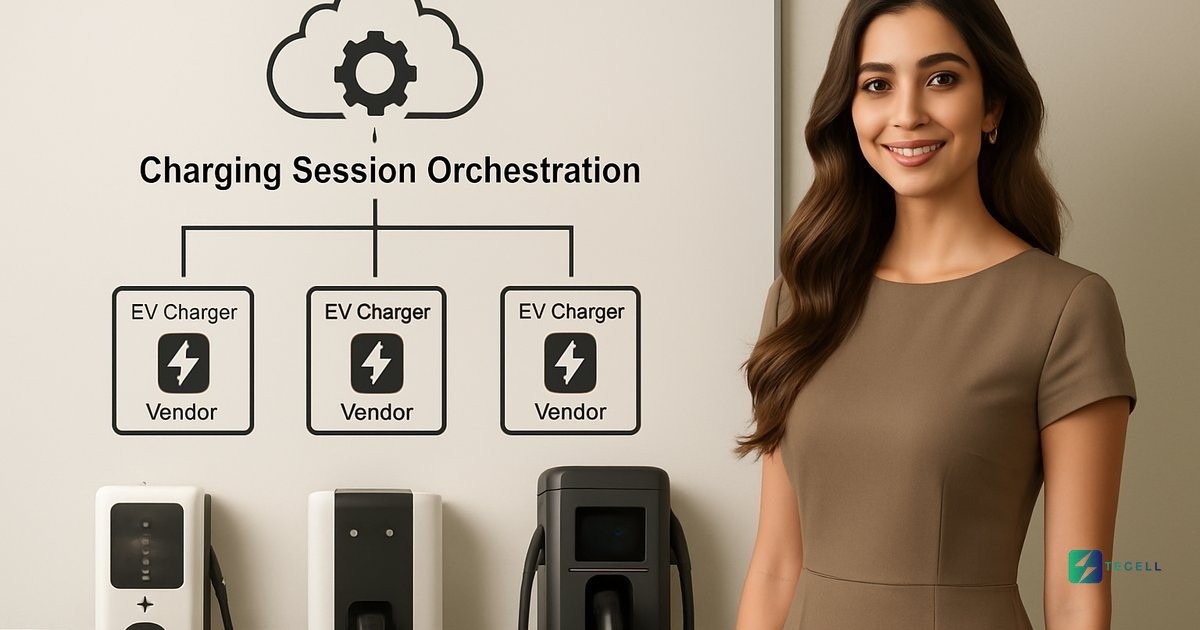
Real-time session negotiation is a core function that enables OCPP 2.0.1 to manage complex charging scenarios. In mixed-fleet environments, where vehicles with different capabilities and requirements are present, this feature ensures that each session is tailored to the specific needs of the vehicle and the network.
When a vehicle connects, the system negotiates session parameters such as power levels, charging profiles, and payment methods. This negotiation happens in real time, using data from both the vehicle and the charging network. The result is a charging session that is optimized for both efficiency and user experience.
This capability is especially important for operators who manage large networks with diverse vehicle types. It allows them to offer a consistent experience across all stations, regardless of the vehicle or charging standard involved. It also helps in managing load balancing and energy optimization, as the system can adjust session parameters based on real-time conditions.
A logistics company managing 40 vehicles faces a challenge when some are equipped with CCS connectors while others use CHAdeMO. With real-time session negotiation, the company can ensure that all vehicles charge efficiently, without requiring manual configuration or station-specific setups.
ISO/IEC 15118 Compliance and Its Role in OCPP 2.0.1
ISO/IEC 15118 is a global standard for vehicle-to-grid (V2G) communication, and its integration with OCPP 2.0.1 enhances the security and interoperability of charging sessions. This compliance ensures that charging stations can securely exchange information with vehicles, including authentication, payment details, and charging parameters.
When a charging station is ISO/IEC 15118 compliant, it can support advanced features like secure communication, smart charging, and energy management. These features are critical for modern charging networks, especially those that aim to integrate with renewable energy sources or participate in grid services.
For operators, this compliance means that their infrastructure can support future-proof technologies and standards. It also ensures that their systems meet the security requirements of regulatory bodies and industry stakeholders. This is particularly important in markets where compliance is mandatory or where security is a key concern.
Operators who deploy systems that support both OCPP 2.0.1 and ISO/IEC 15118 can offer a more robust and secure charging experience. This combination allows for seamless integration with smart grids, dynamic pricing, and other advanced services that are becoming increasingly common in modern charging networks.
Integration with Saha-Edge and ChargeSphere
The integration of OCPP 2.0.1 features with Tecell’s Saha-Edge and ChargeSphere platforms creates a powerful ecosystem for managing complex charging networks. Saha-Edge provides the edge computing capabilities needed to support dynamic connector configuration and real-time session negotiation, while ChargeSphere ensures seamless interoperability across networks.
With Saha-Edge, charging stations can perform local processing and decision-making, reducing reliance on cloud connectivity. This is particularly valuable in areas with limited internet access or where network reliability is a concern. The edge platform enables offline operation, energy optimization, and AI-driven automation, all of which are essential for modern charging infrastructure.
ChargeSphere, on the other hand, connects charging networks, mobility service providers, and payment ecosystems. It ensures that the dynamic capabilities of OCPP 2.0.1 are fully leveraged across the entire network, enabling operators to manage diverse fleets with ease.
Together, these platforms allow operators to deploy charging infrastructure that is both flexible and scalable. They can support a wide range of vehicles and charging standards, while maintaining high levels of performance and security. This integration is a key part of Tecell’s strategy to provide comprehensive solutions for the evolving needs of the EV charging industry.
Conclusion: The Future of OCPP 2.0.1 in EV Charging
OCPP 2.0.1’s dynamic connector configuration and protocol adaptation are transforming how charging networks operate. These features enable seamless cross-protocol charging, even in mixed-fleet environments, without relying on cloud connectivity. The localized hardware abstraction, real-time session negotiation, and ISO/IEC 15118 compliance all contribute to a more efficient and secure charging experience.
When integrated with platforms like Saha-Edge and ChargeSphere, these capabilities become even more powerful. Operators can deploy charging infrastructure that is adaptable, scalable, and future-ready. This is essential for the continued growth and adoption of electric vehicles, especially as the variety of charging standards and vehicle types continues to expand.
As the EV charging landscape evolves, the ability to manage diverse networks with minimal overhead will become increasingly important. OCPP 2.0.1, supported by edge computing and interoperability platforms, is a key enabler for this evolution. It ensures that charging infrastructure can adapt to new technologies and standards without requiring costly upgrades or complex reconfigurations.
Related Reading
For more on related topics, see: Scalable OCPP Gateway for Multi-Vendor Charging Hardware.
Further reading: Tecell CMS – EV Roaming Hub & OCPI Platform | India & Global
📣 Join our Telegram channel for EV charging technology insights and product updates.
Also find us on: LinkedIn · X · Bluesky · Mastodon · DEV.to.