
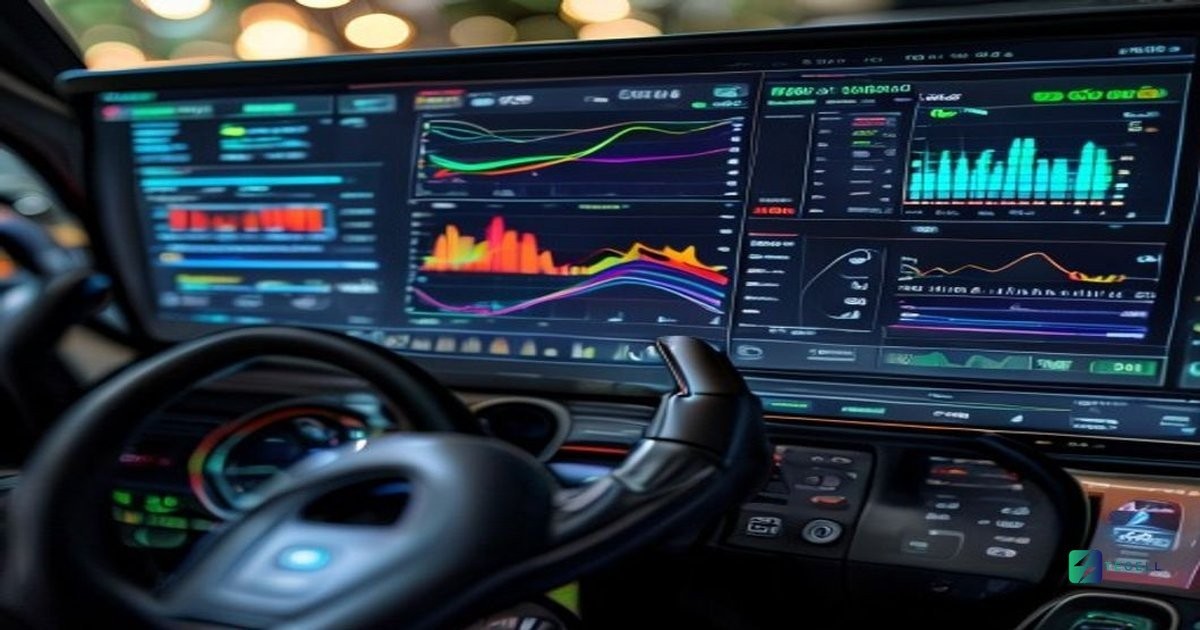
How Real-Time Dynamic Load Forecasting Powers Commercial EV Charging Networks
Commercial parking networks face a complex challenge when managing electric vehicle charging. A logistics company operating 40 vehicles across a multi-charger site must balance energy demand with grid capacity while ensuring fleet uptime. This scenario highlights the need for systems that can predict and respond to load changes in real time.
Saha-Edge’s edge computing platform addresses this challenge by enabling real-time dynamic load forecasting. It integrates seamlessly with OCPP 2.0.1, IEEE 1547 compliance standards, and ChargeSphere roaming support to deliver intelligent energy coordination without relying on cloud connectivity.
This post explores how Saha-Edge’s AI-driven approach transforms commercial charging operations through predictive modeling, localized power management, and cross-protocol communication.
What Is Real-Time Dynamic Load Forecasting?
Real-time dynamic load forecasting refers to the process of predicting energy consumption patterns from EV chargers within a network. Unlike static models, this method adapts continuously based on actual usage data, environmental factors, and system behavior.
The technology allows operators to anticipate peak demand periods and adjust charging schedules accordingly. For instance, during high-traffic hours, it might reduce power to non-critical stations while maintaining priority access for urgent fleet needs.
This capability is especially valuable in commercial settings where multiple users interact with shared infrastructure. It ensures that no single charger monopolizes available capacity, leading to better utilization and reduced wait times.
Why Real-Time Dynamic Load Forecasting Matters for Commercial Charging
Commercial EV charging networks often serve diverse user groups—fleet operators, employees, customers, and visitors. Each group has different charging needs and time constraints.
Without accurate forecasting, these systems can become inefficient or even unstable. Overloading the grid during peak hours may trigger outages or require costly upgrades to electrical infrastructure.
Saha-Edge’s solution mitigates this risk by using AI algorithms trained on historical data and live sensor inputs. It dynamically adjusts power distribution across chargers based on predicted demand, ensuring optimal performance under varying conditions.
How Saha-Edge Enables Real-Time Dynamic Load Forecasting
Saha-Edge operates at the edge of the network, meaning it processes data locally rather than sending everything to a central server. This design choice significantly reduces latency and increases responsiveness.
The platform uses machine learning models to analyze patterns in charging behavior, weather conditions, and occupancy rates. These insights inform decisions about how much energy each charger should draw at any given moment.
By leveraging predictive analytics, Saha-Edge can anticipate when a particular charger will reach full capacity or when demand is likely to spike. This proactive approach prevents bottlenecks and maintains consistent service levels.
OCPP 2.0.1 Integration for Enhanced Control
Open Charge Point Protocol (OCPP) 2.0.1 plays a crucial role in enabling real-time dynamic load forecasting. This version introduces advanced features like remote monitoring, firmware updates, and detailed event logging.
Saha-Edge integrates directly with OCPP 2.0.1 to receive live data from chargers and send control commands instantly. This bidirectional communication ensures that the system always has up-to-date information about charger status and energy usage.
With this integration, operators gain granular visibility into their network’s performance. They can monitor individual stations, identify anomalies, and intervene before issues arise—without needing to rely on manual intervention or cloud-based systems.
IEEE 1547 Compliance for Grid Interaction
IEEE 1547 standards govern how distributed energy resources interact with the electrical grid. Compliance ensures that charging networks operate safely and efficiently within existing utility frameworks.
Saha-Edge supports IEEE 1547 compliance by implementing proper grid-tie protocols and managing power flow between local sources and the broader network. This capability allows commercial sites to participate in demand response programs or sell excess energy back to the grid.
By adhering to these standards, Saha-Edge helps operators meet regulatory requirements while maximizing the value of their charging infrastructure. It also enhances reliability by preventing disruptions caused by non-compliant behavior.
ChargeSphere Roaming Support for Seamless Operations
ChargeSphere provides an open roaming platform that connects various charging networks, mobility service providers, and payment ecosystems. This interoperability is essential for real-world commercial deployments where users may come from different networks.
Saha-Edge works alongside ChargeSphere to ensure that all connected chargers can communicate effectively regardless of their origin or management system. This integration enables seamless user experiences across multiple platforms.
For example, a fleet operator using ChargeSphere for billing and access control can still benefit from Saha-Edge’s load forecasting capabilities. The two systems complement each other, offering both operational efficiency and user convenience.
Practical Example: Managing a Multi-Charger Fleet Site
A logistics company managing 40 vehicles at a commercial parking facility faces unique challenges in energy management. During morning rush hour, all vehicles return to the site simultaneously, creating a surge in demand.
With Saha-Edge’s real-time dynamic load forecasting, the system predicts this spike and automatically redistributes power among chargers. It ensures that critical fleet vehicles get priority access while others wait in queue or charge at reduced rates.
This intelligent coordination prevents overloading the site’s electrical infrastructure and maintains consistent service for all users. The result is improved operational efficiency and higher customer satisfaction.
Benefits of Real-Time Dynamic Load Forecasting
The implementation of real-time dynamic load forecasting brings several tangible benefits to commercial charging networks. First, it improves energy utilization by preventing waste during low-demand periods.
Second, it enhances system stability by avoiding sudden surges that could destabilize the grid or overload local transformers. Third, it supports better planning for future expansion or upgrades based on actual usage trends.
Finally, it empowers operators to make data-driven decisions about pricing strategies, resource allocation, and service level agreements—ultimately improving profitability and user experience.
Conclusion: The Future of Smart Charging Is Local Intelligence
Saha-Edge’s approach to real-time dynamic load forecasting represents a shift toward smarter, more autonomous charging networks. By combining edge computing with AI-driven analytics, it delivers capabilities that were previously impossible without cloud dependency.
This technology enables commercial operators to manage complex energy demands efficiently while staying compliant with evolving standards and regulations. As EV adoption continues to grow, such solutions will become increasingly critical for sustainable infrastructure development.
Real-time dynamic load forecasting isn’t just about managing power—it’s about creating resilient, intelligent systems that adapt to changing conditions in real time.
Related Reading
For more on related topics, see: Real-Time Load Forecasting in EV Charging Networks.
Further reading: The Future of EV Charging: Trends to Watch in 2025 | Tecell CMS Blog
📣 Join our Telegram channel for EV charging technology insights and product updates.
Also find us on: LinkedIn · X · Bluesky · Mastodon.