
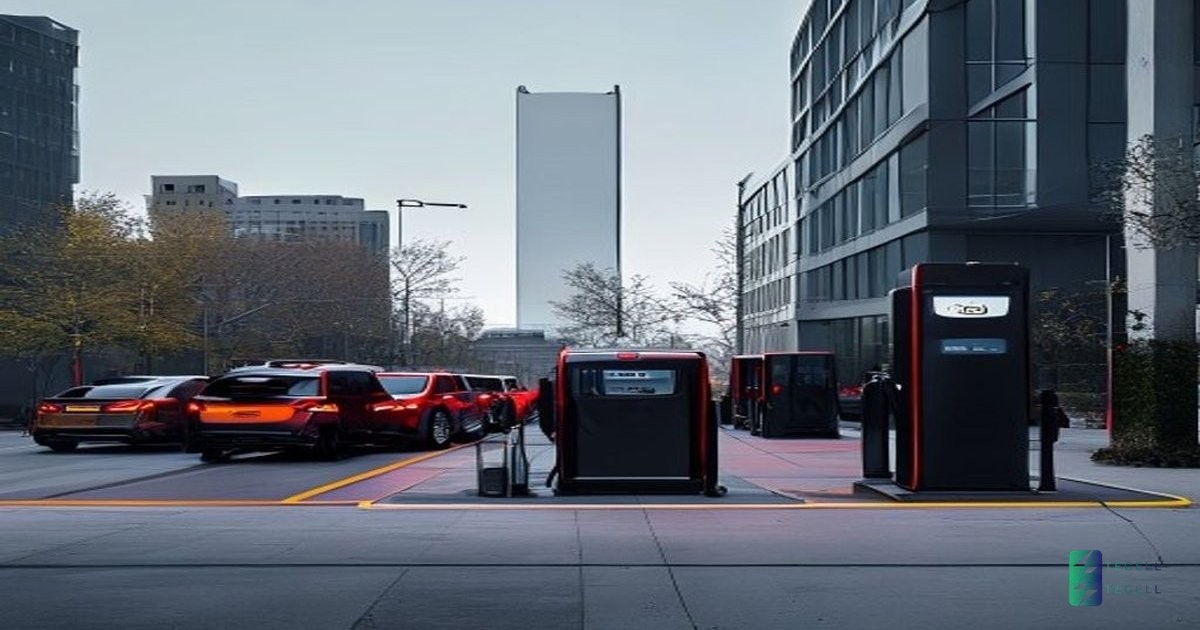
Understanding Dynamic Power Conversion in EV Charging
When a fleet operator manages 40 electric vehicles across multiple charging stations, the efficiency of power conversion becomes critical. Each charger must handle varying loads while maintaining optimal performance. This is where dynamic power conversion plays a pivotal role in modern DC fast charging networks.
Dynamic power conversion refers to the real-time adjustment of electrical parameters within charging systems to match load demands and minimize energy loss. It’s not just about converting AC to DC—it’s about doing so intelligently, with minimal waste and maximum responsiveness.
This approach ensures that each charger operates at peak efficiency regardless of vehicle demand or grid conditions. For operators managing large-scale deployments, this translates into reduced downtime, lower operational costs, and improved user satisfaction.
By leveraging localized control mechanisms, systems like Saha-Edge enable precise tuning without relying on cloud connectivity—a key advantage in environments where network reliability is uncertain.
The Role of Edge-AI in Real-Time Power Optimization
Saha-Edge’s edge computing platform introduces artificial intelligence directly into the charging infrastructure. This allows for immediate decision-making based on real-time data from each charger, rather than waiting for cloud-based processing.
With this technology, power conversion algorithms can adapt instantly to changes in load, temperature, or even vehicle battery states. The AI learns patterns over time and predicts optimal settings before they’re needed.
This predictive capability is especially valuable in multi-charger networks where one station’s behavior affects others. For example, if a high-demand vehicle begins charging at one station, the system can preemptively adjust power distribution to prevent overload elsewhere.
Edge-AI also supports offline operation, meaning that even during network outages, charging continues efficiently using locally stored configurations and learned behaviors.
Localized Switching Frequency Control for Efficiency
Switching frequency control is a core component of dynamic power conversion. By adjusting how often the power electronics switch between states, engineers can reduce losses associated with switching.
In traditional systems, fixed frequencies are used regardless of load conditions. But in a smart charging environment, this approach leads to inefficiencies under light loads or during transient events.
Saha-Edge enables localized switching frequency control that adapts based on real-time feedback from each charger. This means that when demand is low, the system switches less frequently, reducing heat and wear on components.
Conversely, during peak usage, it increases switching frequency to maintain voltage stability and power delivery accuracy. This fine-tuning ensures consistent performance across all units in a network.
Resonant Circuit Tuning for Loss Reduction
Resonant circuits are another key element in minimizing losses during power conversion. These circuits operate at specific frequencies where impedance is minimized, allowing efficient energy transfer.
By tuning these resonant circuits dynamically, Saha-Edge ensures that each charger maintains optimal efficiency under varying conditions. This includes adapting to different battery chemistries and charging protocols.
This tuning process happens in real time, using data from sensors and predictive models. It allows the system to compensate for component aging or environmental factors like temperature fluctuations.
For instance, a logistics company managing 40 electric delivery vans might experience varying ambient temperatures throughout the day. Resonant tuning ensures that charging efficiency remains high regardless of these external influences.
OCPP 2.0.1 Integration for Seamless Communication
Open Charge Point Protocol (OCPP) 2.0.1 is the latest standard for communication between chargers and central management systems. It supports advanced features like remote firmware updates, dynamic pricing, and real-time monitoring.
Saha-Edge integrates seamlessly with OCPP 2.0.1, enabling operators to manage their entire network from a single interface while still benefiting from localized intelligence. This hybrid approach combines the benefits of centralized oversight with decentralized optimization.
Through this integration, charging stations can receive commands and send telemetry data without requiring constant cloud connectivity. The system stores necessary configurations locally and syncs when connectivity is restored.
This capability is essential for operators who deploy chargers in remote locations or areas with unreliable internet access. It ensures that operations continue smoothly even during communication disruptions.
IEEE 1547 Compliance and Grid Integration
Grid integration requires compliance with IEEE 1547 standards, which govern how distributed energy resources interact with the electrical grid. These standards ensure safe and stable operation of renewable and storage systems.
Saha-Edge’s dynamic power conversion supports these requirements by enabling precise control over power flow and voltage regulation. This is particularly important in microgrids or smart city deployments where multiple charging stations must coordinate with local utility infrastructure.
By maintaining compliance, operators can avoid penalties and ensure their systems are eligible for incentives or grid services programs. It also enhances safety by preventing overloading or instability in connected networks.
For example, a commercial building with rooftop solar panels and EV charging stations must comply with IEEE 1547 to safely export excess power back to the grid. Saha-Edge helps maintain this balance automatically.
ChargeSphere Roaming Support for Interoperability
Interoperability is crucial in today’s connected charging landscape. ChargeSphere, Tecell’s roaming platform, allows seamless integration between different charging networks and payment systems.
When combined with Saha-Edge’s localized control, this creates a powerful ecosystem where users can charge at any compatible station regardless of provider. The system ensures that power conversion remains efficient across all platforms.
This interoperability extends beyond simple connectivity—it includes consistent performance metrics and shared data insights. Operators benefit from unified analytics and improved operational visibility.
For instance, a fleet manager using ChargeSphere can monitor charging efficiency across multiple networks in real time, making informed decisions about vehicle deployment and scheduling.
Predictive Power Conversion Algorithms
Predictive algorithms are at the heart of Saha-Edge’s advanced capabilities. These models analyze historical data, current conditions, and user behavior to anticipate future demands on the charging network.
By predicting load patterns, the system can pre-adjust power conversion parameters before actual demand occurs. This proactive approach reduces latency and improves overall efficiency.
These algorithms also learn from past performance, continuously refining their predictions and optimizations. Over time, they become more accurate and effective at managing complex charging scenarios.
A real-world example is a university campus with hundreds of EV chargers. Predictive algorithms help manage peak usage times during morning and evening hours, ensuring that all vehicles charge efficiently without overloading the grid.
ISO 15118 Standards for Secure Charging
ISO 15118 is a set of international standards for vehicle-to-grid (V2G) communication. It defines secure, standardized methods for exchanging information between electric vehicles and charging infrastructure.
Saha-Edge supports these standards, enabling secure communication between chargers and vehicles. This includes authentication, encryption, and transaction management—all critical for safe and reliable charging operations.
By adhering to ISO 15118, operators can offer advanced features like bidirectional power flow, which allows vehicles to discharge energy back into the grid when needed. This capability is essential for participating in demand response programs or emergency power services.
For example, a hospital with EV charging stations might use V2G capabilities during power outages to provide backup power to critical systems. Saha-Edge ensures that this process is both secure and efficient.
Practical Benefits for Charge Point Operators
Charge Point Operators (CPOs) benefit significantly from dynamic power conversion efficiency in multi-charger networks. Reduced energy loss translates directly into lower operational costs and higher profitability.
For large deployments, even small improvements in efficiency can result in substantial savings over time. Saha-Edge’s localized control ensures that these gains are consistent across all units in the network.
Additionally, the system’s predictive capabilities help operators anticipate maintenance needs and avoid costly downtime. This proactive approach improves service reliability and customer satisfaction.
Operators can also leverage real-time data to optimize pricing strategies or participate in grid services programs. The flexibility of Saha-Edge allows for rapid adaptation to changing market conditions or regulatory requirements.
Related Reading
For more on related topics, see: Real-Time Dynamic Power Allocation in AC Fast Charging.
Further reading: EV Charging Energy Management | OCPP Smart Charging CMS | Tecell India
📣 Join our Telegram channel for EV charging technology insights and product updates.
Also find us on: LinkedIn · X · Bluesky · Mastodon.