
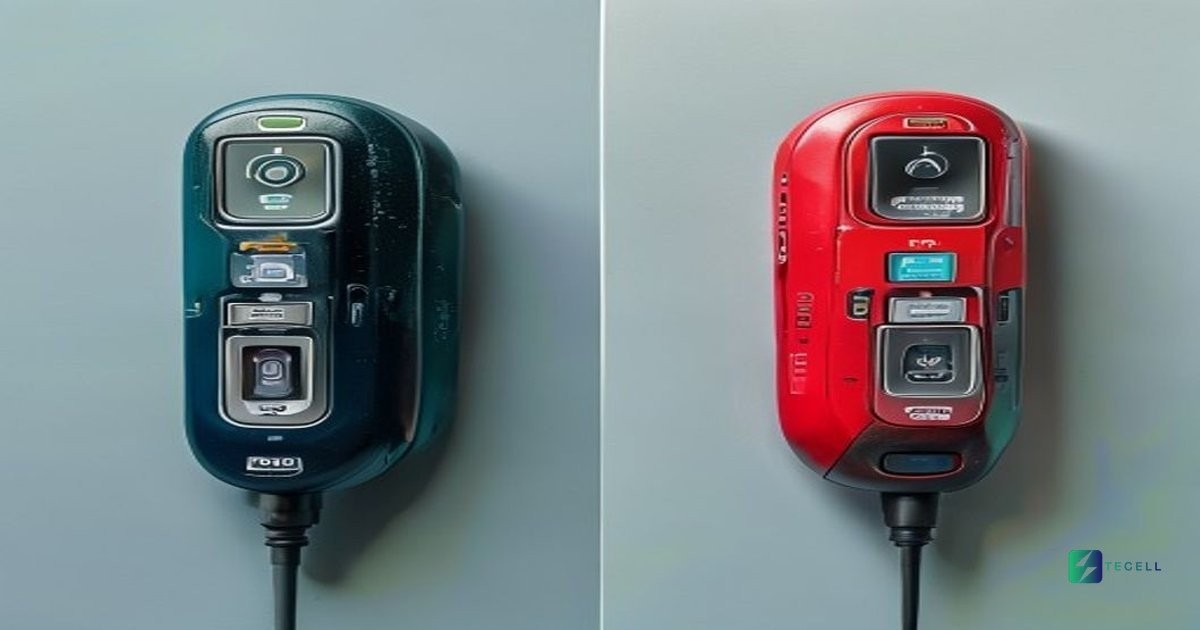
Understanding CCS vs CHAdeMO: A Deep Dive into EV Charging Connectors
When evaluating EV charging infrastructure, one of the most critical decisions involves choosing the right connector standard. The CCS vs CHAdeMO debate centers on physical design, power delivery capabilities, and compatibility with modern electric vehicles. This comparison explores how these two standards differ in real-world deployment, especially when integrated with systems like OCPP 2.0.1 and Saha-Edge for local control and energy optimization.
What Is CCS and How Does It Work?
Combined Charging System (CCS) is a widely adopted standard for electric vehicle charging. It combines AC and DC charging in a single connector, making it versatile for both fast and ultra-fast charging scenarios. The design allows for high power delivery, typically up to 350 kW, depending on vehicle and infrastructure capabilities.
CCS uses a plug-and-play approach that supports both alternating current (AC) and direct current (DC) charging. This dual functionality makes it ideal for fleet operators and commercial deployments where flexibility is key. The standard also supports protocols like OCPP 2.0.1, enabling seamless integration with cloud-based management systems.
What Is CHAdeMO and How Does It Work?
CHAdeMO, developed by the CHAdeMO Initiative, is another DC fast-charging standard. Unlike CCS, CHAdeMO focuses specifically on DC charging and has been widely used in Japan and parts of Asia. It supports power levels up to 50 kW in its original form, though newer versions can reach higher outputs.
The physical design of CHAdeMO differs from CCS in that it uses a separate AC and DC connector. This means that while it excels in DC charging, it lacks the flexibility of a single connector for both AC and DC. However, it remains a strong option for certain regional markets and legacy systems.
Key Differences in Power Delivery and Charging Speeds
Power Delivery Capabilities of CCS
CCS supports significantly higher power delivery compared to CHAdeMO. With support for up to 350 kW, it enables rapid charging for modern EVs. This makes it suitable for highway rest stops, urban charging hubs, and fleet operations where time efficiency is crucial.
For example, a logistics company managing 40 vehicles faces the challenge of minimizing downtime during charging. Using CCS-compatible chargers allows them to reduce charging times and maximize vehicle uptime, especially when integrated with Saha-Edge for local control and predictive load management.
Power Delivery Capabilities of CHAdeMO
CHAdeMO’s power delivery is more limited, typically reaching up to 50 kW in its standard form. While this is sufficient for many applications, it falls short of the speeds offered by CCS. However, it remains a reliable option for regional markets where infrastructure investment is more conservative.
For instance, a regional utility deploying charging stations in a smaller city might choose CHAdeMO for its cost-effectiveness and compatibility with existing EV models in that area. The standard’s simplicity also makes it easier to maintain in environments with limited technical support.
Physical Design and Connector Compatibility
CCS Connector Design
The CCS connector design includes a unique combination of AC and DC pins in a single plug. This design allows for a more compact charging solution, reducing the physical footprint of charging stations. The plug also supports multiple voltage levels, making it adaptable to various vehicle requirements.
When integrating with OCPP 2.0.1, the CCS standard ensures that charging sessions are managed efficiently. The protocol supports real-time communication between the charger and the central system, enabling features like dynamic pricing and load balancing.
CHAdeMO Connector Design
CHAdeMO uses a separate AC and DC connector, which means two distinct plugs are required for different charging modes. This design is simpler but less flexible than CCS. The physical layout also requires more space, which can be a limitation in urban settings.
Despite this, CHAdeMO remains a viable option for certain applications. For example, a fleet operator in a region where CHAdeMO is the dominant standard can rely on its proven compatibility with local vehicles and infrastructure.
Protocol Support and Integration with OCPP 2.0.1
CCS and OCPP 2.0.1 Compatibility
CCS is fully compatible with OCPP 2.0.1, the latest version of the Open Charge Point Protocol. This compatibility ensures that charging stations can communicate effectively with management systems, enabling features like remote diagnostics, firmware updates, and real-time monitoring.
For operators using ChargeSphere or UnityCharge, this integration is essential. It allows for centralized control of multiple charging points, even when they use different connector standards. The protocol also supports advanced features like smart charging and predictive maintenance.
CHAdeMO and OCPP 2.0.1 Compatibility
While CHAdeMO is less commonly integrated with OCPP 2.0.1, it can still be supported through adapters or custom implementations. However, this often requires additional configuration and may limit the full range of features available in modern CMS platforms.
Operators using CHAdeMO may find it more challenging to scale their infrastructure or integrate with newer systems. This is especially true when deploying in regions where CCS is the preferred standard, such as Europe and North America.
Real-World Deployment Considerations
CCS in Commercial and Fleet Applications
CCS is particularly well-suited for commercial and fleet applications due to its high power delivery and compatibility with modern EVs. A logistics company managing 40 vehicles can benefit from CCS by reducing charging times and improving operational efficiency.
When combined with Saha-Edge, CCS stations can operate with local control, even during network outages. This ensures that charging continues without relying on cloud connectivity, which is crucial for fleet operations in remote areas.
CHAdeMO in Regional and Legacy Deployments
CHAdeMO is often found in regions where it was the original standard, such as Japan and parts of Asia. In these markets, it remains a practical choice for legacy infrastructure and vehicles that were designed with this standard in mind.
For operators in these regions, CHAdeMO offers a cost-effective solution for upgrading existing infrastructure. However, as the market shifts toward CCS, the long-term viability of CHAdeMO may be limited.
Future Trends and Market Adoption
Market Shift Toward CCS
As EV adoption grows, the market is increasingly favoring CCS due to its versatility and high power delivery. Major automakers and charging network operators are aligning with this standard to ensure compatibility and performance.
For example, a utility planning to deploy a new charging network in a major metropolitan area would likely choose CCS to support a wide range of EV models and charging speeds. This decision ensures that the infrastructure remains future-proof and scalable.
CHAdeMO’s Role in Regional Markets
While CHAdeMO is less common in global markets, it still holds relevance in specific regions. Operators in these areas may continue to use CHAdeMO for its simplicity and cost-effectiveness.
However, as more vehicles support CCS and charging networks expand, the demand for CHAdeMO is expected to decline. This shift underscores the importance of choosing a standard that aligns with long-term market trends.
Conclusion
The CCS vs CHAdeMO debate highlights the importance of selecting the right charging standard for specific applications. CCS offers superior power delivery and broader compatibility with modern EVs, making it ideal for commercial and fleet deployments. CHAdeMO, while limited in power, remains a practical choice in certain regional markets.
When integrating with systems like OCPP 2.0.1 and Saha-Edge, CCS provides better support for advanced features such as local control, predictive maintenance, and real-time monitoring. These capabilities are essential for operators aiming to optimize their charging infrastructure and ensure reliable service.
Related Reading
For more on related topics, see: CCS vs CHAdeMO: Charging Standards Explained.
Further reading: EV Charge Management Software Global | Europe, UK, US | Tecell CMS
📣 Join our Telegram channel for EV charging technology insights and product updates.
Also find us on: LinkedIn · X · Bluesky · Mastodon · DEV.to.