
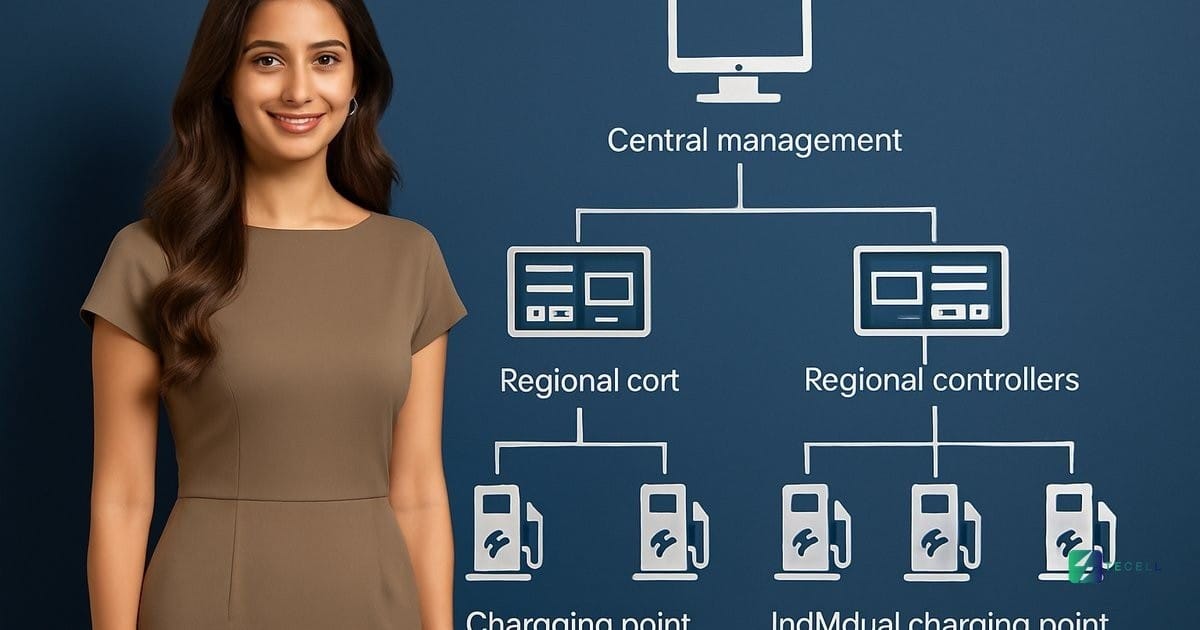
Understanding OCPP 2.0.1 in Multi-Tenant Commercial Charging Environments
OCPP 2.0.1 is more than a communication protocol—it’s a foundational layer for managing complex, multi-tenant charging infrastructures. In commercial settings, where multiple tenants operate on shared infrastructure, real-time coordination becomes essential. This is where OCPP 2.0.1 shines, enabling seamless cross-protocol scheduling without relying on cloud connectivity.
For a logistics company managing 40 electric vehicles across a shared parking facility, the ability to schedule charging based on tenant needs, energy availability, and load constraints is critical. OCPP 2.0.1 allows such environments to function autonomously, even when network connectivity is limited or intermittent.
This protocol introduces a new level of flexibility by supporting dynamic load management, predictive forecasting, and localized decision-making. These features are especially valuable in environments where real-time responsiveness is key to operational efficiency.
By leveraging OCPP 2.0.1, charging infrastructure operators can ensure that each tenant’s charging needs are met without overloading the grid or disrupting other users. This is particularly important in multi-tenant commercial buildings where energy usage must be carefully balanced.
Key Features of OCPP 2.0.1 for Localized Power Management
OCPP 2.0.1 enhances localized power management through its support for event-based communication and enhanced message handling. Unlike previous versions, it allows charging stations to make decisions based on local conditions, such as available power or occupancy levels.
For example, in a multi-tenant office building, a charging station can adjust its power output in real time based on the number of vehicles present and the building’s overall energy consumption. This reduces the need for constant cloud communication and improves responsiveness.
The protocol also supports bidirectional communication, which means that charging stations can receive updates and send status reports without requiring a centralized server. This is especially useful in environments where network reliability is a concern.
These capabilities are essential for maintaining consistent service quality, especially in scenarios where tenants expect reliable charging at all times. OCPP 2.0.1 ensures that even in the absence of cloud connectivity, the system remains functional and responsive.
Integrating Saha-Edge for Autonomous Grid Interaction
Saha-Edge plays a crucial role in enabling autonomous grid interaction by providing edge computing capabilities directly at the charging point. This platform allows charging stations to process data locally, making decisions without relying on cloud-based systems.
When combined with OCPP 2.0.1, Saha-Edge enables real-time adjustments to charging schedules based on local energy conditions. For instance, if a building’s solar panels generate excess energy, the system can automatically increase charging power for vehicles connected to that station.
This integration supports predictive forecasting, where the system anticipates energy availability and adjusts charging accordingly. It also allows for load balancing across multiple charging points, ensuring that no single point becomes a bottleneck.
By embedding intelligence at the edge, Saha-Edge ensures that charging operations remain efficient and responsive, even in environments with limited or unreliable network access.
ChargeSphere’s Role in Cross-Protocol Scheduling
ChargeSphere complements OCPP 2.0.1 by offering a platform for managing roaming and interoperability. It connects different charging networks, mobility service providers, and payment ecosystems, making it easier to coordinate charging across diverse systems.
In a multi-tenant setting, ChargeSphere ensures that tenants can access charging services regardless of which network they are using. This is particularly important for fleet operators who may need to charge vehicles across multiple providers.
The platform also supports dynamic pricing and load coordination, allowing operators to optimize energy usage and reduce costs. By integrating with OCPP 2.0.1, ChargeSphere enables a unified view of charging operations, even when different systems are involved.
This interoperability is essential for scaling charging infrastructure, especially in commercial environments where multiple stakeholders are involved. ChargeSphere ensures that all parties can work together seamlessly, even when using different protocols or systems.
Real-Time Scheduling Without Cloud Dependency
One of the most significant advantages of OCPP 2.0.1 is its ability to support real-time scheduling without requiring cloud connectivity. This is particularly valuable in environments where network access is inconsistent or unavailable.
For example, a commercial building with limited internet access can still manage charging operations effectively. The system can store and process scheduling data locally, ensuring that charging continues to function as expected.
This local processing capability is made possible by the protocol’s support for offline operation and event-driven communication. Charging stations can respond to changes in energy availability or tenant demand without needing to communicate with a central server.
By reducing reliance on cloud infrastructure, OCPP 2.0.1 enhances the resilience and reliability of charging networks, especially in challenging environments.
Energy Optimization Through Predictive Forecasting
Predictive forecasting is a powerful feature of OCPP 2.0.1 that allows systems to anticipate energy needs and adjust charging schedules accordingly. This is particularly useful in multi-tenant environments where energy usage patterns can vary significantly.
For instance, a building with a mix of residential and commercial tenants may experience different charging demands at different times. Predictive models can help optimize energy usage by scheduling charging during off-peak hours or when renewable energy sources are abundant.
When combined with Saha-Edge, this forecasting capability becomes even more robust. The edge platform can analyze local conditions and make adjustments in real time, ensuring that charging operations are both efficient and sustainable.
This approach not only reduces energy costs but also supports environmental goals by aligning charging with renewable energy availability.
Practical Applications in Commercial Charging Environments
In a real-world scenario, a large office complex with multiple tenants faces the challenge of managing charging for hundreds of electric vehicles. Using OCPP 2.0.1, the facility can coordinate charging across different zones, ensuring that no single area becomes overloaded.
The system can also prioritize charging based on tenant needs, such as ensuring that delivery vehicles are charged before the end of the workday. This level of control is made possible by the protocol’s support for dynamic scheduling and load management.
By integrating with ChargeSphere, the facility can also offer a seamless experience for tenants, allowing them to access charging services from multiple providers without complications. This interoperability is key to supporting a growing number of EV users.
Overall, OCPP 2.0.1 enables a more intelligent and responsive charging infrastructure, especially in complex commercial environments where coordination is essential.
Conclusion: The Future of Localized Charging Management
OCPP 2.0.1 represents a significant step forward in the evolution of EV charging infrastructure. Its ability to support real-time scheduling, localized power management, and cross-protocol coordination makes it ideal for multi-tenant commercial environments.
When combined with platforms like Saha-Edge and ChargeSphere, OCPP 2.0.1 enables charging networks to operate autonomously and efficiently, even in challenging conditions. This is particularly important as the number of EVs on the road continues to grow.
By focusing on local decision-making and predictive capabilities, this protocol ensures that charging infrastructure remains responsive, reliable, and sustainable. It’s a key enabler for the future of smart, interconnected charging networks.
As charging networks become more complex, the need for intelligent, localized management will only increase. OCPP 2.0.1, supported by edge computing and interoperability platforms, is well-positioned to meet that need.
Frequently Asked Questions
- What is OCPP 2.0.1 and how does it differ from earlier versions? OCPP 2.0.1 is an updated communication protocol for EV charging stations that supports enhanced features like real-time scheduling, event-based communication, and improved load management. It differs from earlier versions by offering more flexibility and autonomy in charging operations.
- How does OCPP 2.0.1 support offline charging operations? OCPP 2.0.1 allows charging stations to operate independently without cloud connectivity. It supports local data processing and decision-making, ensuring that charging continues even when network access is limited.
- What role does Saha-Edge play in OCPP 2.0.1 implementations? Saha-Edge provides edge computing capabilities that enable real-time processing and decision-making at the charging point. It supports predictive forecasting and load coordination, making charging operations more efficient and responsive.
- Can ChargeSphere integrate with OCPP 2.0.1 for multi-tenant environments? Yes, ChargeSphere supports OCPP 2.0.1 and enables interoperability between different charging networks. It helps coordinate charging across multiple providers and tenants, ensuring a seamless experience.
- What are the benefits of using OCPP 2.0.1 in commercial charging setups? OCPP 2.0.1 offers benefits like real-time scheduling, local power management, and reduced dependency on cloud connectivity. These features are especially valuable in multi-tenant environments where coordination and reliability are key.
Related Reading
For more on related topics, see: OCPI vs Roaming Networks: Cross-Operator Charging Explained.
Further reading: EV Charging Energy Management | OCPP Smart Charging CMS | Tecell India
📣 Join our Telegram channel for EV charging technology insights and product updates.
Also find us on: LinkedIn · X · Bluesky · Mastodon · DEV.to.