
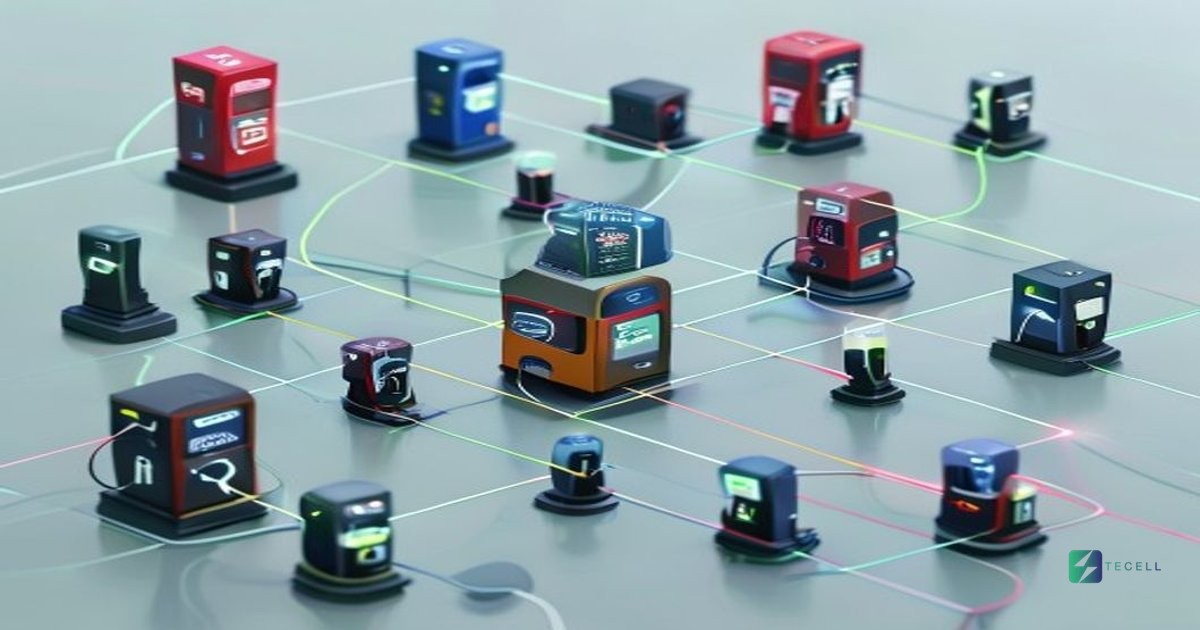
Understanding OCPP 2.0.1 Session Management at Scale
OCPP 2.0.1 session management at scale is a critical component of modern EV charging infrastructure. As the number of connected chargers grows, the complexity of maintaining reliable communication between charging stations and the Charge Management System (CMS) increases exponentially. This is where message queuing and asynchronous processing play a vital role in ensuring that session data flows smoothly, even under high load conditions.
For a logistics company managing 40 vehicles, each with its own charging station, the challenge isn’t just about connecting chargers—it’s about ensuring that every session update, payment confirmation, and status change is handled reliably without delays or data loss. This requires a robust backend architecture that can scale with the number of devices and users.
Session management in OCPP 2.0.1 is more than just tracking charging sessions. It involves handling real-time data exchange, managing errors, and ensuring that all parties—chargers, CMS, and end-users—have consistent and accurate information. When this system is well-designed, it becomes the backbone of a scalable charging network.
Let’s explore how message queuing and asynchronous processing help make OCPP 2.0.1 session management at scale both efficient and resilient.
What Is OCPP 2.0.1 Session Management?
OCPP 2.0.1 session management refers to the process of tracking, controlling, and reporting charging sessions between EV chargers and the central Charge Management System (CMS). It includes handling session start, stop, and status updates, as well as payment and authorization data.
Unlike earlier versions of OCPP, version 2.0.1 introduces more granular control over session data and supports richer communication protocols. This allows for better integration with third-party systems, such as billing platforms, fleet management tools, and smart grid interfaces.
For a fleet operator managing hundreds of vehicles, session management must be both accurate and fast. Any delay or failure in session reporting can lead to billing discrepancies or operational inefficiencies. That’s why understanding how to implement session management at scale is essential for any EV infrastructure provider.
Session management in OCPP 2.0.1 is not just about logging data—it’s about enabling real-time decision-making and ensuring that the system remains responsive even under heavy load.
The Role of Message Queuing in OCPP 2.0.1 Session Management
Message queuing is a foundational technology that helps manage communication between chargers and the CMS in OCPP 2.0.1. It acts as an intermediary layer that buffers messages and ensures they are delivered reliably, even when systems are temporarily offline or overloaded.
When a charger sends a session update, it doesn’t directly connect to the CMS. Instead, the message is placed into a queue, where it waits for processing. This decouples the sender from the receiver, improving system resilience and scalability.
For example, if a charging station sends a status update during peak usage hours, and the CMS is temporarily busy, the message queue ensures that the update is not lost. It will be processed as soon as the CMS is ready, without requiring the charger to retry the connection.
This approach is especially valuable in large deployments where hundreds or thousands of chargers are sending data simultaneously. It prevents bottlenecks and ensures that no session data is dropped due to temporary system overload.
How Asynchronous Processing Enhances Session Reliability
Asynchronous processing allows the CMS to handle multiple session updates without blocking or waiting for each one to complete. This is particularly important in OCPP 2.0.1 session management at scale, where real-time responsiveness is key.
Instead of waiting for a response from one charger before moving to the next, the system can process updates in the background. This means that even if one session is delayed or encounters an error, it doesn’t block the processing of other sessions.
For a large commercial charging network, asynchronous processing ensures that a single faulty charger doesn’t bring down the entire system. It also allows for better resource allocation, as the system can prioritize urgent tasks like payment confirmations or emergency stops.
This method of handling data is especially effective when combined with message queuing, as it allows for both fault tolerance and high throughput in session management.
Real-World Scenario: Managing Session Data for a Fleet Operator
A logistics company operating a fleet of 40 electric delivery vehicles faces a unique challenge in session management. Each vehicle has a dedicated charger, and the company needs to track usage, billing, and performance metrics in real time.
Without a robust OCPP 2.0.1 session management system, the company risks losing session data during high-traffic periods or when network connectivity is unstable. This could lead to inaccurate billing or missed maintenance alerts.
By implementing message queuing and asynchronous processing, the company ensures that every session update is captured and processed reliably. Even if a few chargers experience brief outages, the system continues to function without interruption.
This setup allows the fleet operator to maintain visibility into vehicle usage and optimize charging schedules, all while ensuring that session data is accurate and complete.
Benefits of OCPP 2.0.1 Session Management at Scale
Effective session management at scale brings several key benefits to EV charging networks. First, it improves data integrity by ensuring that no session updates are lost or duplicated. Second, it enhances system performance by reducing the load on the CMS during peak times.
Third, it supports better user experience by providing real-time feedback and accurate billing. Finally, it enables more advanced features like dynamic pricing, load balancing, and integration with smart grid systems.
For infrastructure providers, these benefits translate into more reliable operations, fewer customer complaints, and a stronger foundation for future scalability.
When session management is handled correctly, it becomes a competitive advantage in the EV charging market.
Challenges in Implementing OCPP 2.0.1 Session Management
Despite its advantages, implementing OCPP 2.0.1 session management at scale comes with challenges. One of the most common is ensuring that all chargers are properly configured to support the new protocol. Not all devices may be compatible, which can lead to communication gaps.
Another challenge is managing the volume of data generated by a large number of chargers. Without proper buffering and processing systems, the CMS can become overwhelmed, leading to delays or failures in session reporting.
Additionally, maintaining security and privacy across a large network of devices requires careful attention to authentication and encryption. Any vulnerability in session data handling can compromise the entire system.
These challenges highlight the importance of choosing the right tools and architecture for session management, especially when dealing with large-scale deployments.
Best Practices for OCPP 2.0.1 Session Management
To ensure effective OCPP 2.0.1 session management at scale, it’s important to adopt best practices that prioritize reliability, scalability, and security. First, implement a message queuing system to buffer session updates and prevent data loss.
Second, use asynchronous processing to handle session data without blocking the main system. This allows for better performance and resilience during high-traffic periods.
Third, regularly monitor session data for anomalies or errors. This helps identify issues early and ensures that the system remains stable over time.
Finally, ensure that all chargers are updated and configured correctly to support OCPP 2.0.1. This reduces compatibility issues and improves overall system performance.
Conclusion: The Future of Session Management in EV Charging
As EV charging networks continue to grow, the importance of robust session management becomes even more critical. OCPP 2.0.1 session management at scale, powered by message queuing and asynchronous processing, is essential for maintaining reliability and performance.
By adopting these technologies, infrastructure providers can build systems that are not only scalable but also resilient to failures and capable of handling real-time data with minimal latency.
For companies like Tecell, which specialize in EV charging software, mastering session management is a key differentiator. It enables them to offer solutions that are both technically sound and operationally efficient.
As the industry evolves, session management will continue to play a central role in the success of charging networks. Those who invest in scalable, reliable systems today will be best positioned for tomorrow’s challenges.
Frequently Asked Questions
- What is OCPP 2.0.1 session management? OCPP 2.0.1 session management refers to the process of tracking, controlling, and reporting charging sessions between EV chargers and the Charge Management System (CMS). It includes handling session start, stop, and status updates, as well as payment and authorization data.
- How does message queuing improve session management? Message queuing acts as a buffer for session updates, ensuring that messages are delivered reliably even when systems are offline or overloaded. This prevents data loss and improves system resilience.
- Why is asynchronous processing important for session management? Asynchronous processing allows the CMS to handle multiple session updates without blocking or waiting for each one to complete. This improves performance and ensures that session data is processed efficiently.
- What are the challenges of managing sessions at scale? Challenges include ensuring compatibility across all chargers, managing high volumes of session data, and maintaining security and privacy in large networks.
- How can companies improve session management reliability? Companies can improve reliability by implementing message queuing, using asynchronous processing, monitoring session data regularly, and ensuring all chargers are properly configured for OCPP 2.0.1.
Related Reading
For more on related topics, see: Effortless EV Charger Testing: Tecell’s Free OCPP 1.6 Compatibility Suite – Tecell.
Further reading: EV Charging Software Features | Tecell CMS (UnityCharge) – OCPP, Billing, Mobile
📣 Join our Telegram channel for EV charging technology insights and product updates.
Also find us on: LinkedIn · X · Bluesky · Mastodon · DEV.to.