Understanding OCPP 2.0.1 vs ISO 15118 Certificate Management
When evaluating EV charging infrastructure, one of the most critical aspects is how securely devices communicate and authenticate. The OCPP 2.0.1 and ISO 15118 standards both address this through certificate management, but they approach it differently. This comparison explores how each standard handles digital certificates and PKI integration in secure EV charging networks.
For a logistics company managing 40 vehicles, choosing the right certificate management system can mean the difference between seamless operations and costly downtime. Understanding these two standards helps operators make informed decisions about their charging infrastructure.
Here’s the thing: while both protocols aim to secure communication, their methods vary significantly in implementation and practical application. Let’s break down how each handles certificate lifecycle, trust models, and integration with existing systems.
What Is Certificate Management in EV Charging?
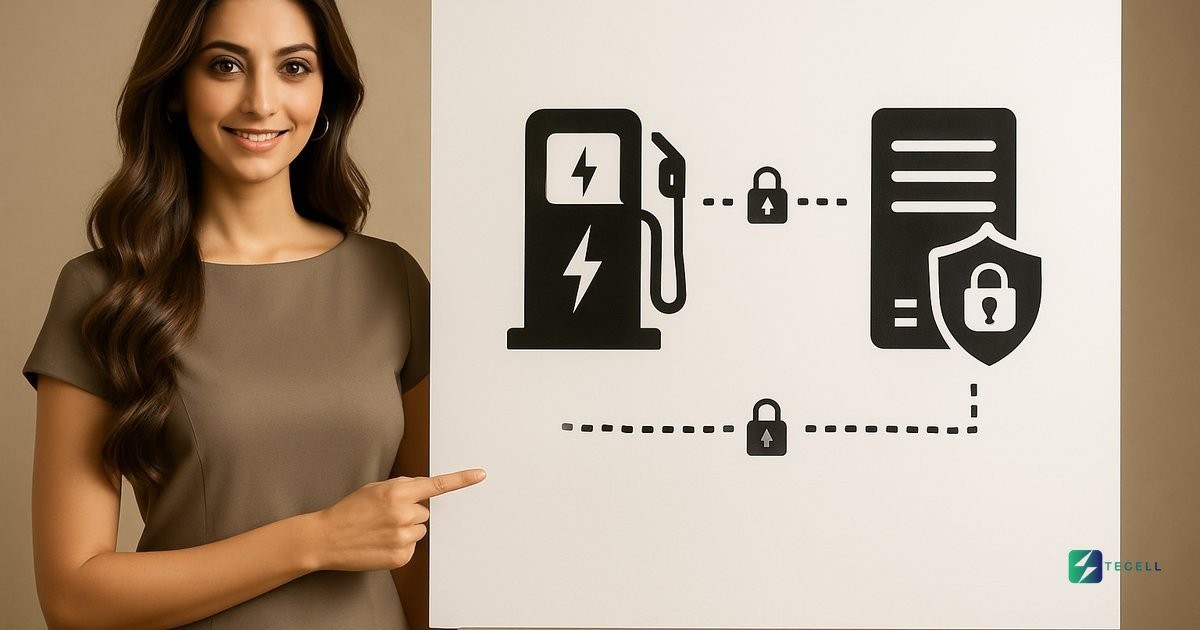
Certificate management ensures that only authorized devices can communicate with charging stations. It involves issuing, storing, validating, and revoking digital certificates used for authentication and encryption.
In practice, this means that a charging station must verify the identity of an EV before allowing it to draw power. Similarly, the vehicle must confirm that the charging station is legitimate and secure.
This process is essential for preventing unauthorized access, ensuring compliance with security regulations, and maintaining trust in the charging ecosystem.
For operators, effective certificate management reduces risks associated with cyber threats and ensures that their systems remain compliant with evolving standards.
OCPP 2.0.1 Certificate Management Overview
OCPP 2.0.1, the latest version of the Open Charge Point Protocol, includes robust support for certificate management using PKI (Public Key Infrastructure).
The protocol defines how charging stations and central systems exchange certificates, manage trust, and handle certificate updates. It supports both X.509 certificates and secure communication channels.
One key feature is its ability to support offline operations. Charging stations can operate without constant connectivity to a central server, relying on locally stored certificates for authentication.
This makes OCPP 2.0.1 particularly suitable for environments where network reliability is a concern, such as rural or remote installations.
ISO 15118 Certificate Management Overview
ISO 15118 is a global standard for vehicle-to-grid (V2G) communication, including secure authentication and payment processes. It also incorporates certificate management for secure EV communication.
Unlike OCPP, ISO 15118 focuses on the vehicle side of the equation, defining how EVs authenticate with charging stations and vice versa. It uses a more centralized approach to certificate handling.
The standard supports both direct and indirect certificate chains, allowing for flexibility in how trust is established between devices.
For fleet operators, this means that ISO 15118 can integrate more seamlessly with existing vehicle management systems, especially those already using secure communication protocols.
Key Differences in Certificate Lifecycle Management
OCPP 2.0.1 allows charging stations to manage certificates locally, which is beneficial for environments with limited connectivity. It supports certificate renewal and revocation through secure channels.
ISO 15118, on the other hand, relies more heavily on centralized certificate authorities. This approach ensures consistency but may introduce latency in certificate updates.
For example, a utility company deploying charging stations across a wide area might prefer OCPP 2.0.1 for its local certificate handling capabilities. Meanwhile, a fleet operator with a centralized management system might lean toward ISO 15118 for its integrated approach.
The catch is that ISO 15118’s centralized model can be more complex to implement in distributed networks, especially when dealing with multiple vendors or legacy systems.
Trust Model and PKI Integration
OCPP 2.0.1 uses a distributed trust model, where each charging station maintains its own certificate store and can validate other devices independently. This reduces dependency on a single point of failure.
ISO 15118 adopts a more centralized trust model, relying on a common certificate authority to issue and manage certificates across the network. This simplifies management but increases the risk if the CA is compromised.
For operators who prioritize resilience, OCPP 2.0.1’s distributed model offers better fault tolerance. For those who value centralized control, ISO 15118’s approach may be more appealing.
Both models are valid, but the choice depends on the operator’s infrastructure, security requirements, and operational preferences.
Implementation Considerations for Charge Point Operators
Implementing either standard requires careful planning around certificate storage, update mechanisms, and integration with existing systems. OCPP 2.0.1’s local certificate handling makes it easier to deploy in environments with unreliable internet.
ISO 15118, while more centralized, offers better integration with vehicle-side systems. This is especially useful for operators who manage both charging infrastructure and EV fleets.
For a large enterprise deploying hundreds of charging points, the ability to manage certificates centrally through ISO 15118 could reduce administrative overhead. However, OCPP 2.0.1’s flexibility allows for more granular control at each station.
Ultimately, the decision should align with the operator’s long-term strategy, network architecture, and compliance needs.
Security Implications and Compliance
Both standards are designed to meet high security requirements, but they differ in how they enforce compliance. OCPP 2.0.1 provides more granular control over certificate policies, allowing operators to define custom rules for each charging point.
ISO 15118 ensures compliance through a standardized framework that aligns with international V2G standards. This makes it easier to meet regulatory requirements in regions with strict cybersecurity laws.
For operators in Europe or other regions with stringent data protection laws, ISO 15118’s compliance framework may be more attractive. However, OCPP 2.0.1’s flexibility allows for tailored security policies that can adapt to specific operational contexts.
Either standard can support robust security, but the right choice depends on the operator’s risk tolerance and regulatory environment.
Real-World Scenario: Fleet Operator Using Both Standards
A logistics company managing 40 vehicles faces challenges in ensuring secure and efficient charging across multiple sites. They use OCPP 2.0.1 for their public charging stations, which operate in areas with inconsistent internet connectivity.
For their internal fleet charging, they use ISO 15118, which integrates well with their vehicle management system. This allows them to maintain centralized control over both vehicle and charging station security.
This hybrid approach demonstrates how operators can leverage the strengths of each standard depending on the use case. It also highlights the importance of understanding how certificate management works in different contexts.
By combining both, the company ensures that their charging infrastructure remains secure and scalable, regardless of network conditions or operational requirements.
Conclusion: Choosing the Right Certificate Management for Your EV Network
OCPP 2.0.1 and ISO 15118 both offer strong certificate management capabilities, but they serve different needs. OCPP 2.0.1 excels in distributed environments where local control is essential. ISO 15118 is ideal for centralized systems that prioritize integration with vehicle-side protocols.
For operators, the decision should be based on infrastructure, compliance requirements, and operational goals. Understanding how each standard handles certificate lifecycle, trust models, and PKI integration is crucial for making the right choice.
Whether you’re deploying a small network or scaling across multiple regions, selecting the appropriate certificate management approach ensures secure, reliable, and compliant EV charging operations.
As the EV charging landscape continues to evolve, staying informed about these technical differences will help you build a robust and future-proof infrastructure.
Frequently Asked Questions
- What is the main difference between OCPP 2.0.1 and ISO 15118 certificate management? OCPP 2.0.1 supports local certificate handling, making it ideal for environments with limited connectivity. ISO 15118 uses a centralized trust model, which is better suited for integrated vehicle and charging station systems.
- Which standard is better for fleet operators? ISO 15118 is often preferred for fleet operations due to its seamless integration with vehicle-side systems and centralized certificate management.
- Can both standards be used together? Yes, operators can use OCPP 2.0.1 for public charging stations and ISO 15118 for fleet or internal charging, depending on their specific needs.
- How does certificate revocation work in these standards? Both standards support certificate revocation, but OCPP 2.0.1 allows for more localized handling, while ISO 15118 relies on centralized authority for updates.
- What are the security benefits of using either standard? Both standards provide strong security through PKI integration, ensuring that only authenticated devices can communicate and charge, reducing the risk of unauthorized access.
Related Reading
For more on related topics, see: OCPP 2.0.1 vs ISO 15118: Session Management and Authentication.
Further reading: EV Charge Management Software Global | Europe, UK, US | Tecell CMS
📣 Join our Telegram channel for EV charging technology insights and product updates.
Also find us on: LinkedIn · X · Bluesky · Mastodon · DEV.to.