
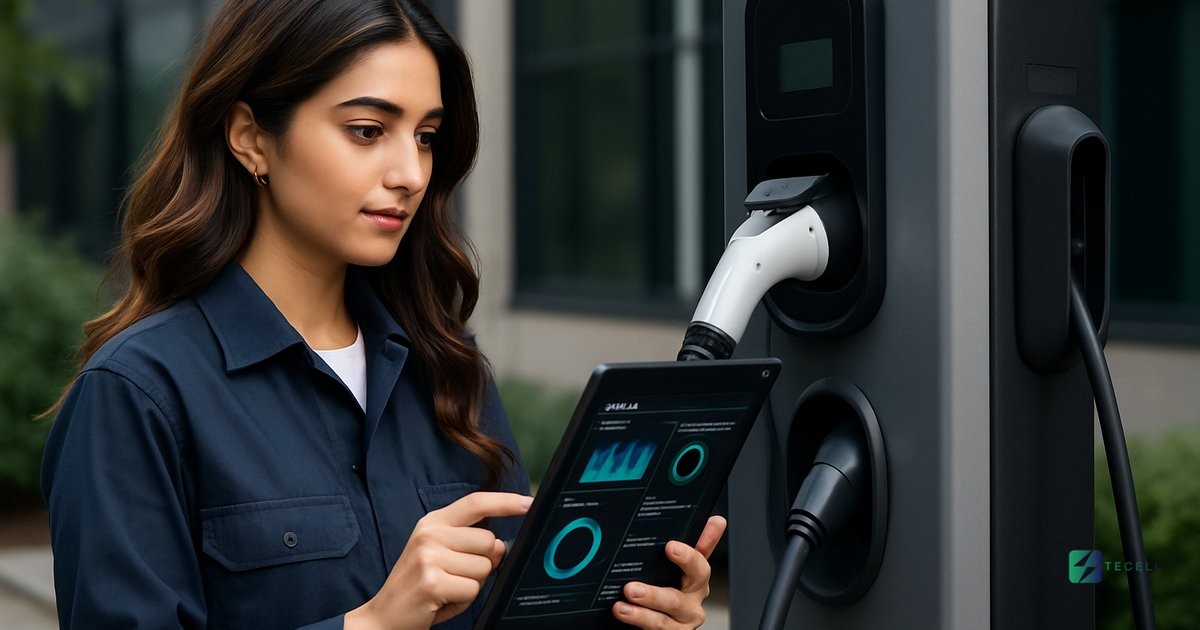
How Predictive Maintenance Transforms EV Charging Operations
Implementing predictive maintenance in EV charging infrastructure is no longer a luxury—it’s a necessity for operators aiming to reduce downtime and improve reliability. This approach uses analytics to anticipate equipment failures before they occur, allowing operators to schedule maintenance proactively. For charge point operators (CPOs), this means fewer unexpected outages and more consistent service for users.
At Tecell, we’ve seen how predictive maintenance can shift the paradigm from reactive to preventive operations. By analyzing real-time data from charging stations, our systems can detect anomalies that indicate potential issues. This allows for timely interventions that prevent costly breakdowns and maintain high availability.
Here’s the thing: traditional maintenance schedules often rely on fixed intervals or visible signs of wear. But predictive maintenance leverages machine learning and sensor data to identify patterns that precede failure. It’s a smarter way to manage infrastructure, especially as charging networks grow in complexity.
For example, a logistics company managing 40 electric vehicles might experience significant delays if a key charging station goes down unexpectedly. With predictive maintenance, operators can monitor station health and address issues before they impact fleet operations.
What Is Predictive Maintenance in EV Charging?
Predictive maintenance in EV charging refers to using data analytics and monitoring systems to predict when equipment is likely to fail. Unlike traditional maintenance, which follows a set schedule, predictive methods analyze real-time performance metrics to determine the optimal time for intervention.
This technology relies on sensors, software platforms, and machine learning algorithms to process information from charging stations. The system tracks parameters like voltage, current, temperature, and communication logs to detect deviations from normal behavior.
The catch is that predictive maintenance requires a robust data infrastructure. Operators must have systems in place to collect, store, and analyze large volumes of data from multiple sources. That’s where platforms like ChargeSphere come into play, offering integrated analytics capabilities.
That matters because without proper data collection, even the most advanced algorithms can’t deliver accurate predictions. The effectiveness of predictive maintenance depends heavily on the quality and consistency of input data.
Key Benefits of Predictive Maintenance for Charging Stations
One major benefit is reduced unplanned downtime. When a charging station fails unexpectedly, it impacts user experience and can lead to revenue loss. Predictive systems help operators stay ahead of these issues, ensuring stations remain operational.
Another advantage is cost efficiency. By performing maintenance only when needed, operators avoid unnecessary service calls and parts replacements. This also extends the lifespan of equipment, reducing long-term replacement costs.
Additionally, predictive maintenance improves customer satisfaction. Users expect reliable charging infrastructure, and consistent performance builds trust. Stations that rarely break down are more likely to be used and recommended.
In practice, this means operators can allocate resources more effectively. Instead of constant monitoring, teams can focus on strategic tasks while the system handles routine checks.
How Tecell Implements Predictive Maintenance
Tecell’s approach to predictive maintenance centers on real-time data collection and intelligent analysis. Our ChargeSphere platform gathers telemetry from charging stations and applies machine learning models to detect abnormal patterns.
These models are trained on historical data from thousands of charging events. They learn what normal operation looks like and flag deviations that could signal impending problems. For instance, a gradual increase in temperature or fluctuating voltage readings might indicate a component nearing failure.
The system also integrates with existing OCPP (Open Charge Point Protocol) infrastructure, making it easy to deploy without major overhauls. This compatibility ensures that operators can start using predictive features without disrupting current workflows.
Our solution doesn’t just alert operators to potential issues—it also provides actionable insights. For example, it might recommend replacing a specific part or adjusting operational parameters to reduce stress on components.
Real-World Scenario: Fleet Charging Operations
Consider a delivery company with a fleet of 100 electric vehicles. Each vehicle requires regular charging, and downtime affects productivity and scheduling. The company uses a network of public and private charging stations to support its operations.
Without predictive maintenance, the company might face unexpected station failures during peak hours. These outages could delay deliveries and strain relationships with customers. However, with Tecell’s predictive tools, the company can monitor station health and schedule maintenance during off-peak times.
This proactive approach ensures that charging infrastructure remains reliable. It also allows the company to plan around maintenance windows, minimizing disruption to daily operations. The result is smoother fleet management and improved service quality.
That’s the power of predictive maintenance—it turns potential problems into manageable tasks. Operators gain control over their infrastructure, reducing risk and increasing efficiency.
Challenges in Adopting Predictive Maintenance
One challenge is the initial investment required for data infrastructure. Not all charging stations are equipped with the necessary sensors or connectivity. Upgrading older systems can be costly and time-consuming.
Another issue is data interpretation. While analytics can identify patterns, understanding what those patterns mean requires domain expertise. Operators need staff trained in both technical and analytical skills to make the most of predictive tools.
Finally, there’s the question of integration. Many operators use multiple vendors for different aspects of their charging network. Ensuring that predictive systems work seamlessly across platforms is critical for success.
Despite these challenges, the long-term benefits outweigh the costs. Organizations that invest in predictive maintenance are better positioned to scale their operations and maintain high service levels.
Future Trends in Predictive Maintenance for EV Charging
As EV adoption increases, so does the demand for smarter infrastructure. Predictive maintenance will become even more essential as networks expand and complexity grows. Future systems will likely incorporate more advanced AI and automation.
One trend is the use of edge computing to process data closer to the source. This reduces latency and allows for faster responses to potential issues. It also helps manage bandwidth requirements for large-scale deployments.
Another development is the integration of weather and traffic data into predictive models. These external factors can influence charging behavior and station performance. Incorporating them improves accuracy and helps operators prepare for changing conditions.
Looking ahead, we expect predictive maintenance to evolve into a fully automated process. Operators will have systems that not only predict failures but also initiate repairs or replacements autonomously.
FAQ
What is predictive maintenance in EV charging?
Predictive maintenance in EV charging uses data analytics and machine learning to anticipate equipment failures before they happen. It monitors real-time performance metrics to detect anomalies and schedule maintenance proactively.
How does predictive maintenance reduce downtime?
By identifying potential issues early, predictive maintenance allows operators to perform maintenance before a failure occurs. This prevents unexpected outages and keeps charging stations operational.
Can small operators benefit from predictive maintenance?
Yes, even small operators can benefit from predictive maintenance tools. These systems help optimize resource use and reduce costs, regardless of network size.
What data does predictive maintenance require?
Predictive maintenance requires telemetry data from charging stations, including voltage, current, temperature, and communication logs. The system must also have access to historical performance data.
Is predictive maintenance compatible with existing systems?
Yes, modern predictive maintenance solutions are designed to integrate with existing OCPP infrastructure. This allows operators to adopt the technology without major disruptions.
Related Reading
For more on related topics, see: EV Charging Software & Management Platforms | Tecell.
Further reading: Blog – Tecell CMS
📣 Join our Telegram channel for EV charging technology insights and product updates.
Also find us on: LinkedIn · X · Bluesky · Mastodon · DEV.to.