
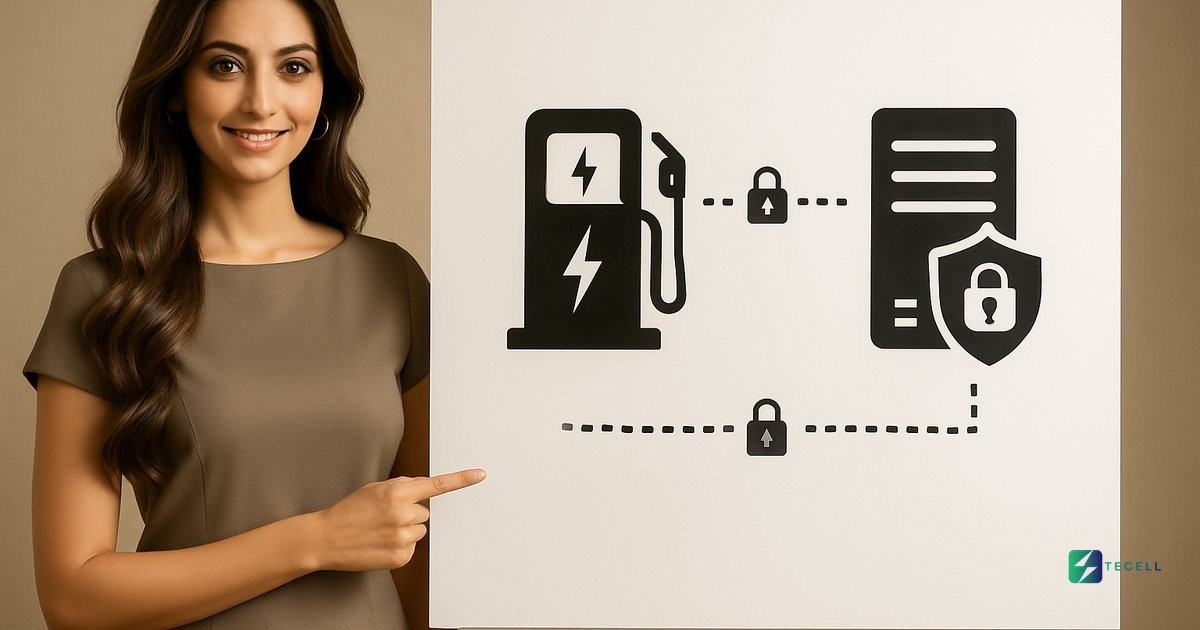
When choosing authentication methods for multi-tenant Charge Point Operators (CPOs), QR codes offer convenience but are less secure than RFID. RFID provides stronger identity verification and is more resilient to spoofing, making it better for high-security environments. QR codes are easier to implement but require additional layers of validation to match RFID’s security level.
Security differences in practice
RFID tags are harder to duplicate or clone than QR codes, which rely on visual scanning and can be intercepted or replicated. In a multi-tenant setup, this means RFID reduces the risk of unauthorized access or fraudulent use of charging sessions. QR codes, while convenient, are more vulnerable to man-in-the-middle attacks if not paired with secure backend protocols.
For CPOs managing multiple operators or tenants, RFID’s ability to authenticate physical credentials makes it ideal for preventing cross-tenant misuse. QR codes, on the other hand, often depend on mobile apps or web-based systems, which can be compromised if not properly secured. This makes RFID a better fit for environments where strict access control is required.
Implementation considerations for CPOs
QR codes are more cost-effective to deploy and integrate into existing systems, especially for smaller networks or those with limited infrastructure. They work well in scenarios where users are already using mobile apps for payment or session management. However, they require robust backend validation to ensure session integrity.
RFID systems demand more upfront investment and hardware integration, but they offer a more secure and scalable solution for large or complex CPO networks. For fleet operators or enterprise charging setups, RFID’s reliability and tamper-resistance make it a preferred choice. CPOs must weigh the trade-offs between ease of deployment and security requirements when selecting an authentication method.
Related Reading
For more on related topics, see our previous post: How Tecell’s CMS handles OCPP 2.0.1 firmware updates.
📣 Join our Telegram channel for EV charging technology insights and product updates.
Also find us on: LinkedIn · X · Bluesky · Mastodon · DEV.to.