
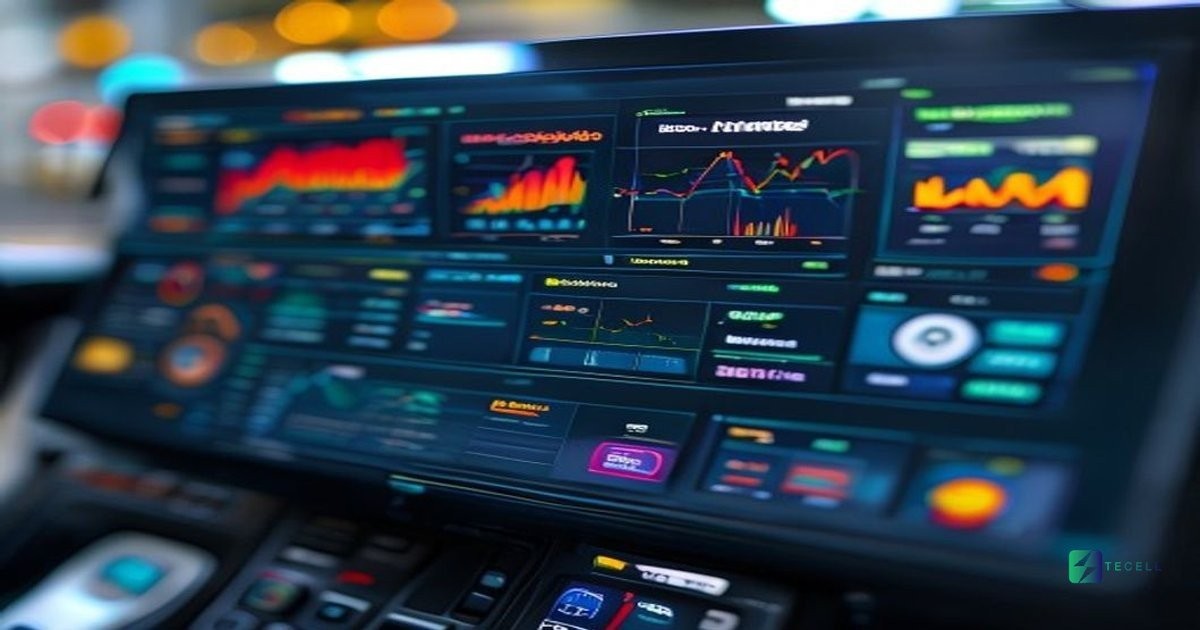
How Saha-Edge Enables Real-Time Cross-Protocol Dynamic Energy Arbitrage in Multi-Charger Commercial Parking Networks
Commercial parking networks face a complex challenge when managing multiple EV chargers. Unlike residential or fleet setups, these environments must balance energy costs, revenue generation, and user satisfaction. The key to success lies in leveraging localized intelligence and predictive algorithms. Saha-Edge, Tecell’s edge computing platform, delivers this capability through its AI-driven approach to dynamic energy arbitrage. This post explores how Saha-Edge enables real-time cross-protocol energy optimization in commercial parking networks without relying on cloud connectivity.
What Is Dynamic Energy Arbitrage in EV Charging?
Dynamic energy arbitrage refers to the practice of buying electricity at low rates and selling it back to the grid or charging networks at higher rates. In commercial EV charging, this concept becomes more complex due to fluctuating demand, varying tariffs, and the need for real-time decision-making. Saha-Edge addresses this by enabling localized energy management that adapts to local conditions.
Why Commercial Parking Networks Need Localized Intelligence
Commercial parking networks often operate in environments with high variability in energy pricing and demand. A centralized system may not react quickly enough to changes in energy costs or user behavior. Saha-Edge’s edge computing architecture ensures that decisions are made at the point of operation, reducing latency and increasing responsiveness. This is especially important in multi-charger setups where each station must respond independently to optimize performance.
How Saha-Edge Works in Practice
Edge-AI for Predictive Demand Forecasting
Saha-Edge uses machine learning models to predict energy demand and pricing trends. These models are trained on historical data from the charging network and updated in real time. For example, a logistics company managing 40 vehicles at a commercial facility might see varying usage patterns throughout the day. Saha-Edge’s AI forecasts these patterns and adjusts charging schedules accordingly.
OCPP 2.0.1 Integration for Cross-Protocol Compatibility
One of the strengths of Saha-Edge is its ability to integrate with various charging protocols, including OCPP 2.0.1. This ensures that even if different chargers use different communication standards, they can still work together under a unified energy management strategy. This compatibility is essential in commercial networks where multiple vendors may be involved.
IEEE 1547 Grid Interaction for Compliance and Optimization
Grid interaction protocols like IEEE 1547 are critical for ensuring that energy management systems comply with utility regulations. Saha-Edge supports these standards, allowing commercial networks to participate in demand response programs and avoid penalties. This also opens up opportunities for revenue generation through grid services.
Real-Time Revenue Optimization Without Cloud Dependency
Offline Operation and Local Decision-Making
Unlike traditional cloud-based systems, Saha-Edge operates effectively even when offline. This is crucial for commercial networks that may experience intermittent connectivity. The platform’s edge computing capabilities allow it to make decisions based on local data and predictive models, ensuring continuous optimization.
Predictive Pricing Algorithms for Dynamic Rate Adjustment
Saha-Edge employs predictive pricing algorithms that adjust charging rates based on real-time energy costs. For instance, during peak hours, the system might increase rates to encourage off-peak usage. Conversely, during low-demand periods, it might reduce rates to attract more users. This dynamic approach maximizes revenue while maintaining user satisfaction.
ChargeSphere Roaming Compliance for Interoperability
Commercial parking networks often serve users from different charging networks. ChargeSphere ensures that Saha-Edge’s energy management aligns with roaming standards, such as OCPI. This allows seamless integration with external systems and supports a broader range of users.
Case Study: A Logistics Company’s Experience
A logistics company managing 40 electric vehicles at a commercial facility faced challenges with energy costs and user satisfaction. By deploying Saha-Edge, the company was able to reduce energy expenses by optimizing charging schedules and leveraging dynamic pricing. The system’s ability to operate offline ensured consistent performance even during network outages. The result was a more efficient and profitable charging operation.
Benefits of Saha-Edge for Commercial Parking Operators
Enhanced Energy Efficiency
Saha-Edge’s localized intelligence ensures that energy is used efficiently. By predicting demand and adjusting charging behavior, it minimizes waste and reduces overall consumption. This is particularly valuable in commercial settings where energy costs can be significant.
Improved User Experience
Users benefit from consistent availability and competitive pricing. Saha-Edge’s predictive algorithms ensure that chargers are available when needed, and pricing is adjusted to reflect real-time conditions. This leads to higher satisfaction and more frequent use of the charging network.
Scalable and Flexible Architecture
The platform’s modular design allows commercial operators to scale their charging infrastructure as needed. Whether adding a few new chargers or expanding to a larger network, Saha-Edge adapts to the changing requirements without requiring a complete overhaul of the system.
Conclusion
Saha-Edge’s edge-AI capabilities provide a powerful solution for commercial parking networks seeking to optimize energy use and revenue. By enabling real-time cross-protocol dynamic energy arbitrage, it ensures that charging operations are both efficient and profitable. The system’s offline functionality and integration with standards like OCPP 2.0.1 and IEEE 1547 make it a robust choice for modern EV infrastructure.
Related Reading
For more on related topics, see: Saha-Edge Dynamic Energy Arbitrage in EV Charging.
Further reading: The Future of EV Charging: Trends to Watch in 2025 | Tecell CMS Blog
📣 Join our Telegram channel for EV charging technology insights and product updates.
Also find us on: LinkedIn · X · Bluesky · Mastodon.