
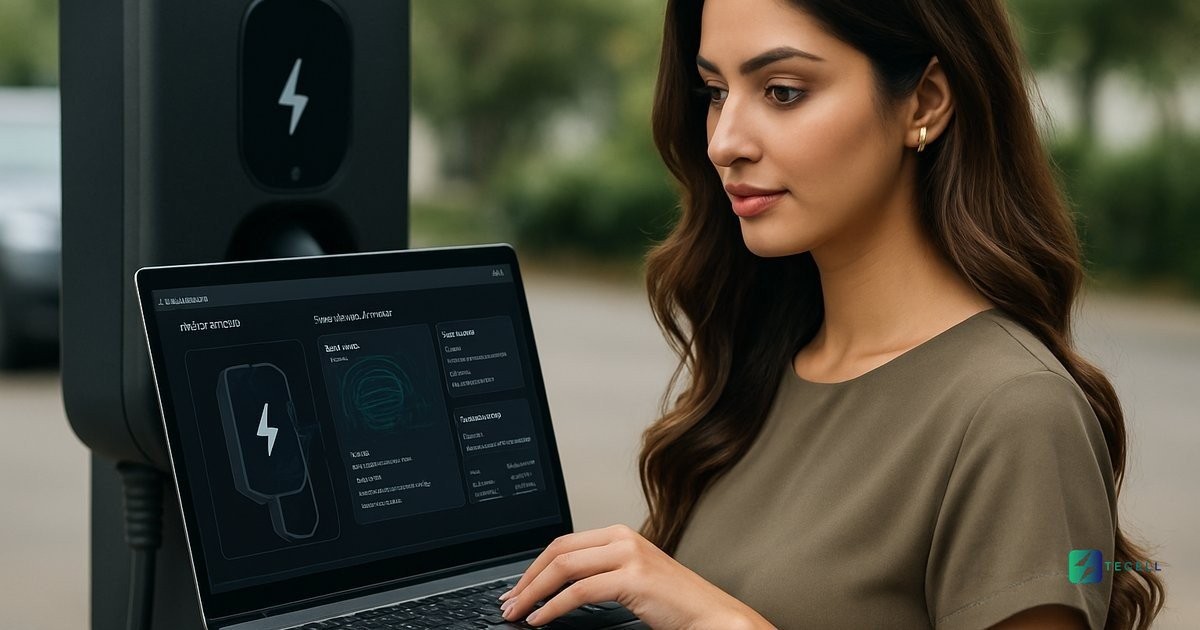
Understanding Cable Degradation in EV Charging Networks
Real-time monitoring of cable health is critical for maintaining safe and efficient EV charging operations. In multi-charger networks, the degradation of charging cables can lead to performance issues or even safety hazards. Saha-Edge’s edge-AI technology addresses this challenge by enabling localized electrical conductivity tracking without relying on cloud connectivity.
For example, a logistics company managing 40 electric vehicles across multiple sites faces frequent cable failures that disrupt operations and increase maintenance costs. Traditional systems often detect these issues only after they’ve caused downtime or safety concerns. With Saha-Edge’s approach, operators can now proactively monitor cable conditions in real time.
This capability is especially valuable when dealing with high-use environments where cables are subject to frequent insertion/removal and environmental stress. The system uses hardware-level diagnostic algorithms to assess degradation at the point of use, ensuring that maintenance decisions are based on actual performance rather than assumptions.
How Saha-Edge Enables Localized Electrical Conductivity Tracking
Saha-Edge’s edge computing platform integrates with charging infrastructure to perform continuous monitoring of cable integrity. It leverages localized sensors and AI models trained to interpret electrical signals from the cable itself.
The system tracks changes in conductivity over time, identifying early signs of wear such as oxidation or mechanical damage. These insights are processed directly on the device, eliminating latency issues associated with cloud-based analysis.
By analyzing real-time data streams, Saha-Edge can detect anomalies that might otherwise go unnoticed until a failure occurs. This proactive approach allows operators to schedule replacements before cables become unsafe or unreliable.
Dynamic Cable Material Degradation Monitoring Using OCPP 2.0.1
OCPP 2.0.1 plays a crucial role in enabling seamless communication between charging stations and management systems. Saha-Edge’s implementation ensures that degradation data is transmitted accurately and efficiently through this protocol.
This integration allows for consistent reporting across different vendors and platforms, supporting interoperability within complex charging ecosystems. It also enables operators to maintain compliance with industry standards while leveraging advanced monitoring capabilities.
Operators benefit from a unified view of cable health across their entire network, regardless of the specific hardware or software used at each station. This level of visibility is essential for large-scale deployments where manual inspection is impractical.
Predictive Replacement Scheduling Without Cloud Dependency
One of the most significant advantages of Saha-Edge’s approach is its ability to operate independently of cloud connectivity. This feature ensures that monitoring continues even during network outages or in remote locations with limited internet access.
The predictive algorithms embedded within the edge platform analyze historical and real-time data to estimate remaining useful life for each cable. These predictions inform maintenance schedules, reducing unplanned downtime and extending asset lifespan.
For instance, a fleet operator managing 100 vehicles in a rural area with unreliable internet connectivity can still rely on accurate cable health assessments. This independence from cloud infrastructure makes the solution more robust and adaptable to diverse operational environments.
Integration with ChargeSphere for Roaming Compliance
ChargeSphere, Tecell’s open roaming platform, ensures that charging networks remain compliant with OCPI standards while maintaining interoperability across different providers. When combined with Saha-Edge’s monitoring capabilities, it creates a comprehensive solution for multi-network operations.
This integration allows operators to share degradation data seamlessly with other platforms and stakeholders. It also supports regulatory reporting requirements and helps maintain consistent service quality across various charging networks.
By aligning with ISO 15118 standards, the system ensures compatibility with future EV technologies and charging protocols. This forward-looking design helps operators prepare for evolving industry demands without requiring major infrastructure overhauls.
Hardware-Level Diagnostic Algorithms in Practice
The diagnostic algorithms used by Saha-Edge are specifically designed to work at the hardware level, capturing subtle changes in electrical behavior that indicate cable degradation. These models are trained using extensive datasets from real-world charging environments.
They can distinguish between normal wear and actual faults, reducing false positives that might lead to unnecessary maintenance actions. This precision is vital for maintaining operational efficiency while minimizing costs.
In practice, these algorithms allow operators to make data-driven decisions about when to replace cables, based on measurable performance indicators rather than arbitrary time intervals or visual inspections.
ISO 15118 Standards and Their Role in EV Charging
ISO 15118 is a critical standard for vehicle-to-grid (V2G) communication and charging protocols. It defines how electric vehicles interact with charging infrastructure, including security, authentication, and power management.
Saha-Edge’s adherence to this standard ensures that its monitoring capabilities align with broader industry expectations. This alignment supports long-term scalability and compatibility as new technologies emerge.
Operators who implement Saha-Edge benefit from a solution that not only monitors cable health but also integrates smoothly with upcoming V2G systems and smart grid initiatives.
Benefits for Charge Point Operators Managing Multi-Charger Networks
For CPOs managing large networks, the ability to monitor cable health in real time significantly improves operational reliability. It reduces unexpected failures and helps optimize maintenance schedules based on actual usage patterns.
The localized nature of Saha-Edge’s monitoring also enhances security by keeping sensitive data within the charging station itself. This approach minimizes exposure to potential cyber threats while maintaining full functionality.
Additionally, the system supports predictive maintenance strategies that can reduce overall lifecycle costs for charging infrastructure. Operators gain better control over their assets and can respond quickly to emerging issues before they escalate.
Conclusion: The Future of Cable Monitoring in EV Infrastructure
Saha-Edge’s edge-AI technology represents a significant advancement in cable health monitoring for EV charging networks. By combining localized diagnostics with robust protocols like OCPP 2.0.1 and ChargeSphere integration, it offers a powerful solution for modern CPOs.
This approach not only improves safety and reliability but also supports the growing demand for intelligent, automated infrastructure management. As EV adoption continues to expand, such technologies will become increasingly essential for maintaining efficient and secure charging ecosystems.
Related Reading
For more on related topics, see: Real-Time Fault Detection in Hybrid Charging Environments.
Further reading: ChargeSphere – EV Roaming Hub | Tecell
📣 Join our Telegram channel for EV charging technology insights and product updates.
Also find us on: LinkedIn · X · Bluesky · Mastodon.