
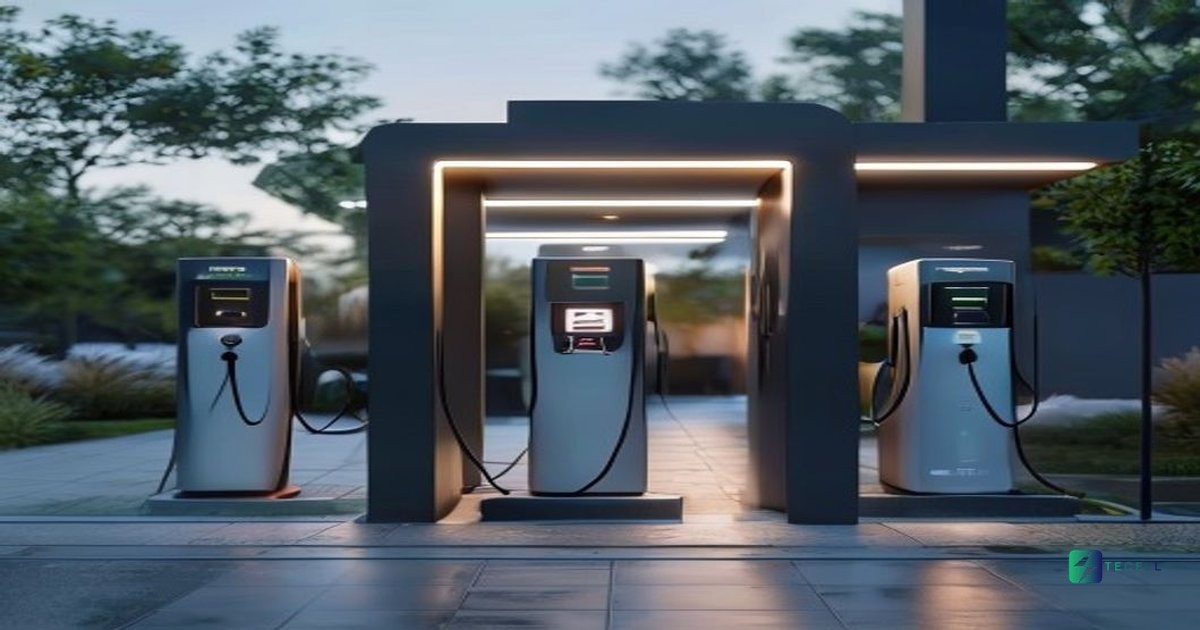
How Saha-Edge’s Edge-AI Optimizes Battery Efficiency Across Multi-Charger Networks
When a logistics company manages 40 electric vehicles across multiple charging stations, the challenge isn’t just about power delivery—it’s about how efficiently each vehicle’s battery charges. This is where Saha-Edge’s edge-AI comes into play. It enables real-time cross-protocol dynamic battery charging efficiency optimization without relying on cloud connectivity. The system uses localized electrochemical modeling to adjust charge rates, manage thermal conditions, and ensure compliance with ISO/IEC 15118 standards—all within a multi-charger network using OCPP 2.0.1 integration.
This approach is particularly valuable for fleet operators who need consistent performance across diverse charging environments. It ensures that each vehicle charges optimally, regardless of the charger type or protocol used, while maintaining full compatibility with existing infrastructure.
By leveraging localized intelligence, Saha-Edge avoids the latency and dependency issues that come with cloud-based systems. This makes it ideal for scenarios where network reliability is uncertain or where immediate response to battery conditions is critical.
Understanding the Challenge of Multi-Charger Efficiency
Managing a fleet of electric vehicles across multiple charging stations presents unique challenges. Each charger may support different protocols, and batteries may vary in age, capacity, and condition. Without a system that adapts dynamically, charging efficiency can suffer significantly.
For example, a logistics company operating in a region with limited internet connectivity might find that cloud-dependent systems fail to optimize charging in real time. This can lead to slower charging times, overheating, or even reduced battery lifespan due to suboptimal charge profiles.
Saha-Edge addresses this by processing data locally, enabling immediate adjustments based on battery health, temperature, and charging protocol. This localized approach ensures that charging decisions are made quickly and accurately, even in environments with unreliable network access.
Edge-AI and Localized Electrochemical Modeling
Saha-Edge’s edge-AI engine uses localized electrochemical modeling to predict and adjust charging behavior. This modeling takes into account factors like battery chemistry, current state of charge, and historical usage patterns to determine the most efficient charging profile.
Unlike traditional systems that rely on generic charge curves, this approach tailors the charging process to each battery’s specific characteristics. It can detect early signs of degradation or inefficiency and respond proactively.
The system continuously learns from each charging session, refining its understanding of how different batteries behave under various conditions. This adaptive learning ensures that optimization improves over time, even as battery conditions change.
OCPP 2.0.1 Integration for Seamless Multi-Protocol Support
One of the key strengths of Saha-Edge is its ability to work seamlessly with OCPP 2.0.1, the latest version of the Open Charge Point Protocol. This protocol supports advanced features like dynamic power scheduling, real-time monitoring, and enhanced security.
With OCPP 2.0.1, Saha-Edge can communicate with chargers that support different charging standards, including CCS, CHAdeMO, and Tesla’s proprietary connector. This multi-protocol support ensures that fleet operators can use a variety of chargers without sacrificing efficiency or performance.
The integration also allows for centralized management through UnityCharge CMS, which provides operators with visibility into all charging activities. This combination of local intelligence and centralized control creates a powerful framework for managing complex charging networks.
Real-Time Predictive Charge Rate Adjustment
One of the most impactful features of Saha-Edge is its ability to predict and adjust charge rates in real time. This is especially important when dealing with batteries that are nearing full capacity or when environmental conditions change.
For instance, if a battery is approaching its maximum charge level, Saha-Edge can automatically reduce the charge rate to prevent overcharging and extend battery life. Similarly, if the ambient temperature rises, the system can adjust the charging profile to prevent overheating.
This predictive capability is powered by machine learning algorithms that analyze data from multiple sensors and charging events. It allows for fine-tuned control that adapts to changing conditions without requiring manual intervention.
Thermal Management Without Cloud Dependency
Thermal management is critical in EV charging, especially in high-density environments where multiple vehicles are charging simultaneously. Saha-Edge handles this through localized thermal monitoring and control.
Each charger equipped with Saha-Edge continuously monitors battery temperature and adjusts charging parameters accordingly. If a battery begins to heat up, the system can reduce the charge rate or pause charging temporarily to prevent damage.
This local control eliminates the delay that would occur if the system had to send data to a cloud server and wait for a response. It ensures that thermal issues are addressed immediately, protecting both the battery and the charging infrastructure.
ISO/IEC 15118 Compliance for Secure and Standardized Charging
ISO/IEC 15118 is the international standard for vehicle-to-grid (V2G) communication and secure charging. Saha-Edge ensures compliance with this standard, which is essential for future-proofing charging infrastructure.
By adhering to ISO/IEC 15118, Saha-Edge enables secure communication between the vehicle, charger, and grid. This is particularly important for applications involving bidirectional charging, where energy can flow from the vehicle back to the grid.
Compliance with this standard also ensures interoperability across different manufacturers and charging networks. It allows fleet operators to use a wide range of chargers and vehicles without compatibility issues.
Integration with ChargeSphere and UnityCharge CMS
Saha-Edge works in tandem with ChargeSphere and UnityCharge CMS to provide a complete solution for managing EV charging networks. ChargeSphere handles roaming and interoperability, while UnityCharge CMS offers centralized control and analytics.
This integration allows fleet operators to monitor and manage charging across multiple networks and locations. It provides insights into charging behavior, energy consumption, and battery health, all while maintaining the efficiency gains from edge-AI.
Operators can also configure policies and rules that are enforced at the edge, ensuring that charging decisions align with business objectives. This combination of local intelligence and centralized management creates a robust framework for scalable EV infrastructure.
Practical Benefits for Fleet Operators
Fleet operators benefit significantly from Saha-Edge’s edge-AI capabilities. The system reduces downtime by optimizing charging efficiency and preventing issues like overheating or overcharging.
It also extends battery life by ensuring that each vehicle charges under optimal conditions. This is particularly valuable for companies that operate large fleets, where battery degradation can have a significant impact on operational costs.
Additionally, the system’s ability to function without cloud dependency makes it ideal for remote or low-connectivity locations. Fleet managers can rely on consistent performance regardless of network conditions.
Conclusion: The Future of Efficient EV Charging
Saha-Edge’s edge-AI technology represents a significant advancement in EV charging efficiency. By enabling real-time, localized optimization across multi-charger networks, it addresses key challenges faced by fleet operators and infrastructure providers.
The system’s ability to work with OCPP 2.0.1, support multiple protocols, and maintain compliance with international standards ensures that it can be deployed in a wide range of environments. It also provides the flexibility to adapt to changing conditions and improve over time through machine learning.
As the EV charging landscape continues to evolve, technologies like Saha-Edge will play a crucial role in ensuring that charging infrastructure is both efficient and reliable. For operators looking to maximize the performance of their charging networks, this approach offers a compelling solution.
Related Reading
For more on related topics, see: Real-Time Cross-Protocol Dynamic Battery Cooling Optimization.
Further reading: EV Charging Energy Management | OCPP Smart Charging CMS | Tecell India
📣 Join our Telegram channel for EV charging technology insights and product updates.
Also find us on: LinkedIn · X · Bluesky · Mastodon.