What Is a Secure Multi-Tenant Charging Data Mesh?
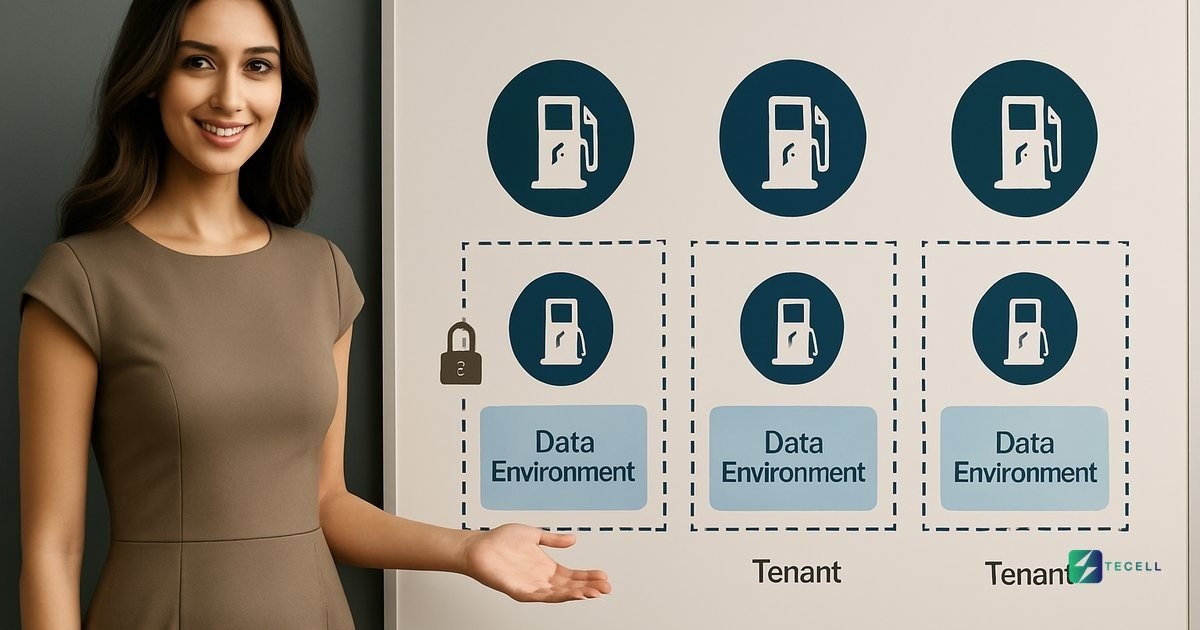
Charge Point Operators (CPOs) are increasingly looking for ways to share insights across their networks while maintaining strict operational isolation. A secure multi-tenant charging data mesh offers a solution that allows multiple CPOs to collaborate on data without compromising security or compliance. This architecture enables federated data sharing, where each tenant retains control over their own data while contributing to a shared analytical layer.
Here’s the thing: traditional data silos prevent CPOs from leveraging collective intelligence. A data mesh approach changes that by enabling real-time insights across networks, even when those networks are operated by different entities. It’s not just about sharing data—it’s about building a federated layer that respects tenant boundaries.
The catch: implementing such a system requires careful attention to access controls, data governance, and compliance frameworks. Without proper safeguards, even well-intentioned data sharing can expose sensitive information or violate regulatory requirements.
Why CPOs Need Secure Multi-Tenant Data Sharing
Modern EV charging networks are complex ecosystems involving multiple stakeholders. A logistics company managing 40 vehicles faces challenges in optimizing charging schedules across different operators. They need visibility into usage patterns, peak demand times, and cost structures without exposing proprietary data.
That matters because without shared insights, CPOs operate in isolation. They miss opportunities to improve efficiency, reduce costs, and enhance user experience. A secure multi-tenant data mesh allows them to gain these benefits while preserving their competitive edge.
For example, one CPO might have detailed data on low-usage periods in a residential area, while another has insights into high-traffic commercial zones. Sharing these insights through a secure mesh can help both operators optimize their infrastructure and pricing strategies.
Key Components of a Secure Multi-Tenant Data Mesh
A secure multi-tenant charging data mesh consists of several core components. First, it requires a robust identity and access management (IAM) system. This ensures that only authorized users can access specific datasets, and that access is logged and auditable.
Second, it needs a federated data layer that can aggregate information from various sources. This layer must be designed to handle diverse data formats, protocols, and structures—especially when dealing with OCPP and OCPI standards.
Third, the system must enforce strict data governance policies. These policies define how data is collected, processed, stored, and shared. They also ensure compliance with regulations like GDPR or local data protection laws.
Identity and Access Management
Effective IAM is critical for maintaining security in a multi-tenant environment. Each tenant must have its own identity, with granular permissions based on roles and responsibilities. This prevents unauthorized access to sensitive data while allowing necessary collaboration.
For instance, a fleet manager might need access to charging usage data but not to pricing models or financial reports. The IAM system enforces these distinctions automatically, reducing the risk of accidental exposure.
Implementing IAM also means having audit trails. Every access request and data query should be logged, providing a clear record of who accessed what and when. This is essential for compliance and troubleshooting.
Federated Data Layer
The federated data layer acts as a bridge between disparate systems. It aggregates data from multiple charge points, operators, and platforms, transforming it into a unified format that can be analyzed and shared.
This layer must be flexible enough to accommodate different data models and structures. For example, one CPO might use OCPP 1.6, while another uses OCPP 2.0.1. The federated layer handles these differences transparently, ensuring consistent data flow.
It also supports real-time processing, which is crucial for dynamic pricing, load balancing, and predictive analytics. Without this capability, the data mesh becomes a static repository rather than a living system.
Data Governance Policies
Data governance ensures that shared data meets quality standards and complies with legal requirements. It defines who owns what data, how it should be used, and under what conditions it can be shared.
These policies are especially important in regulated environments. For example, a CPO operating in Europe must comply with GDPR, which governs how personal data is handled. A secure data mesh must incorporate these rules into its architecture.
Additionally, governance policies help maintain data integrity. They prevent inconsistencies and ensure that shared insights are accurate and actionable. This builds trust among participating CPOs.
Benefits of Implementing a Secure Multi-Tenant Data Mesh
Implementing a secure multi-tenant data mesh brings several tangible benefits to CPOs. It enables better decision-making through access to broader datasets. Operators can identify trends, optimize pricing, and improve infrastructure planning.
It also enhances operational efficiency. When CPOs share insights, they can coordinate charging schedules, reduce congestion, and avoid overloading the grid. This leads to smoother operations and better user experiences.
Finally, it supports innovation. With more data available, CPOs can develop new services, such as predictive maintenance or dynamic pricing models. These services can drive revenue and improve competitiveness.
Challenges and Considerations
Despite its advantages, building a secure multi-tenant data mesh is not without challenges. One major concern is ensuring data privacy and compliance. Each tenant must retain control over their data, which requires strong technical safeguards.
Another challenge is interoperability. Different systems may use varying protocols, making integration difficult. A well-designed data mesh must account for these differences and provide seamless connectivity.
Lastly, there’s the question of governance. Establishing clear policies and procedures for data sharing requires collaboration between multiple parties. It’s not just a technical issue—it’s also a business and legal one.
Real-World Application: A Logistics Company Example
Consider a logistics company managing a fleet of 40 electric vehicles. They partner with two different CPOs to charge their vehicles across various locations. Each CPO operates independently but wants to improve efficiency and reduce costs.
By implementing a secure multi-tenant data mesh, the company can access aggregated insights from both operators. They learn about optimal charging times, peak demand periods, and pricing variations. This information helps them plan routes and charging schedules more effectively.
At the same time, each CPO maintains control over their own data. The logistics company doesn’t see sensitive financial details or proprietary information. The data mesh ensures that only relevant, anonymized insights are shared, protecting both parties’ interests.
Building a Secure Multi-Tenant Data Mesh
Developing a secure multi-tenant data mesh requires careful planning and execution. Start by identifying the key stakeholders and their data needs. Then, design an architecture that supports both collaboration and isolation.
Choose tools and platforms that support OCPP and OCPI standards. These protocols are essential for interoperability in the EV charging space. A mesh built on these standards will integrate more easily with existing systems.
Finally, invest in robust security measures. This includes encryption, access controls, and continuous monitoring. The goal is to make the system as secure as possible while remaining functional and scalable.
Conclusion
A secure multi-tenant charging data mesh is a powerful tool for CPOs looking to collaborate without sacrificing security or compliance. It enables shared insights, better decision-making, and improved operational efficiency. While implementation can be complex, the long-term benefits make it a worthwhile investment for forward-thinking operators.
As the EV charging landscape continues to evolve, such systems will become increasingly important. They represent a shift from isolated data silos to connected, intelligent networks. This transformation is essential for the future of sustainable transportation.
Related Reading
For more on related topics, see: Chargepoint Alliance – EV Charging Interoperability.
Further reading: Privacy Policy – Tecell CMS
📣 Join our Telegram channel for EV charging technology insights and product updates.
Also find us on: LinkedIn · X · Bluesky · Mastodon · DEV.to.