
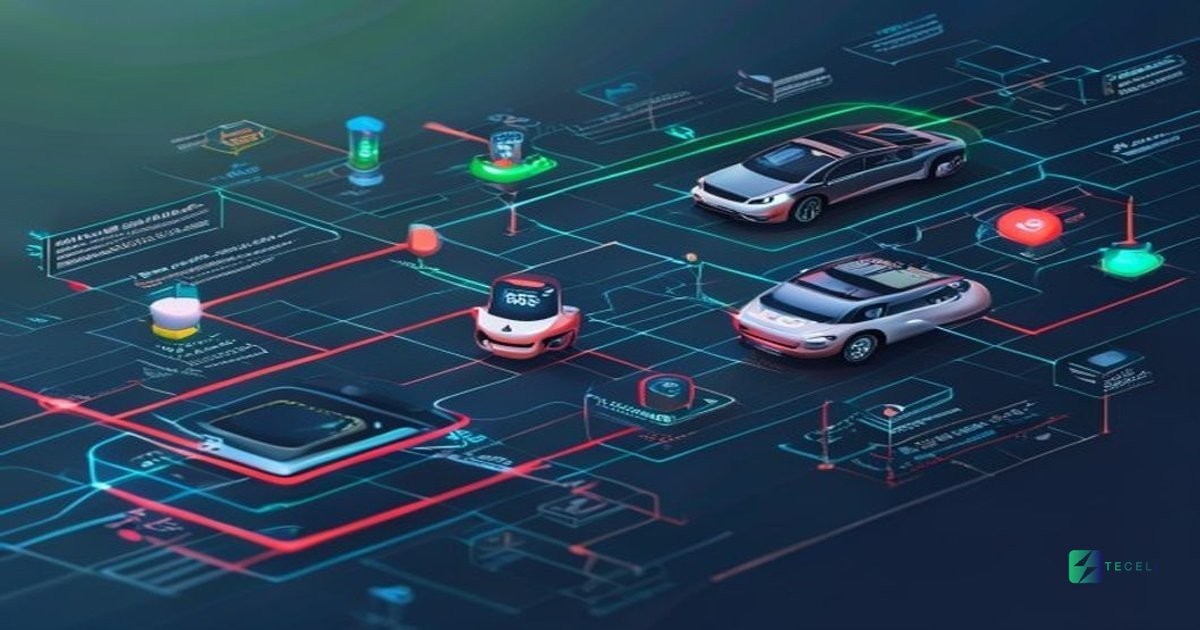
Understanding Real-Time Dynamic Power Quality Enhancement in EV Charging
Real-time dynamic power quality enhancement is a critical capability for modern EV charging networks, especially in multi-charger AC fast charging environments. This technology ensures that the electrical signals delivered to vehicles remain stable, safe, and compliant with industry standards. The challenge lies in managing power fluctuations, harmonics, and voltage variations that can occur when multiple chargers operate simultaneously. Saha-Edge addresses these challenges by leveraging edge computing and localized reactive power compensation.
For a logistics company managing 40 vehicles across a fleet charging station, maintaining consistent power quality becomes essential. Without proper mitigation, the simultaneous charging of multiple vehicles can lead to voltage drops, harmonic distortion, and even equipment damage. Saha-Edge’s approach ensures that each charger operates within optimal parameters, regardless of the load conditions.
This capability is particularly important in urban environments where charging infrastructure must coexist with other electrical systems. The system’s ability to respond quickly to changes in power demand allows for smoother integration with the grid and reduces the risk of disruptions.
By focusing on localized reactive power compensation, Saha-Edge avoids the latency issues associated with cloud-based solutions. This makes it ideal for real-time applications where immediate response is necessary for maintaining system stability.
How Saha-Edge Integrates with OCPP 2.0.1 for Enhanced Control
OCPP 2.0.1, the latest version of the Open Charge Point Protocol, provides a robust framework for communication between charging stations and central management systems. Saha-Edge leverages this protocol to enable seamless integration with ChargeSphere and other platforms. This integration allows for real-time data exchange, enabling dynamic adjustments to power delivery based on current conditions.
When a charger detects a power quality issue, it can immediately communicate with the central system through OCPP 2.0.1. The system then applies corrective measures using localized reactive power compensation. This process happens in milliseconds, ensuring that the charging process remains uninterrupted and efficient.
For fleet operators, this means that their charging infrastructure can adapt to changing conditions without requiring manual intervention. The system automatically adjusts to maintain optimal performance, even under varying load conditions.
The integration also supports advanced features like predictive diagnostics and load balancing. These capabilities allow operators to anticipate potential issues and proactively manage their charging networks.
Hardware Sensor Fusion for Accurate Electrical Signal Processing
Accurate electrical signal processing is essential for effective power quality enhancement. Saha-Edge achieves this through hardware sensor fusion, combining data from multiple sensors to create a comprehensive view of the charging environment. This approach allows the system to detect subtle changes in voltage, current, and frequency that might otherwise go unnoticed.
Sensors monitor parameters such as harmonic distortion, power factor, and voltage stability. By fusing this data, the system can identify patterns and anomalies that indicate potential issues. This real-time monitoring enables proactive responses to prevent problems before they escalate.
In practice, this means that a charging station can detect when a vehicle’s charging process is causing harmonic distortion and immediately apply compensation. This prevents the distortion from affecting other chargers or the broader electrical grid.
The use of hardware sensors also ensures that the system operates independently of network connectivity. Even if the internet connection is lost, the system continues to function, maintaining power quality and safety.
IEEE 519 Compliance Without Cloud Dependency
IEEE 519 is a widely recognized standard for harmonic limits in electrical systems. Compliance with this standard is crucial for ensuring that charging infrastructure does not introduce harmful distortions into the grid. Saha-Edge achieves compliance through localized reactive power compensation, eliminating the need for cloud-based processing.
By processing data locally, the system ensures that all power quality enhancements meet IEEE 519 requirements without relying on external systems. This approach also reduces latency, which is critical for real-time applications.
For utilities and grid operators, this means that charging networks can be deployed without fear of violating power quality standards. The system’s ability to maintain compliance independently makes it suitable for a wide range of environments, from residential complexes to commercial facilities.
Compliance with IEEE 519 also helps operators avoid potential fines or penalties. It demonstrates a commitment to grid stability and safety, which is increasingly important as more EVs are integrated into existing electrical infrastructure.
Predictive Electrical Signal Processing Using AI and Machine Learning
Predictive electrical signal processing is a key component of Saha-Edge’s advanced capabilities. By using AI and machine learning algorithms, the system can anticipate potential issues before they occur. This proactive approach allows for more efficient and reliable charging operations.
The system analyzes historical data and current conditions to predict how power quality might change under different scenarios. For example, it might predict that a sudden increase in charging demand could lead to harmonic distortion. The system then pre-emptively applies compensation to prevent the issue.
This predictive capability is particularly valuable in environments with fluctuating demand. It allows operators to maintain consistent performance even when conditions change unexpectedly. The result is a more stable and efficient charging network.
Machine learning models continuously improve over time, learning from new data and refining their predictions. This ensures that the system becomes more accurate and effective as it gains experience.
Case Study: Fleet Charging Station with Multi-Charger AC Fast Charging
A logistics company managing 40 vehicles faces a complex challenge in maintaining consistent power quality across its charging infrastructure. The company operates a multi-charger AC fast charging station with varying vehicle types and charging demands. Without proper power quality management, the simultaneous charging of multiple vehicles could lead to voltage instability and harmonic distortion.
By implementing Saha-Edge, the company was able to maintain stable power delivery across all chargers. The system’s real-time monitoring and compensation capabilities ensured that each vehicle received consistent power, regardless of the load conditions. This resulted in faster charging times and reduced downtime for vehicles.
The integration with ChargeSphere allowed the company to monitor and manage the charging network from a central location. Operators could view real-time data and make adjustments as needed, without requiring on-site intervention. This centralized control improved operational efficiency and reduced maintenance costs.
Over time, the system’s predictive capabilities helped the company anticipate potential issues and proactively address them. This prevented costly equipment failures and ensured that the charging infrastructure remained reliable and efficient.
Conclusion: The Future of EV Charging with Edge-AI Integration
Saha-Edge’s edge-AI integration represents a significant advancement in EV charging technology. By combining real-time power quality enhancement, OCPP 2.0.1 integration, hardware sensor fusion, and predictive signal processing, it provides a comprehensive solution for managing complex charging environments.
The system’s ability to maintain IEEE 519 compliance without cloud dependency makes it suitable for a wide range of applications. It ensures that charging infrastructure can operate efficiently and safely, even in challenging environments.
For operators, this means greater reliability, improved performance, and reduced operational costs. As EV adoption continues to grow, systems like Saha-Edge will play a crucial role in ensuring that charging networks can meet the demands of a rapidly expanding market.
The integration of AI and edge computing in EV charging is not just about technology—it’s about creating a smarter, more responsive infrastructure that supports the transition to sustainable transportation.
Related Reading
For more on related topics, see: Saha-Edge Real-Time Energy Optimization for DC Chargers.
Further reading: EV Charging Energy Management | OCPP Smart Charging CMS | Tecell India
📣 Join our Telegram channel for EV charging technology insights and product updates.
Also find us on: LinkedIn · X · Bluesky · Mastodon · DEV.to.