
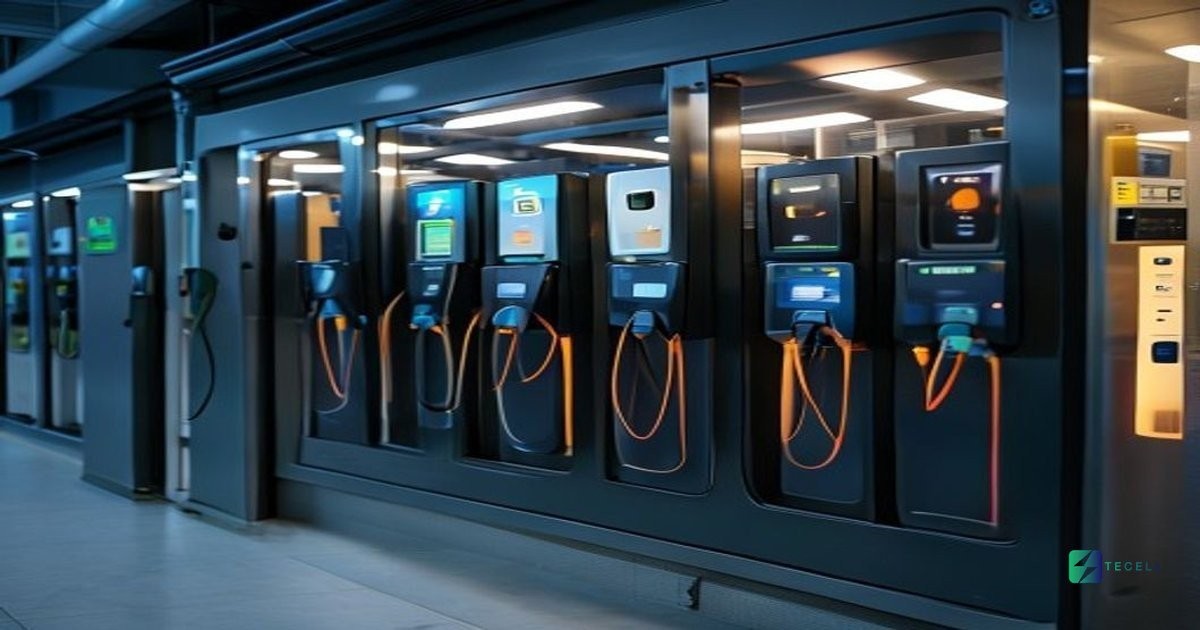
Understanding Secure Enclaves in EV Charging Systems
Secure enclaves in EV charging systems represent a critical layer of defense that ensures trustless authentication and key exchange without relying on cloud connectivity. These hardware-based security modules are embedded within charging infrastructure to protect sensitive data and cryptographic keys. In the context of EV charging, secure enclaves enable local operations even when network access is unavailable. This capability is essential for maintaining service continuity and security in remote or low-connectivity environments.
For example, a logistics company managing 40 vehicles across multiple sites may encounter scenarios where network outages occur during peak charging hours. With secure enclaves, the charging stations can continue to authenticate users and manage sessions without requiring cloud-based verification. This resilience is crucial for fleet operators who depend on consistent access to charging infrastructure.
The implementation of secure enclaves addresses a fundamental challenge in EV infrastructure: how to maintain security and functionality in the absence of constant internet connectivity. By leveraging hardware-based protection, these systems ensure that even if a network connection fails, the charging process remains secure and reliable.
How TPM 2.0 Enables Hardware-Level Security
Trusted Platform Module (TPM) 2.0 plays a foundational role in secure enclaves by providing a dedicated chip for cryptographic operations. TPM 2.0 ensures that keys are generated, stored, and used in a secure environment that is isolated from the main system. This isolation prevents unauthorized access or tampering with sensitive cryptographic material.
When a user initiates a charging session, the TPM 2.0 module handles the cryptographic handshake required for authentication. It generates and stores keys that are unique to each charging session, ensuring that no two sessions share identical cryptographic identifiers. This approach significantly reduces the risk of replay attacks or session hijacking.
For instance, in a scenario where a charging station is located in a rural area with limited network coverage, the TPM 2.0 module ensures that all session data is processed securely on-device. Even if the station cannot communicate with a central server, the authentication process remains intact due to the secure storage of keys and certificates.
Elliptic Curve Cryptography for Efficient Key Exchange
Elliptic Curve Cryptography (ECC) is used within secure enclaves to perform efficient key exchange and digital signatures. ECC offers strong security with smaller key sizes compared to traditional RSA algorithms, making it ideal for resource-constrained environments like EV charging stations.
The use of ECC in secure enclaves allows for fast and secure communication between the charging station and the vehicle. It enables the creation of session-specific keys that are valid only for a limited time, enhancing security by reducing the window of opportunity for attackers.
Consider a commercial fleet operator who needs to manage hundreds of charging sessions daily. ECC ensures that each session is authenticated quickly and securely, without placing excessive demands on the hardware or network resources. This efficiency is vital for maintaining high throughput in busy charging environments.
Benefits of ECC in EV Charging Infrastructure
ECC provides several advantages in EV charging systems. Its smaller key sizes mean faster processing times and lower power consumption. These characteristics are particularly important for edge devices that may operate on battery power or in environments where energy efficiency is a priority.
Additionally, ECC supports forward secrecy, meaning that even if a key is compromised in the future, past sessions remain secure. This property is essential for maintaining long-term trust in the charging ecosystem.
Localized PKI Implementation for Offline Operations
Localized Public Key Infrastructure (PKI) is a method of managing digital certificates and keys within a specific geographic or operational boundary. In secure enclaves, this approach allows charging stations to issue and validate certificates independently, without relying on external Certificate Authorities (CAs).
This localized model is particularly useful in scenarios where network connectivity is intermittent or unavailable. Charging stations can maintain their own certificate authority and issue short-lived certificates for each charging session. These certificates are validated locally, ensuring that the authentication process remains intact even without cloud access.
A real-world example involves a utility company deploying charging stations in a remote region. With localized PKI, the company can manage all certificate issuance and validation internally, reducing dependency on external systems and improving operational resilience.
OCPP 2.0.1 Compliance and Secure Enclave Integration
OCPP 2.0.1, the latest version of the Open Charge Point Protocol, includes enhanced security features that align with secure enclaves. This protocol supports secure communication channels and standardized methods for handling cryptographic operations, making it a natural fit for systems that rely on hardware-based security.
When integrated with secure enclaves, OCPP 2.0.1 ensures that all communication between the charging station and the central management system is encrypted and authenticated. This integration is critical for maintaining compliance with industry standards and ensuring that sensitive data is protected throughout the charging lifecycle.
For example, a CPO managing a network of charging stations across multiple regions can rely on OCPP 2.0.1 to enforce consistent security policies. The secure enclaves ensure that each station adheres to these policies, regardless of network conditions or geographic location.
ISO/IEC 15118 Security Requirements and Secure Enclaves
ISO/IEC 15118 is the international standard for communication between electric vehicles and charging stations. It defines security requirements that ensure safe and secure charging sessions, including authentication, encryption, and integrity protection.
Secure enclaves play a key role in meeting these requirements by providing hardware-level support for cryptographic operations. They ensure that all security protocols defined in ISO/IEC 15118 are implemented correctly and consistently across the charging network.
For instance, a fleet operator deploying vehicles that comply with ISO/IEC 15118 can trust that their charging infrastructure will meet the same security standards. The secure enclaves ensure that the vehicle and charging station can establish a secure connection, even in environments with limited network access.
Real-World Applications and Use Cases
Secure enclaves in EV charging systems are particularly valuable in environments where network reliability is a concern. A logistics company managing 40 vehicles faces challenges when charging stations are located in areas with poor connectivity. With secure enclaves, these stations can authenticate users and manage sessions without requiring constant cloud access.
Another scenario involves a utility company deploying charging infrastructure in rural or remote locations. These areas often lack reliable internet access, making secure enclaves essential for maintaining service availability and security. The localized PKI and hardware-based security ensure that charging sessions proceed smoothly, even when network outages occur.
These applications demonstrate how secure enclaves enhance the reliability and security of EV charging networks. They provide a robust foundation for trustless operations, ensuring that charging infrastructure remains functional and secure under various conditions.
Conclusion: The Future of Secure EV Charging
Secure enclaves in EV charging systems are a critical component of modern infrastructure. They enable trustless authentication, key exchange, and secure operations without cloud dependency. By leveraging TPM 2.0, ECC, and localized PKI, these systems provide robust security in challenging environments.
As EV adoption continues to grow, the importance of secure and resilient charging infrastructure will only increase. Secure enclaves offer a path forward that maintains both functionality and security, even in the face of network limitations or disruptions.
For operators and infrastructure providers, investing in secure enclaves is not just about compliance—it’s about building a foundation for reliable, scalable, and trustworthy EV charging networks.
Related Reading
For more on related topics, see: Charging Network Security at Scale: Zero-Trust for EV Platforms.
Further reading: EV Charge Management Software Global | Europe, UK, US | Tecell CMS
📣 Join our Telegram channel for EV charging technology insights and product updates.
Also find us on: LinkedIn · X · Bluesky · Mastodon · DEV.to.