
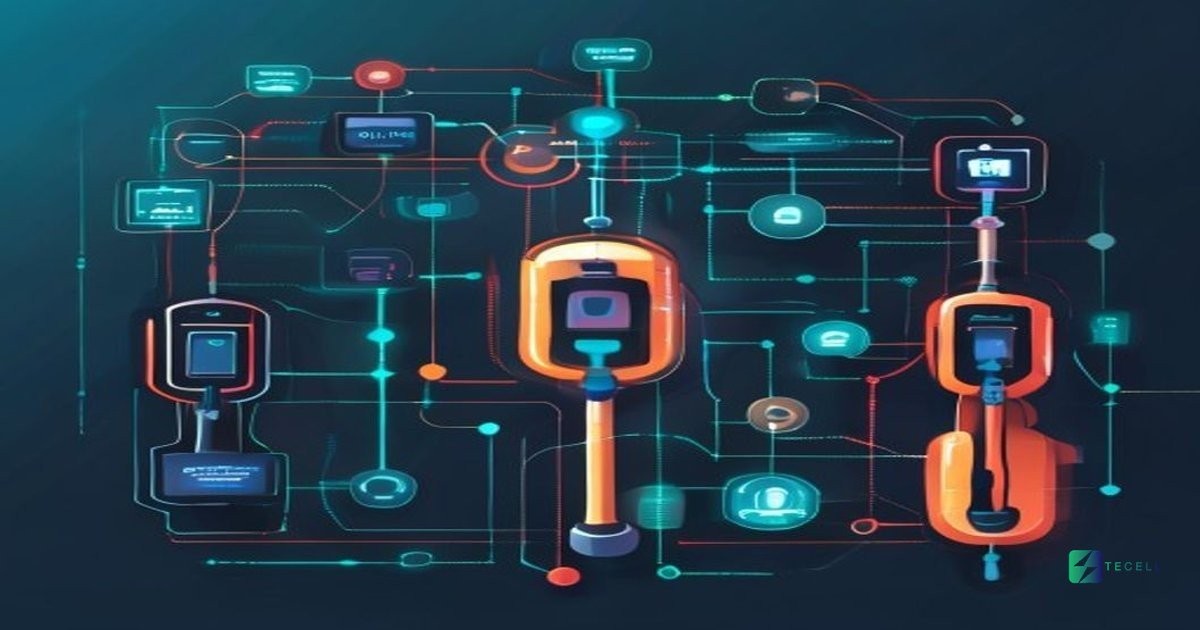
Understanding Charging Network Security at Scale
As EV charging networks expand across cities and countries, the need for robust security becomes more critical. Charging network security at scale is not just about protecting data—it’s about safeguarding the entire infrastructure that powers electric vehicles. This becomes especially complex when managing multi-tenant platforms where different operators, customers, and services interact within the same system.
Multi-tenant EV charging platforms must balance accessibility with security. Each tenant—whether a fleet operator, property manager, or utility company—needs secure access to their data and operations. But the challenge lies in ensuring that one tenant’s access doesn’t compromise another’s. This is where zero-trust architecture comes into play.
Zero-trust principles assume no implicit trust and verify every access request, regardless of location or user. For charging networks, this means implementing strict authentication, authorization, and encryption protocols across all layers of the system. It’s not just a policy—it’s a foundational approach to how systems are designed and operated.
End-to-end encryption ensures that sensitive data, such as payment information or user identities, remains protected from the point of origin to the final destination. This is essential in a multi-tenant environment where data flows between various systems and services.
Why Zero-Trust Architecture Matters for EV Charging Platforms
Traditional security models often rely on a perimeter-based approach. In this model, once a user or device is inside the network, they are trusted. But in the world of EV charging, where systems are distributed and often connected to public networks, this approach is insufficient.
Zero-trust architecture shifts the focus from perimeter-based security to identity-based security. Every access request is verified, and access is granted only after thorough checks. This is particularly important for charging platforms that handle sensitive data like user profiles, payment details, and vehicle telemetry.
For example, a logistics company managing 40 vehicles faces a unique challenge. They need to ensure that their charging data is secure and only accessible to authorized personnel. At the same time, they must allow their drivers to access charging stations without compromising the security of other users or the platform itself.
Implementing zero-trust in this context means that each vehicle and driver is authenticated individually, and access to charging data is controlled through granular permissions. This approach reduces the risk of unauthorized access and data breaches.
Key Components of Zero-Trust in Charging Infrastructure
Zero-trust in charging infrastructure involves several core components. First, identity and access management (IAM) ensures that only verified users can access the system. This includes multi-factor authentication (MFA) and role-based access controls (RBAC).
Second, network segmentation isolates different parts of the system. This prevents a breach in one area from spreading to others. For instance, a breach in the payment processing module should not give access to user profiles or charging logs.
Third, continuous monitoring and analytics help detect anomalies in real-time. If a user suddenly accesses data outside their normal behavior, the system can flag it and take action. This is especially important in multi-tenant environments where many users interact with the same platform.
Finally, secure communication protocols ensure that data is encrypted during transmission. This includes using TLS for network communication and end-to-end encryption for sensitive data like payment information or personal identifiers.
Authentication and Authorization in Multi-Tenant Environments
Authentication and authorization are the backbone of any zero-trust system. In multi-tenant EV charging platforms, each tenant must be able to authenticate their users independently while maintaining a unified security framework.
For example, a property manager may want to allow residents to access charging stations, but not employees from other buildings. This requires a system that can distinguish between different user roles and grant access accordingly.
Implementing strong authentication mechanisms, such as biometrics or hardware tokens, adds an extra layer of security. These methods are more secure than passwords alone and reduce the risk of account takeover.
Authorization policies must also be dynamic and adaptable. As user roles change or new tenants join the platform, the system should automatically adjust access rights without manual intervention.
Network Segmentation and Data Isolation
Network segmentation is a critical component of zero-trust architecture. It ensures that even if one part of the system is compromised, the rest remains secure. In EV charging platforms, this means isolating data related to different tenants or services.
For instance, a charging platform might have separate segments for payment processing, user management, and vehicle telemetry. Each segment is isolated and only accessible to authorized users within that segment.
Data isolation also helps with compliance. Different regions or industries may have specific requirements for how data is stored and processed. Segmentation allows platforms to meet these requirements without exposing unrelated data.
By implementing network segmentation, platforms can reduce the attack surface and limit the impact of potential breaches. This is especially important in multi-tenant environments where a single vulnerability could affect multiple users.
Implementing End-to-End Encryption for Charging Data
End-to-end encryption ensures that data is encrypted from the moment it’s created until it reaches its final destination. This is particularly important for sensitive information like payment data or user identities.
In a multi-tenant charging platform, encryption must be applied at every stage of the data lifecycle. From the initial connection to the charging station, through the transaction process, and into the backend systems, data should remain protected.
For example, when a user initiates a charging session, their payment information should be encrypted before it leaves their device. The same applies to any data shared between the charging station and the platform’s backend.
Implementing end-to-end encryption requires careful planning and integration. It must be seamless for users while providing strong protection for sensitive data. Platforms that prioritize encryption are better positioned to build trust with their users and comply with data protection regulations.
Real-World Scenario: A Fleet Operator’s Security Needs
A logistics company managing 40 vehicles faces a complex security challenge. They need to ensure that their charging data is secure, but they also want to provide easy access to drivers and fleet managers.
The company uses a multi-tenant charging platform that allows them to manage their vehicles and charging sessions in a secure environment. Each driver is authenticated individually, and access to charging data is controlled through role-based permissions.
With zero-trust architecture in place, the platform ensures that only authorized personnel can view or modify charging data. Even if one driver’s account is compromised, it doesn’t affect the security of other users or the platform itself.
Additionally, all data is encrypted end-to-end, from the moment a driver starts a charging session to when the payment is processed. This ensures that sensitive information remains protected throughout the entire process.
Challenges and Solutions in Scaling Security
Scaling security across a large charging network presents unique challenges. As the number of users and charging stations increases, so does the complexity of managing access and protecting data.
One major challenge is maintaining performance while enforcing strict security measures. Users expect fast, seamless access to charging stations. If security checks slow down the process, it can lead to frustration and reduced adoption.
To address this, platforms must optimize their security protocols without sacrificing protection. This includes using efficient authentication methods and automating access controls where possible.
Another challenge is ensuring that all parts of the system are aligned with zero-trust principles. This requires ongoing monitoring and updates to keep up with evolving threats and technologies.
Best Practices for Charging Network Security
Building a secure charging network requires a proactive approach. Here are some best practices to consider:
- Implement strong identity and access management (IAM) with multi-factor authentication (MFA).
- Use network segmentation to isolate different parts of the system.
- Apply end-to-end encryption to all sensitive data.
- Continuously monitor and analyze system behavior for anomalies.
- Regularly update and test security protocols to stay ahead of threats.
These practices help ensure that the platform remains secure as it scales and evolves. They also help build trust with users and stakeholders who rely on the system for their charging needs.
Conclusion: Building Trust Through Security
Charging network security at scale is not just a technical challenge—it’s a business imperative. As EV adoption grows, so does the need for secure, reliable charging infrastructure. Zero-trust architecture and end-to-end encryption are essential tools in this effort.
By implementing these principles, platforms can protect sensitive data, comply with regulations, and build trust with users. The result is a more resilient and secure charging ecosystem that supports the growing demand for electric mobility.
For companies managing multi-tenant platforms, the investment in robust security is not just about compliance—it’s about ensuring that their systems can scale safely and securely. With the right approach, charging networks can be both accessible and secure.
Frequently Asked Questions
What is zero-trust architecture in EV charging?
Zero-trust architecture assumes no implicit trust and verifies every access request. In EV charging, this means that each user or device must be authenticated and authorized before gaining access to the system, regardless of location or previous access history.
How does end-to-end encryption protect charging data?
End-to-end encryption ensures that data is encrypted from the moment it’s created until it reaches its final destination. This protects sensitive information like payment details or user identities from being intercepted or accessed by unauthorized parties.
Why is network segmentation important for multi-tenant platforms?
Network segmentation isolates different parts of a system, preventing a breach in one area from affecting others. For multi-tenant platforms, this ensures that one tenant’s data or access doesn’t compromise another’s.
What are the main challenges in scaling charging network security?
Scaling security involves balancing performance with protection. As the number of users and charging stations grows, platforms must maintain fast access while enforcing strict security measures. This requires optimization and automation.
How can a fleet operator ensure secure charging for their vehicles?
A fleet operator can ensure secure charging by using platforms with zero-trust architecture and end-to-end encryption. These systems provide role-based access controls and protect sensitive data throughout the charging process.
Related Reading
For more on related topics, see: EV Charging Solution | Cloud-Based EV Charging Management.
Further reading: India’s EV Charging Infrastructure: Opportunities and Challenges | Tecell CMS Blog
📣 Join our Telegram channel for EV charging technology insights and product updates.
Also find us on: LinkedIn · X · Bluesky · Mastodon · DEV.to.