
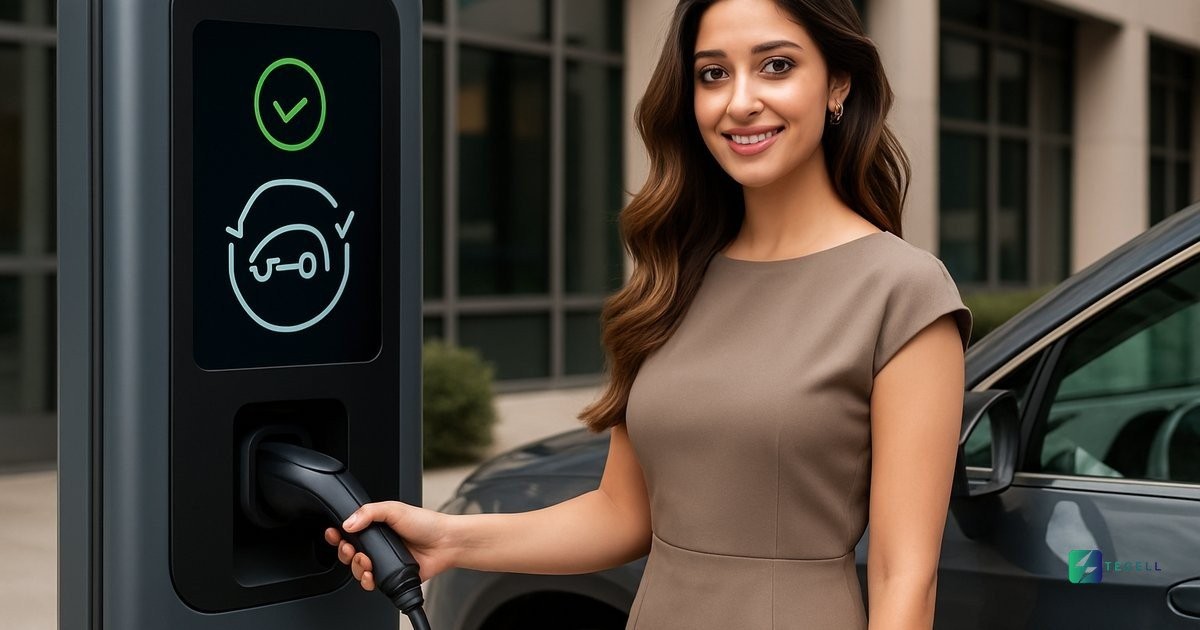
How Saha-Edge Enables Real-Time Cross-Protocol Dynamic Energy Storage Scheduling in Commercial Parking Networks
Commercial parking networks with multiple EV chargers face a complex challenge: balancing energy demand, grid stability, and operational efficiency. When a fleet of vehicles arrives simultaneously, the strain on local power infrastructure can be significant. Saha-Edge’s edge-AI technology addresses this by enabling real-time cross-protocol dynamic energy storage scheduling without relying on cloud connectivity. This approach allows for localized battery management, seamless integration with OCPP 2.0.1, and compliance with IEEE 1547 standards.
Here’s the thing: traditional charging systems often depend on centralized control and cloud-based decision-making. That can lead to delays, increased latency, and potential outages during high-demand periods. Saha-Edge changes the game by processing data locally, making intelligent decisions at the edge of the network. This ensures that charging operations remain responsive and efficient, even when network connectivity is limited or unavailable.
Understanding the Challenge in Multi-Charger Commercial Environments
Commercial parking facilities, such as shopping centers, office complexes, or logistics hubs, often house dozens of EV chargers. These facilities must manage energy consumption across multiple charging points while maintaining grid stability. The challenge becomes even more complex when dealing with different charging protocols, such as CCS, CHAdeMO, or Tesla’s proprietary connector.
For example, a logistics company managing 40 vehicles at a commercial facility might experience sudden surges in charging demand. Without intelligent scheduling, the facility’s electrical system could become overloaded, leading to power outages or equipment damage. Saha-Edge’s edge-AI technology solves this by dynamically allocating energy based on real-time conditions and local battery availability.
How Saha-Edge’s Edge-AI Works in Practice
Saha-Edge operates by embedding AI algorithms directly into the charging infrastructure. This means that decisions about energy distribution, battery charging, and grid interaction are made locally, without waiting for cloud-based processing. The system uses machine learning models trained on historical usage patterns and real-time data to predict and respond to demand fluctuations.
That matters because it reduces latency and increases reliability. In a scenario where a facility has 20 chargers and 15 vehicles are charging simultaneously, Saha-Edge can automatically adjust the power flow to prevent overloading. It also ensures that the facility’s battery storage system is used efficiently, reducing reliance on the main grid during peak hours.
Integration with OCPP 2.0.1 and ChargeSphere
OCPP 2.0.1 is the latest version of the Open Charge Point Protocol, which standardizes communication between EV chargers and charging station management systems. Saha-Edge seamlessly integrates with OCPP 2.0.1, allowing it to communicate with a wide range of charging hardware and software platforms.
ChargeSphere, Tecell’s open roaming and interoperability platform, complements this by connecting charging networks, mobility service providers, and payment ecosystems. Together, these technologies create a robust framework for managing multi-charger environments. For instance, a facility using both Saha-Edge and ChargeSphere can ensure that charging sessions are optimized not only locally but also across the broader network.
Ensuring IEEE 1547 Compliance with Localized Battery Management
IEEE 1547 is a standard that governs the interconnection of distributed energy resources with the electric grid. Compliance with this standard is crucial for facilities that use battery storage systems to manage energy consumption.
Saha-Edge’s localized battery management ensures that these systems operate within the parameters defined by IEEE 1547. This includes managing power flow, voltage regulation, and grid synchronization. By doing so, it helps facilities avoid penalties and maintain grid stability, even when operating with high levels of local energy storage.
Real-World Application: A Commercial Facility’s Energy Optimization
Consider a large office complex with 30 charging stations and a 500 kWh battery storage system. During a typical weekday, the facility experiences moderate charging demand. However, on certain days, a group of employees arrives early with their vehicles fully depleted. Without intelligent scheduling, this could overwhelm the facility’s electrical capacity.
Saha-Edge’s edge-AI monitors the battery levels, charging rates, and grid conditions in real time. It then dynamically schedules charging sessions to ensure that the battery is used efficiently and that the grid is not overloaded. This approach not only prevents outages but also reduces the facility’s energy costs by optimizing the use of stored energy.
Benefits of Localized Energy Scheduling Without Cloud Dependency
One of the key advantages of Saha-Edge’s approach is its independence from cloud connectivity. In environments where network reliability is a concern, this feature ensures that charging operations continue smoothly. It also reduces the risk of data breaches and enhances overall system security.
In practice, this means that even if a facility experiences a network outage, the charging stations can continue to operate based on pre-defined rules and local intelligence. This resilience is particularly important for critical infrastructure, such as hospitals or emergency response centers, where uninterrupted power is essential.
Scalability and Future-Proofing with Saha-Edge
As commercial parking networks grow, so does the complexity of managing energy flow. Saha-Edge’s modular design allows for easy scaling, whether adding more chargers or expanding battery storage capacity. The system’s AI capabilities also evolve over time, learning from new data to improve performance.
This scalability is crucial for facilities that plan to expand their charging infrastructure. It ensures that the system remains effective and efficient, regardless of the number of chargers or the size of the battery storage system. It also supports future developments in EV technology and grid integration.
Conclusion: The Future of Intelligent Charging Infrastructure
Saha-Edge’s edge-AI technology represents a significant advancement in how commercial parking networks manage energy. By enabling real-time cross-protocol dynamic energy storage scheduling without cloud dependency, it provides a reliable, efficient, and secure solution for managing EV charging demand.
With its integration with OCPP 2.0.1 and ChargeSphere, and its compliance with IEEE 1547, Saha-Edge ensures that facilities can operate at peak efficiency while maintaining grid stability. This approach not only addresses current challenges but also prepares for the future of smart charging infrastructure.
Related Reading
For more on related topics, see: Real-Time Dynamic Power Scheduling in EV Charging Networks.
Further reading: EV Charging Energy Management | OCPP Smart Charging CMS | Tecell India
📣 Join our Telegram channel for EV charging technology insights and product updates.
Also find us on: LinkedIn · X · Bluesky · Mastodon.