
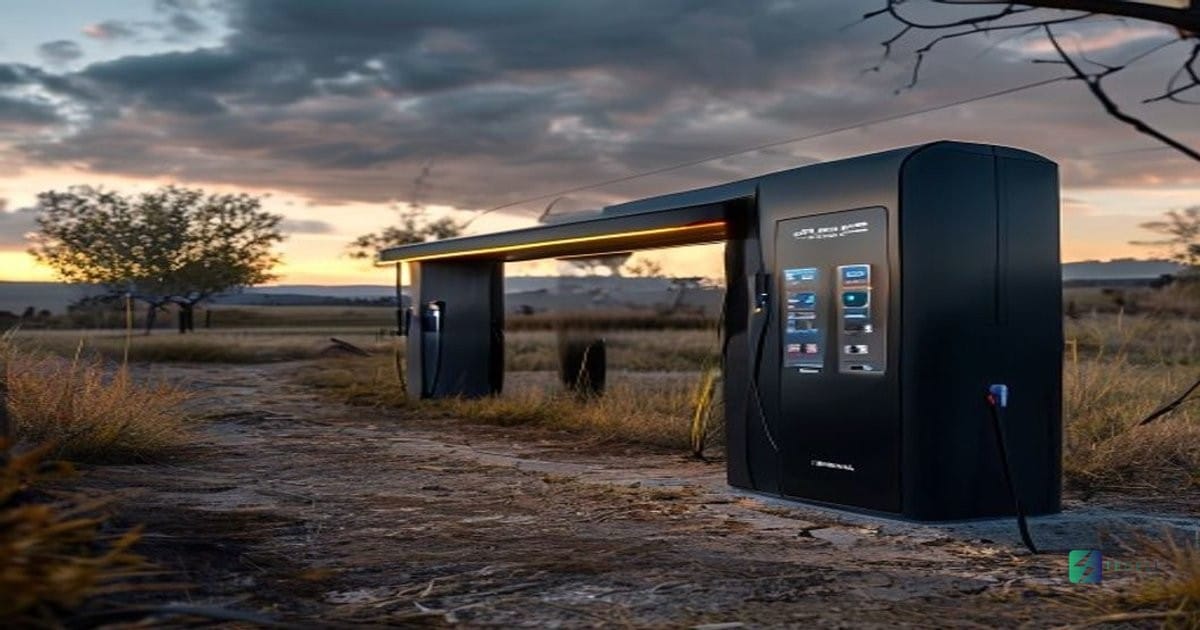
Understanding Edge-Cloud Co-Design for Smart Charging
Edge-Cloud Co-Design for Smart Charging represents a powerful approach to managing EV charging infrastructure in high-density urban environments. This method combines local processing power with cloud-based intelligence to optimize performance. It addresses the core challenge of latency and load balancing that arises when many charging stations operate simultaneously in confined spaces.
By placing computational resources closer to the charging point, this architecture reduces the time it takes for decisions to be made. This is especially important in cities where multiple vehicles are charging at once. The result is a more responsive and efficient system that can handle peak demand without overloading the network.
For example, a logistics company managing 40 vehicles in a downtown area faces frequent delays due to congestion at charging points. With edge-cloud co-design, the system can dynamically adjust power distribution in real time, ensuring that no single station becomes a bottleneck.
This approach also allows for better integration with grid management systems. It enables operators to respond quickly to changes in electricity supply or demand, which is essential for maintaining stability in urban charging networks.
Why Latency Matters in EV Charging Systems
Latency in EV charging systems refers to the delay between when a command is issued and when it is executed. In high-density deployments, even small delays can compound into significant inefficiencies. For instance, if a charging station must wait for cloud-based processing before adjusting its output, that delay can slow down the entire charging process.
Localized AI at the charging point helps reduce this delay. It allows immediate decision-making based on current conditions. This is particularly useful when managing multiple vehicles that may have different charging needs or priorities.
Consider a busy shopping mall with dozens of charging stations. Without localized processing, each station would need to communicate with a central server. That communication overhead can cause bottlenecks during peak hours. With edge computing, each station can make its own decisions, reducing the load on the central system.
Reducing latency also improves user experience. Drivers expect fast, reliable service. When systems respond quickly, it builds trust and satisfaction. This is especially important for commercial deployments where uptime and performance are critical.
How Localized AI Improves Load Balancing
Localized AI plays a key role in load balancing by enabling intelligent distribution of power among charging points. Instead of relying on a central server to make these decisions, each charging point can assess its own capacity and adjust accordingly.
This distributed approach ensures that no single station is overloaded while others remain underutilized. It also allows for more granular control over power allocation. For example, a charging station might prioritize faster charging for vehicles with lower battery levels.
In practice, this means that a fleet operator managing a large number of electric vehicles can ensure that all units are charged efficiently, even during high-demand periods. The system adapts in real time to changing conditions, optimizing for both speed and fairness.
Localized AI also supports predictive capabilities. By analyzing usage patterns, it can anticipate demand and pre-allocate resources. This proactive approach helps prevent congestion before it occurs, making the entire system more resilient.
Real-World Applications in Urban Charging Networks
Urban charging networks face unique challenges due to space constraints and high usage. Edge-Cloud Co-Design for Smart Charging addresses these issues by enabling smarter, more adaptive systems.
A real-world scenario involves a residential complex with 200 charging spots. During evening hours, demand spikes dramatically. Without proper load balancing, the system may struggle to meet demand, leading to long wait times and frustrated users.
With localized AI, each charging point can monitor its own load and communicate with nearby stations to optimize usage. This coordination ensures that all vehicles are served efficiently, even during peak periods.
This kind of deployment is especially valuable for apartment buildings, where space is limited and residents rely on shared infrastructure. The system can balance usage across multiple floors or sections, ensuring equitable access.
Benefits of Edge-Cloud Co-Design for Charging Operators
Charging operators benefit significantly from Edge-Cloud Co-Design for Smart Charging. It reduces the burden on central servers, which can become overwhelmed during high-traffic periods. This leads to more stable and predictable performance.
Operators also gain better control over their infrastructure. They can monitor and manage individual charging points more effectively, identifying issues before they escalate. This proactive approach improves maintenance and reduces downtime.
Additionally, the system supports scalability. As more charging points are added, the edge-cloud architecture can expand without requiring major overhauls to the central infrastructure. This makes it easier to grow a network over time.
The integration of localized AI also enhances security. By processing sensitive data locally, operators can reduce the risk of data breaches. This is particularly important in commercial and public deployments where privacy is a concern.
Technical Considerations and Implementation
Implementing Edge-Cloud Co-Design for Smart Charging requires careful planning. The system must balance local processing capabilities with cloud-based analytics and control. This involves selecting appropriate hardware and software components.
Hardware choices include edge devices that can handle real-time processing while maintaining connectivity to the cloud. These devices must be robust enough to operate in various environmental conditions, especially in outdoor installations.
Software integration is equally important. The system needs to support protocols like OCPP and OCPI, which are essential for interoperability. It must also be able to communicate seamlessly with existing charging infrastructure.
Deployment considerations include network reliability and data synchronization. Ensuring that local decisions align with broader operational goals requires robust communication channels. This is especially true when managing large-scale networks across multiple locations.
Future Trends and Scalability
As EV adoption grows, so does the need for smarter charging solutions. Edge-Cloud Co-Design for Smart Charging is well-positioned to meet this demand. It offers a scalable framework that can adapt to changing needs.
Future developments may include more advanced AI models that can predict usage patterns with greater accuracy. These models could further optimize load balancing and energy distribution.
Integration with smart grid technologies is another area of growth. As grids become more intelligent, charging systems will need to respond to real-time energy availability and pricing. Edge-Cloud Co-Design supports this by enabling flexible, responsive systems.
Scalability remains a key advantage. Whether deploying a few charging points or hundreds, the architecture can accommodate growth. This makes it ideal for both small-scale and enterprise-level implementations.
FAQ
- What is Edge-Cloud Co-Design for Smart Charging? It is a hybrid architecture that combines local processing with cloud-based intelligence to manage EV charging systems more efficiently.
- How does localized AI reduce latency in charging systems? By making real-time decisions at the charging point, it eliminates delays caused by communication with central servers.
- What are the benefits of using Edge-Cloud Co-Design in urban deployments? It improves load balancing, reduces congestion, and enhances system responsiveness in high-density areas.
- Can this approach be scaled for large networks? Yes, the architecture supports growth from small installations to large, multi-site deployments.
- What technical requirements are needed for implementation? It requires edge devices capable of local processing and reliable communication with cloud services.
Related Reading
For more on related topics, see: EV Charging Solution | Cloud-Based EV Charging Management.
Further reading: UnityCharge Pricing – EV Charging Plans
📣 Join our Telegram channel for EV charging technology insights and product updates.
Also find us on: LinkedIn · X · Bluesky · Mastodon · DEV.to.