
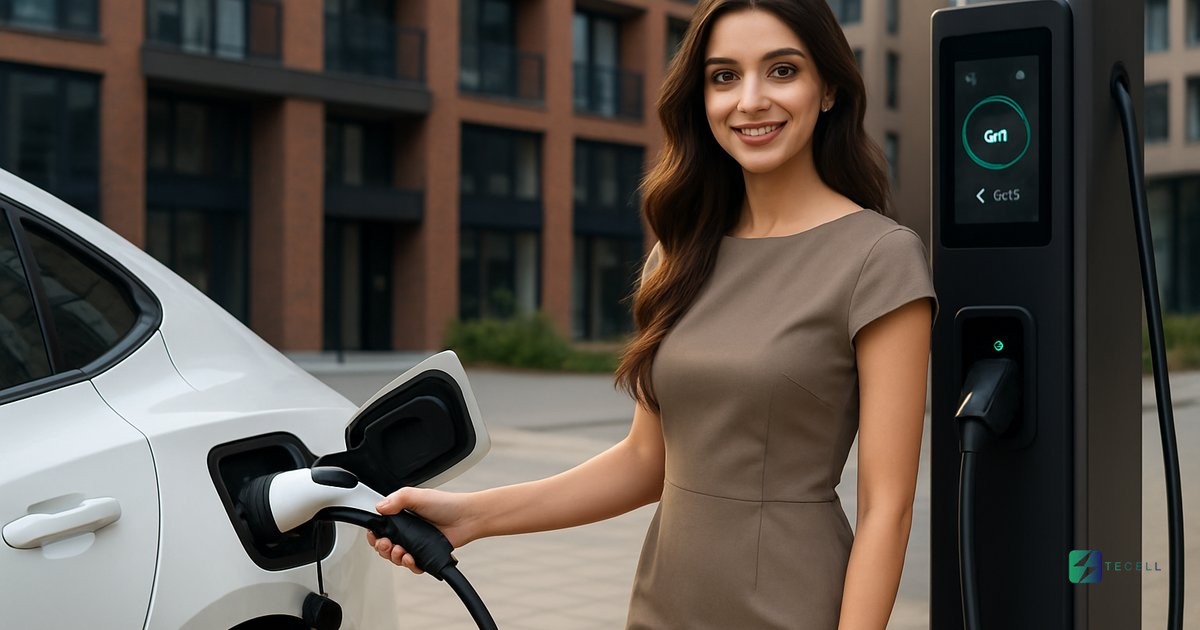
Understanding Plug & Charge in Multi-Tenant EV Charging Environments
Plug & Charge represents a significant shift in how electric vehicle users interact with charging infrastructure. Unlike traditional authentication methods that require users to log in via an app or card, Plug & Charge allows users to simply plug in and start charging. This technology is especially valuable in multi-tenant environments such as apartment complexes, office buildings, and shared parking facilities. The underlying standard, ISO 15118, enables secure, seamless transactions without manual intervention.
For property managers and facility operators, this means less friction for tenants and residents. It also reduces the need for dedicated support staff to assist with charging access. In environments where multiple users share the same charging points, Plug & Charge ensures that each user can access the system without delays or confusion.
Here’s the thing: traditional authentication methods often involve a series of steps that can slow down the charging process. Users must open an app, enter credentials, and sometimes wait for confirmation. Plug & Charge eliminates these steps by authenticating the vehicle directly through digital certificates stored in the EV’s onboard unit.
This approach is particularly beneficial in high-density areas where charging stations are shared among many users. It streamlines the user experience and reduces the potential for disputes or access issues.
How ISO 15118 Enables Plug & Charge Functionality
ISO 15118 is the international standard that defines the communication between electric vehicles and charging stations. It specifies how vehicles and charging infrastructure exchange information, including authentication, payment, and charging parameters. This standard supports Plug & Charge by enabling secure, automated communication between the EV and the charging station.
The standard uses digital certificates to authenticate both the vehicle and the charging station. These certificates are stored in the vehicle’s embedded system and are used to establish trust without requiring user input. This process is known as ‘certificate-based authentication’ and is a core component of Plug & Charge.
That matters because it removes the need for users to interact with a charging station’s interface. Instead, the system automatically recognizes the vehicle and initiates the charging session. This is especially useful in environments where users may not be familiar with the charging infrastructure or may be in a hurry.
In practice, this means that a user can simply connect their EV to a charging station and begin charging immediately. No app login, no card swipe, no manual entry. The system handles everything behind the scenes.
Traditional Authentication Methods and Their Limitations
Traditional authentication methods for EV charging typically involve a user interface or app-based login. Users must register with a charging network, download an app, and often link their payment methods. These systems work well for individual users but can become cumbersome in multi-tenant environments.
For example, a logistics company managing 40 vehicles faces challenges when each driver must log in separately. This can lead to delays, confusion, and increased administrative overhead. Traditional systems also require users to remember login details or carry physical cards, which can be lost or forgotten.
The catch is that these systems often rely on centralized databases or cloud services. If connectivity is lost, users may be unable to access charging stations. This is a significant limitation in environments where network reliability is not guaranteed.
Additionally, traditional systems often require users to manually select charging sessions or confirm payments. This can slow down the process and create bottlenecks, especially during peak usage times.
Benefits of Plug & Charge in Multi-Tenant Environments
Plug & Charge offers several advantages in multi-tenant settings. First, it reduces the administrative burden on facility managers. There’s no need to manage user accounts or track access permissions. The system handles authentication automatically, based on the vehicle’s digital certificate.
Second, it improves user satisfaction. Residents and tenants can charge their vehicles without any additional steps. This is especially important in shared spaces where users may not be tech-savvy or may be in a hurry.
Third, Plug & Charge enhances security. Since authentication is handled through digital certificates, there’s no risk of stolen credentials or unauthorized access. The system also supports secure payment methods, ensuring that transactions are handled safely.
Finally, it supports scalability. As more users join a facility, the system doesn’t require additional configuration or user management. The Plug & Charge standard ensures that new vehicles can be added seamlessly.
Challenges and Considerations for Implementation
While Plug & Charge offers many benefits, it also presents some challenges. One of the main issues is the need for compatible hardware. Not all charging stations support ISO 15118, and upgrading older systems can be costly.
Another challenge is ensuring that all vehicles in a multi-tenant environment are equipped with compatible systems. Some older EVs may not support Plug & Charge, which can create inconsistencies in user experience.
Additionally, the initial setup can be complex. Facility managers must ensure that digital certificates are properly configured and that the charging infrastructure is compatible with the standard. This may require technical expertise or external support.
However, the long-term benefits often outweigh these initial challenges. Once implemented, Plug & Charge systems can significantly improve the efficiency and user experience of charging infrastructure.
Real-World Scenario: A Multi-Tenant Apartment Complex
Consider a large apartment complex with 200 residents and 50 charging stations. Each resident owns an EV and needs access to charging during the day. Traditional authentication methods would require residents to log in via an app or card, potentially causing delays and confusion.
With Plug & Charge, residents simply plug in their vehicles and start charging. The system automatically authenticates the vehicle and begins the session. This eliminates the need for residents to remember login details or carry cards. It also reduces the burden on property management staff, who no longer need to assist with access issues.
The complex can also benefit from improved security and reduced administrative overhead. Since authentication is handled automatically, there’s less risk of unauthorized access or disputes over charging sessions.
This scenario illustrates how Plug & Charge can transform the user experience in shared environments. It’s not just about convenience—it’s about creating a seamless, secure, and scalable charging solution.
Future Trends and Developments in Plug & Charge
As EV adoption continues to grow, Plug & Charge is expected to become more widespread. Newer charging stations are increasingly supporting the ISO 15118 standard, making it easier for users to adopt this technology.
Developers are also working on improvements to the standard, including better integration with smart grid systems and enhanced security features. These developments will further enhance the user experience and make Plug & Charge even more attractive for multi-tenant environments.
Additionally, as more EV manufacturers adopt the standard, compatibility will improve. This means that users will be able to charge at any compatible station without needing to worry about authentication issues.
The future of Plug & Charge lies in its ability to integrate with broader smart infrastructure systems. As charging networks become more connected, the technology will play a key role in enabling seamless, automated charging experiences.
FAQ
- What is Plug & Charge in EV charging? Plug & Charge is a method of authentication that allows electric vehicle users to start charging by simply plugging in their vehicle. It uses digital certificates to authenticate the vehicle automatically, eliminating the need for manual login or card entry.
- How does ISO 15118 support Plug & Charge? ISO 15118 is the international standard that defines how EVs and charging stations communicate. It enables Plug & Charge by providing a secure framework for vehicle authentication and transaction handling.
- What are the benefits of Plug & Charge in multi-tenant environments? Plug & Charge reduces administrative burden, improves user satisfaction, enhances security, and supports scalability. It allows users to charge without manual steps, making it ideal for shared spaces.
- Are all charging stations compatible with Plug & Charge? Not all charging stations currently support Plug & Charge. Compatibility depends on the hardware and software used. Newer systems are increasingly adopting the ISO 15118 standard.
- Can older EVs use Plug & Charge? Older EVs may not support Plug & Charge. Compatibility depends on the vehicle’s onboard systems and whether they support the ISO 15118 standard. Newer models are more likely to be compatible.
Related Reading
For more on related topics, see: Plug & Charge: Simplifying the EV Charging Payment Experience.
Further reading: EV Charge Management Software Global | Europe, UK, US | Tecell CMS
📣 Join our Telegram channel for EV charging technology insights and product updates.
Also find us on: LinkedIn · X · Bluesky · Mastodon · DEV.to.