
Understanding Hierarchical Charging Network Topologies
Hierarchical charging network topologies represent a structured approach to scaling EV charging infrastructure from single-site deployments to multi-region fleet operations. This method organizes charging points into layers, each with distinct roles and responsibilities. The top layer typically manages global policies, while lower layers handle local operations. This design allows for centralized control without sacrificing operational flexibility.
For fleet operators, this architecture provides a clear path to manage hundreds or even thousands of charging points across multiple locations. It ensures consistent policies, real-time monitoring, and efficient resource allocation. The key is balancing centralized oversight with local autonomy to maintain performance and responsiveness.
Implementing this structure requires careful planning and integration of software platforms that support multi-level control. It’s not just about adding more chargers—it’s about organizing them in a way that scales with business needs. This approach becomes essential as companies grow beyond simple point-to-point charging setups.
Real-world applications show that companies using hierarchical topologies can reduce operational complexity while improving service availability. A logistics company managing 40 vehicles across three facilities might find that a hierarchical system allows them to monitor all chargers from one dashboard while still enabling local teams to make quick decisions.
Key Components of a Hierarchical Charging Network
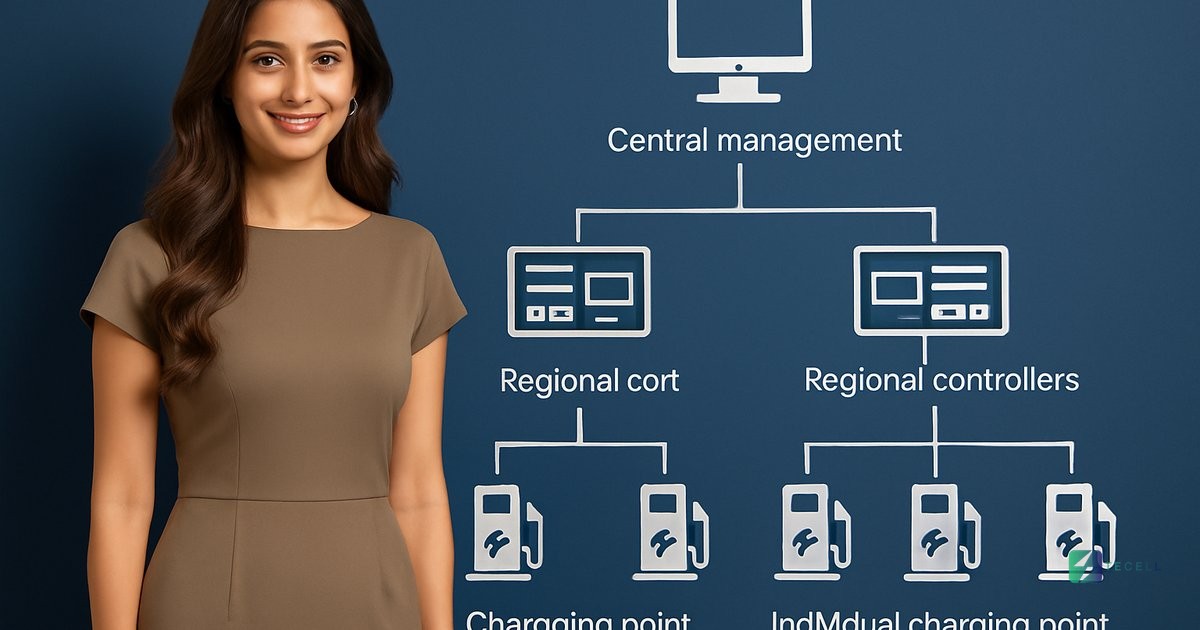
The foundation of any hierarchical charging network lies in its layered architecture. At the highest level, a central management system oversees all operations. This system enforces policies, tracks usage, and provides analytics across the entire network. It acts as the brain of the operation, making strategic decisions based on data and business requirements.
Below the central layer, regional or site-level controllers manage specific areas. These controllers handle local configurations, coordinate charging schedules, and respond to immediate needs. They communicate with the central system to report status and receive updated instructions. This division of labor ensures that high-level decisions don’t slow down local operations.
At the lowest level, individual charging points operate autonomously within their defined parameters. They execute commands from higher layers, monitor their own performance, and report back to the system. This setup allows for granular control while maintaining overall network integrity. Each component must be designed to work seamlessly with others to avoid bottlenecks or communication failures.
Software platforms like ChargeSphere and CMS play a critical role in enabling this structure. They provide the tools needed to configure, monitor, and manage each layer effectively. These systems must support both centralized and distributed control models to accommodate different operational needs.
Benefits of Hierarchical Charging Network Design
One major advantage of hierarchical charging network topologies is improved scalability. As organizations expand, they can add new layers or nodes without overhauling the entire system. This modular approach makes it easier to integrate new charging points or facilities into existing operations.
Centralized control also enhances operational efficiency. Managers can view all charging activity from a single interface, making it easier to identify issues, optimize usage, and plan for future needs. This visibility is especially valuable when dealing with large numbers of vehicles and charging points.
Security and compliance are also strengthened through this design. Policies can be enforced consistently across all levels, ensuring that safety standards and regulatory requirements are met. It also simplifies audits and reporting, as data flows through clearly defined channels.
Another benefit is the ability to implement dynamic pricing or load management strategies. Central systems can adjust rates or power allocation based on real-time conditions, helping to balance demand and reduce strain on the grid. This flexibility is crucial for fleet operators who need to optimize costs and performance.
Challenges in Implementing Hierarchical Systems
Designing and deploying a hierarchical charging network requires significant upfront planning. Organizations must determine how to divide responsibilities between layers and ensure that communication protocols are robust enough to handle large volumes of data.
Integration with existing infrastructure can be complex. Legacy systems may not support the required communication standards or may need upgrades to work effectively within the new architecture. Compatibility issues can delay deployment and increase costs.
Training staff to manage a multi-layered system is another challenge. Operators need to understand how each layer functions and how changes in one area affect others. This requires ongoing education and support to maintain system effectiveness.
Network reliability is critical in hierarchical systems. If the central layer fails, it can impact operations across all connected nodes. Redundancy and backup systems must be built into the design to prevent cascading failures. This adds complexity but is necessary for mission-critical applications.
Best Practices for Scaling Charging Networks
Start with a clear understanding of your operational needs. Determine how many charging points you’ll need and how they’ll be distributed across locations. This helps define the appropriate number of layers and the scope of each one.
Choose software platforms that support multi-level control. Systems like ChargeSphere offer the flexibility needed to manage complex hierarchies. They should provide tools for configuration, monitoring, and analytics at every level.
Plan for growth from the beginning. Design your network with expansion in mind, so adding new charging points or facilities doesn’t require a complete redesign. Modular components make it easier to scale without disrupting current operations.
Test thoroughly before full deployment. Simulate various scenarios to ensure that communication between layers works as expected. This includes testing under high load conditions and verifying that failover mechanisms function correctly.
Real-World Application: Fleet Charging Case Study
A logistics company managing 40 vehicles across three facilities faced challenges with inconsistent charging schedules and limited visibility into usage patterns. They implemented a hierarchical charging network to address these issues.
The central system managed global policies and provided analytics across all sites. Regional controllers handled local operations, including scheduling and responding to immediate needs. Individual chargers operated autonomously within their defined parameters.
This setup allowed the company to optimize charging times, reduce peak demand, and improve vehicle availability. They could monitor all charging points from one dashboard while still enabling local teams to make quick decisions. The result was better resource utilization and improved operational efficiency.
The company also benefited from enhanced compliance reporting and the ability to implement dynamic pricing strategies. This flexibility helped them reduce costs while maintaining service quality.
Future Trends in Hierarchical Charging Networks
As EV adoption grows, hierarchical charging networks will become even more important. The increasing number of charging points and vehicles will require more sophisticated management systems to maintain efficiency and reliability.
Integration with smart grid technologies will enhance the capabilities of these networks. Real-time data from the grid can inform charging decisions, helping to balance load and reduce costs. This connection also supports renewable energy integration and sustainability goals.
Artificial intelligence and machine learning will play a larger role in optimizing network performance. These technologies can predict demand, identify potential issues, and automatically adjust configurations to improve efficiency.
Standards and protocols will continue to evolve, making it easier to integrate new systems and maintain compatibility. Organizations should stay informed about these developments to ensure their networks remain current and effective.
Technical Considerations for Implementation
Communication protocols are essential for maintaining connectivity between layers. OCPP and OCPI standards provide the foundation for interoperability. These protocols must be supported at every level to ensure seamless data exchange.
Security measures must be implemented at all layers to protect sensitive data and prevent unauthorized access. Encryption, authentication, and monitoring systems help maintain network integrity and compliance with regulations.
Redundancy planning is crucial for maintaining uptime. Backup systems should be in place to handle failures in any layer without disrupting overall operations. This includes both hardware and software redundancy.
Performance monitoring tools help identify bottlenecks and optimize system efficiency. These tools should provide real-time insights into network health and performance metrics.
Conclusion
Hierarchical charging network topologies offer a powerful solution for scaling EV charging infrastructure from single sites to multi-region operations. By organizing charging points into distinct layers, organizations can achieve centralized control while maintaining operational flexibility.
This approach is particularly valuable for fleet operators who need to manage large numbers of vehicles and charging points. It provides the tools needed to optimize performance, reduce costs, and ensure compliance with regulations.
Successful implementation requires careful planning, appropriate software platforms, and ongoing management. Organizations that invest in this architecture can expect improved efficiency, better resource utilization, and enhanced operational capabilities.
As the EV landscape continues to evolve, hierarchical networks will play an increasingly important role in supporting scalable, reliable charging infrastructure. Companies that adopt this approach early will be better positioned to meet future demands and take advantage of emerging technologies.
Related Reading
For more on related topics, see: Chargepoint Alliance – EV Charging Interoperability.
Further reading: India’s EV Charging Infrastructure: Opportunities and Challenges | Tecell CMS Blog
📣 Join our Telegram channel for EV charging technology insights and product updates.
Also find us on: LinkedIn · X · Bluesky · Mastodon · DEV.to.