
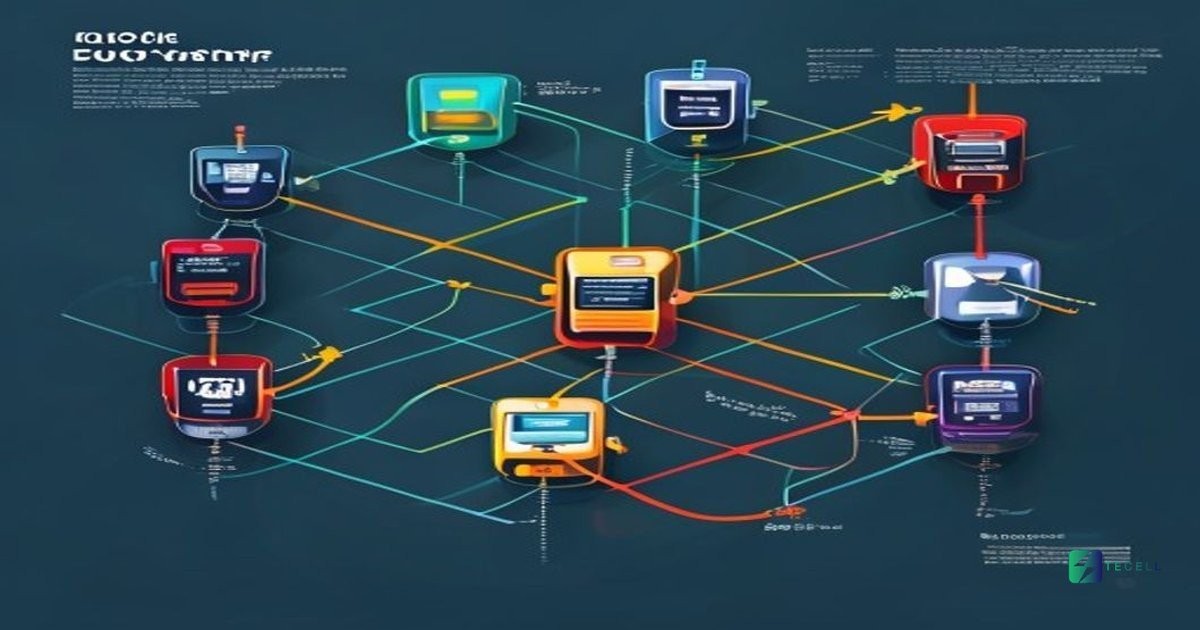
Understanding Agentic AI in EV Charging Systems
Agentic AI represents a paradigm shift in how electric vehicle charging networks operate. Unlike traditional systems that rely on centralized control, agentic AI allows individual charging units to make decisions autonomously. This approach is particularly valuable in environments where real-time responsiveness and local processing power are essential. The technology enables systems to adapt to changing conditions without waiting for cloud-based instructions.
For charging infrastructure, this means that each node in a network can respond to load demands, energy availability, and user behavior patterns instantly. This autonomy becomes critical when network connectivity is intermittent or when rapid adjustments are needed to maintain optimal performance. The result is a more resilient and efficient charging ecosystem.
At the core of this innovation lies the ability to process data locally while still maintaining coordination across the broader network. This balance between local intelligence and global awareness is what makes agentic AI so powerful in EV charging applications.
Real-world scenarios highlight the importance of such capabilities. A logistics company managing 40 vehicles faces challenges when multiple chargers must coordinate during peak hours. With agentic AI, each charger can independently adjust its output based on real-time grid conditions and vehicle needs, reducing bottlenecks and improving overall throughput.
How Saha-Edge Implements Agentic AI for Charging Networks
Saha-Edge, Tecell’s edge computing platform, is designed specifically to support agentic AI in EV charging environments. It brings computational power directly to the charging point, enabling real-time decision-making without dependence on cloud connectivity. This architecture ensures that charging operations continue smoothly even during network outages or high-latency conditions.
The platform integrates seamlessly with existing charging infrastructure, allowing operators to upgrade their systems incrementally. It supports a wide range of protocols and standards, including OCPP and OCPI, ensuring compatibility with various charging networks and service providers.
By embedding AI capabilities at the edge, Saha-Edge enables predictive maintenance, dynamic load balancing, and intelligent energy management. These features are crucial for maintaining high availability and performance in complex charging environments.
Operators benefit from reduced latency and improved reliability. For instance, when a charger detects an anomaly in its operation, it can initiate corrective actions immediately, rather than waiting for a remote system to detect and respond to the issue.
Autonomous Load Management Through Edge-AI
One of the most significant advantages of agentic AI in EV charging is its ability to manage load dynamically. Traditional systems often struggle with balancing demand across multiple charging points, especially during peak usage times. Agentic AI addresses this by enabling each charger to assess local conditions and adjust accordingly.
For example, if a charging station detects that the local grid is approaching capacity, it can automatically reduce power output or delay non-critical charging sessions. This prevents overloading and maintains stable operation across the entire network.
This kind of autonomous behavior is particularly useful in commercial and fleet environments where consistent access to charging is essential. A facility with 200 charging points can rely on each unit to make intelligent decisions based on real-time data, ensuring that no single point becomes a bottleneck.
Moreover, the system can learn from historical patterns and user behavior to optimize performance over time. This adaptive learning capability enhances efficiency and reduces the need for manual intervention.
Predictive Maintenance Without Cloud Dependency
Predictive maintenance is another area where agentic AI excels. By analyzing sensor data and operational logs, edge-AI systems can identify potential issues before they escalate into failures. This proactive approach minimizes downtime and reduces maintenance costs.
With Saha-Edge, each charging unit can monitor its own health and performance metrics. If an anomaly is detected, the system can trigger alerts or initiate self-diagnostic routines. This capability is especially valuable in remote or hard-to-access locations where physical inspections are challenging.
Operators benefit from a more reliable and cost-effective maintenance schedule. Instead of following a fixed routine, they can respond to actual conditions, ensuring that resources are used efficiently.
For instance, a utility company managing a large network of public chargers can deploy predictive maintenance strategies that reduce the frequency of unplanned outages. This not only improves user satisfaction but also enhances the overall reputation of the charging infrastructure.
Benefits of Local Intelligence in EV Charging
Local intelligence, powered by agentic AI, offers several distinct advantages over cloud-based solutions. First, it reduces latency in decision-making, which is crucial for real-time operations. Second, it enhances security by minimizing data transmission over networks. Third, it increases resilience by ensuring that systems continue to function even when connectivity is lost.
These benefits are particularly important in environments where reliability is paramount. For example, in urban settings with high-density charging infrastructure, local processing ensures that all units can respond quickly to changing conditions without relying on a central server.
Additionally, local intelligence supports scalability. As networks grow, new charging points can be added without requiring significant upgrades to the central infrastructure. Each new unit brings its own processing power and decision-making capabilities.
The result is a more distributed and robust system that can handle increasing complexity without sacrificing performance or reliability.
Challenges and Considerations for Agentic AI Adoption
While agentic AI presents many opportunities, it also introduces challenges that must be carefully managed. One key consideration is ensuring that local decisions align with broader network objectives. This requires robust communication protocols and coordination mechanisms.
Another challenge is the complexity of training AI models for edge devices. These systems must be lightweight enough to run on hardware with limited computational resources while still delivering accurate insights.
Operators must also consider the cost of implementing such systems. While the long-term benefits are clear, the initial investment in hardware and software can be significant. However, the potential for improved efficiency and reduced maintenance costs often justifies this expense.
Finally, ongoing support and updates are essential for maintaining the effectiveness of agentic AI systems. Regular software updates ensure that models remain accurate and that new features can be deployed as needed.
Future Outlook for Agentic AI in EV Infrastructure
The future of agentic AI in EV charging is promising. As technology advances, we can expect even more sophisticated decision-making capabilities. These systems will become better at predicting demand, optimizing energy use, and integrating with renewable energy sources.
Moreover, the growing adoption of smart grid technologies will further enhance the value of edge-AI systems. As grids become more intelligent and responsive, charging networks will be able to participate more effectively in grid management and energy trading.
For operators, this means that investing in agentic AI today positions them for long-term success. The systems will continue to evolve and improve, offering greater value over time.
Ultimately, the goal is to create charging networks that are not only efficient and reliable but also intelligent and adaptive. Agentic AI is a key step toward achieving that vision.
Related Reading
For more on related topics, see: Edge AI for EV Charging Infrastructure Predictive Maintenance.
Further reading: Understanding the EV Charging Ecosystem: Who’s Who in Electric Vehicle Charging | Tecell CMS Blog
📣 Join our Telegram channel for EV charging technology insights and product updates.
Also find us on: LinkedIn · X · Bluesky · Mastodon · DEV.to.