Understanding OCPP 2.0.1 in Multi-Protocol EV Charging Environments
When electric vehicle (EV) charging networks span multiple providers and protocols, managing session handover becomes a complex challenge. OCPP 2.0.1, the latest version of the Open Charge Point Protocol, introduces significant improvements that allow for secure, real-time cross-network session handover. This capability is especially critical in environments where multiple charging networks coexist, such as urban centers or commercial hubs. The protocol’s enhanced features ensure that users can seamlessly transition between networks without losing session data or experiencing service interruptions.
For a logistics company managing 40 vehicles across different charging networks, this means uninterrupted operations. If one network experiences downtime or capacity constraints, the system can automatically route vehicles to an alternative provider without requiring manual intervention. This level of automation is made possible by OCPP 2.0.1’s improved handling of session data and communication between charge points and central systems.
OCPP 2.0.1 builds upon its predecessor by offering better support for ISO 15118 compliance, which is essential for secure, plug-and-play charging. It also enhances the ability to synchronize data locally, reducing dependency on cloud connectivity. This is particularly valuable in remote or low-connectivity areas where real-time communication with central servers may not always be feasible.
By enabling localized data synchronization, OCPP 2.0.1 ensures that charging sessions remain consistent and secure even when offline. This is a key advancement for operators who need to maintain service continuity under varying network conditions.
Key Features of OCPP 2.0.1 for Session Handover
OCPP 2.0.1 introduces several key features that support secure, real-time session handover. These include enhanced message handling, improved security mechanisms, and better integration with local systems. The protocol now supports more granular control over charging sessions, allowing operators to manage complex scenarios with greater precision.
One of the most significant improvements is the protocol’s ability to handle session data locally. This means that even if a charge point loses connection to the central server, it can still maintain session integrity and continue operations. This is especially useful in environments where network reliability is inconsistent.
The protocol also supports dynamic session management, which allows for real-time adjustments based on network availability, user preferences, or charging demand. This flexibility is crucial for operators who manage large fleets or serve high-traffic locations.
For example, a fleet operator might use OCPP 2.0.1 to automatically switch vehicles to a different charging network if one location becomes congested. The system can make these decisions in real time, ensuring that vehicles are always charged efficiently and without delay.
Localized Data Synchronization in OCPP 2.0.1
Localized data synchronization is a core feature of OCPP 2.0.1 that allows charge points to maintain session data independently. This capability is essential for environments where cloud connectivity is unreliable or unavailable. By storing session data locally, charge points can continue to operate and provide accurate billing information even during network outages.
This approach reduces the dependency on constant cloud communication, which is a common limitation in older versions of OCPP. It also enhances security by minimizing the exposure of sensitive data to external networks. Local storage ensures that session details, such as charging start and end times, energy consumed, and payment information, remain protected.
For a commercial charging station, localized data synchronization means that even if the internet connection is lost, the system can still complete a charging session and provide accurate records. This is particularly important for operators who need to ensure compliance with regulatory requirements or provide detailed reports to customers.
Operators can also use this feature to implement offline charging policies. For instance, a charging network might allow users to start a session without immediate cloud verification, deferring the final confirmation until connectivity is restored. This improves user experience and operational flexibility.
ISO 15118 Compliance and OCPP 2.0.1
ISO 15118 is a standard for vehicle-to-grid (V2G) communication that ensures secure, plug-and-play charging. OCPP 2.0.1 supports this standard, enabling seamless integration with V2G-capable vehicles. This compatibility is crucial for future-proofing charging infrastructure and supporting advanced charging scenarios.
With ISO 15118 compliance, OCPP 2.0.1 allows for secure communication between the vehicle, the charging station, and the central system. This ensures that charging sessions are authenticated and that payment information is handled securely. It also enables features like dynamic pricing and energy management that are essential for smart charging networks.
For a utility company deploying a smart charging network, ISO 15118 compliance ensures that the system can integrate with existing grid management tools. This allows for better load balancing and more efficient use of renewable energy sources. The protocol’s support for V2G also opens up opportunities for vehicle-to-grid services, where EVs can contribute energy back to the grid during peak demand.
Operators who implement OCPP 2.0.1 with ISO 15118 support are better positioned to meet evolving regulatory requirements and customer expectations. It also provides a foundation for future innovations in EV charging technology.
Real-Time Cross-Network Session Handover
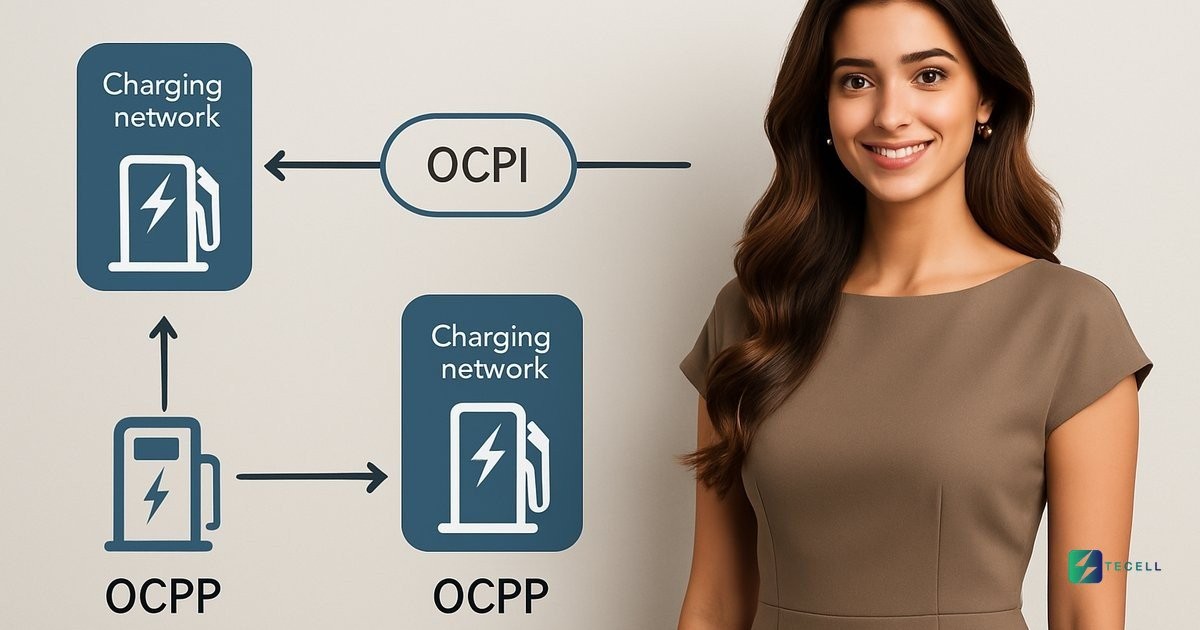
Real-time cross-network session handover is a critical capability for multi-provider charging environments. OCPP 2.0.1 enables this by providing a standardized way for charge points to communicate session data and status updates across different networks. This ensures that users can switch between providers without losing session continuity.
Consider a scenario where a user is charging at a public station and the network becomes congested. With OCPP 2.0.1, the system can automatically redirect the user to an alternative charging point within the same network or a partner network. The session data is transferred seamlessly, and the user can continue charging without interruption.
This feature is particularly valuable for fleet operators who manage multiple vehicles across different charging networks. It allows for dynamic load balancing and ensures that vehicles are always charged efficiently, regardless of network availability or capacity.
For infrastructure providers, real-time session handover also improves customer satisfaction. Users no longer need to manually switch networks or worry about session loss. The system handles these transitions automatically, making the charging experience more reliable and user-friendly.
Benefits for Charge Point Operators
Charge Point Operators (CPOs) benefit significantly from OCPP 2.0.1’s enhanced session management capabilities. The protocol’s support for localized data synchronization and real-time handover reduces operational complexity and improves service reliability. CPOs can manage multiple networks more effectively, ensuring that users always have access to charging services.
For example, a CPO managing a network of charging stations in a metropolitan area can use OCPP 2.0.1 to monitor and control sessions across different providers. If one network experiences issues, the system can automatically reroute users to alternative stations, minimizing service disruption.
The protocol also supports better analytics and reporting. CPOs can track session data, user behavior, and network performance in real time. This information is valuable for optimizing operations, identifying bottlenecks, and improving customer experience.
Additionally, OCPP 2.0.1’s improved security features help protect sensitive data and ensure compliance with industry standards. This is especially important for operators who handle large volumes of transactions and personal information.
Challenges and Considerations
While OCPP 2.0.1 offers many advantages, implementing it requires careful planning and technical expertise. Operators must ensure that their systems are compatible with the new protocol and that all components are properly configured. This may involve upgrading hardware or software, which can be a significant investment.
Another challenge is the complexity of managing multiple networks with different protocols. Even with OCPP 2.0.1, operators must still navigate differences in how various providers handle session data and communication. This requires robust integration tools and ongoing monitoring.
Security remains a key consideration. While OCPP 2.0.1 improves security, operators must still implement additional safeguards to protect against unauthorized access or data breaches. Regular updates and monitoring are essential to maintain a secure environment.
Finally, training staff to use the new features effectively is crucial. Operators who are not familiar with OCPP 2.0.1 may struggle to take full advantage of its capabilities. Investing in staff education and support can help ensure successful implementation.
Conclusion
OCPP 2.0.1 represents a significant step forward in EV charging technology, particularly in multi-protocol environments. Its support for secure, real-time session handover, localized data synchronization, and ISO 15118 compliance makes it a powerful tool for operators managing complex charging networks. By enabling seamless transitions between providers and maintaining session integrity, the protocol enhances user experience and operational efficiency.
For operators who want to stay ahead of the curve, adopting OCPP 2.0.1 is a strategic move. It provides the foundation for scalable, secure, and intelligent charging infrastructure that can adapt to evolving needs. Whether managing a small fleet or a large public network, the protocol’s features offer real value in today’s dynamic EV landscape.
Related Reading
For more on related topics, see: Protocol-Agnostic Charging Session Layer for EV Infrastructure.
Further reading: EV Charge Management Software Global | Europe, UK, US | Tecell CMS
📣 Join our Telegram channel for EV charging technology insights and product updates.
Also find us on: LinkedIn · X · Bluesky · Mastodon · DEV.to.