Understanding Protocol-Agnostic Charging Session Layer
Designing a protocol-agnostic charging session layer is a critical step in modernizing EV charging infrastructure. This approach allows systems to seamlessly integrate with multiple communication protocols such as OCPP, OCPI, and ISO 15118 without requiring separate implementations for each. The core idea is to abstract the underlying protocol differences into a unified interface that applications can interact with consistently.
For example, a fleet operator managing 40 vehicles across different charging networks needs a system that works uniformly regardless of whether the chargers use OCPP 1.6, OCPI for roaming, or ISO 15118 for vehicle-to-grid communication. A protocol-agnostic layer ensures that the same logic can manage all these interactions without modification.
This design pattern is especially valuable in environments where interoperability is key. It reduces complexity for developers and operators alike, enabling faster deployment and easier maintenance of charging solutions.
The challenge lies in creating an abstraction that preserves the unique features of each protocol while providing a consistent user experience. This requires deep understanding of how each protocol handles session initiation, data exchange, and error handling.
Why Protocol-Agnostic Design Matters for EV Charging
EV charging systems must support a variety of communication standards to function effectively across different networks and regions. Each protocol has its own strengths and use cases. OCPP is widely used for managing charging stations, OCPI enables roaming between operators, and ISO 15118 supports advanced vehicle-to-grid capabilities.
When systems are built around a single protocol, they often become rigid and difficult to adapt. A protocol-agnostic approach allows for flexibility and scalability. It means that as new protocols emerge or existing ones evolve, the system can adapt without major rework.
For instance, a utility company deploying charging infrastructure in a smart city might initially use OCPP for local management. Later, they may want to enable roaming through OCPI or integrate with vehicle networks using ISO 15118. A protocol-agnostic layer makes this transition smooth and cost-effective.
This design philosophy aligns with the broader trend toward open, interoperable systems in the EV ecosystem. It supports the vision of a truly connected charging network where devices and platforms communicate seamlessly.
Key Components of a Unified Abstraction Interface
A protocol-agnostic charging session layer typically includes several key components. These include a session manager, a protocol adapter, and a standardized event handler. The session manager coordinates between different protocols and maintains session state.
The protocol adapter acts as a translator between the abstract interface and the specific protocol implementations. It converts messages and commands from one format to another, ensuring compatibility. For example, it might translate an OCPP StartTransaction request into an equivalent OCPI session initiation.
The standardized event handler ensures that events like charging start, stop, or payment confirmation are processed consistently, regardless of the underlying protocol. This consistency is crucial for maintaining accurate billing, monitoring, and analytics.
These components work together to create a modular architecture that can be extended or modified without disrupting the entire system. This modularity is essential for long-term maintainability and adaptability.
Real-World Implementation Example
Consider a logistics company operating a fleet of electric delivery trucks. They deploy charging stations at multiple locations, some using OCPP, others using OCPI for roaming. Their central management system needs to track all charging sessions uniformly.
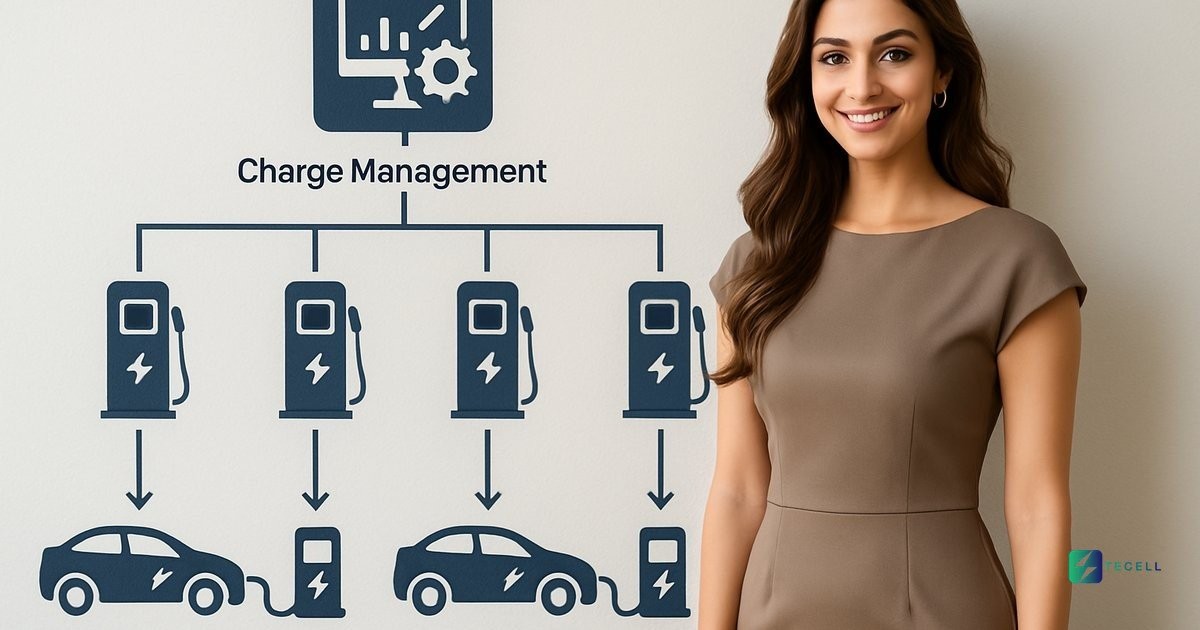
With a protocol-agnostic layer, the company can manage all these stations through a single interface. The system automatically adapts to the protocol used by each station, ensuring consistent reporting and control. This eliminates the need for separate tools or manual configuration for each charging network.
The result is a simplified operational workflow. The fleet manager can view real-time status, monitor energy usage, and handle billing from one dashboard, regardless of the communication protocol used by individual chargers.
This kind of integration is particularly valuable for large-scale deployments where managing multiple protocols manually would be error-prone and time-consuming.
Benefits of Using a Unified Interface
Adopting a unified abstraction interface brings several tangible benefits. First, it significantly reduces development time and effort. Instead of building protocol-specific modules, developers can focus on core business logic.
Second, it improves system reliability. Since the abstraction layer handles protocol differences, errors in one protocol don’t cascade to others. This isolation makes debugging and maintenance easier.
Third, it enhances scalability. As new protocols are introduced or existing ones are updated, the system can be extended with minimal disruption. This is especially important in the fast-evolving EV charging landscape.
Finally, it supports better data consistency and analytics. With a unified interface, all charging data flows through the same pipeline, making it easier to generate comprehensive reports and insights.
Challenges in Protocol Agnostic Design
Despite its advantages, designing a protocol-agnostic charging session layer is not without challenges. One major issue is handling protocol-specific features that don’t have direct equivalents in others. For example, some protocols support advanced payment methods or security features that others do not.
Another challenge is performance. The abstraction layer adds an extra layer of processing, which can introduce latency. This is particularly important in real-time applications where quick response times are critical.
Compatibility issues can also arise when protocols evolve or when new versions are introduced. The abstraction layer must be flexible enough to accommodate these changes without requiring frequent updates.
Lastly, testing becomes more complex. Each protocol must be tested individually, and then the abstraction layer must be validated across all combinations. This requires robust testing frameworks and thorough validation processes.
Best Practices for Implementation
To successfully implement a protocol-agnostic charging session layer, start by clearly defining the scope and requirements. Identify which protocols are most important for your use case and prioritize their integration.
Design the abstraction layer with extensibility in mind. Use modular architecture patterns that allow new protocols to be added with minimal impact on existing functionality. This approach makes future upgrades easier and more predictable.
Ensure comprehensive testing across all supported protocols. This includes both unit tests for individual components and integration tests that validate the entire flow. Automated testing helps catch issues early and ensures consistent behavior.
Document the interface thoroughly. Clear documentation helps developers understand how to extend or modify the system. It also serves as a reference for troubleshooting and maintenance.
Future Trends in Protocol-Agnostic Charging
As EV charging continues to evolve, protocol-agnostic approaches are becoming more prevalent. The industry is moving toward more open standards and interoperable systems. This shift is driven by the need for seamless integration across different networks and platforms.
Emerging technologies like AI and machine learning are also influencing how charging sessions are managed. These systems can benefit from a unified interface that provides consistent data streams for analysis and optimization.
Looking ahead, we can expect even greater standardization across protocols. This will make it easier to build truly universal charging solutions that work regardless of the underlying technology or network.
The trend toward smart charging and vehicle-to-grid integration will further emphasize the importance of flexible, protocol-agnostic systems. These systems will need to handle complex interactions between vehicles, charging infrastructure, and the power grid.
Frequently Asked Questions
- What is a protocol-agnostic charging session layer? It’s an abstraction layer that allows charging systems to work with multiple communication protocols like OCPP, OCPI, and ISO 15118 without requiring separate implementations for each.
- How does it improve system flexibility? It enables systems to adapt to new protocols or changes in existing ones with minimal code modifications, reducing maintenance overhead.
- What are the main challenges in implementing this design? Key challenges include handling protocol-specific features, managing performance overhead, and ensuring compatibility across evolving standards.
- Can this approach be used in enterprise deployments? Yes, it’s particularly valuable for large-scale deployments where managing multiple protocols manually would be inefficient and error-prone.
- What role does this play in future EV charging systems? It supports the trend toward open, interoperable systems that can integrate seamlessly with smart grids and vehicle networks.
Related Reading
For more on related topics, see: Chargepoint Alliance – EV Charging Interoperability.
Further reading: EV Charging Software Features | Tecell CMS (UnityCharge) – OCPP, Billing, Mobile
📣 Join our Telegram channel for EV charging technology insights and product updates.
Also find us on: LinkedIn · X · Bluesky · Mastodon · DEV.to.