Understanding PKI-Based Certificate Management in EV Charging
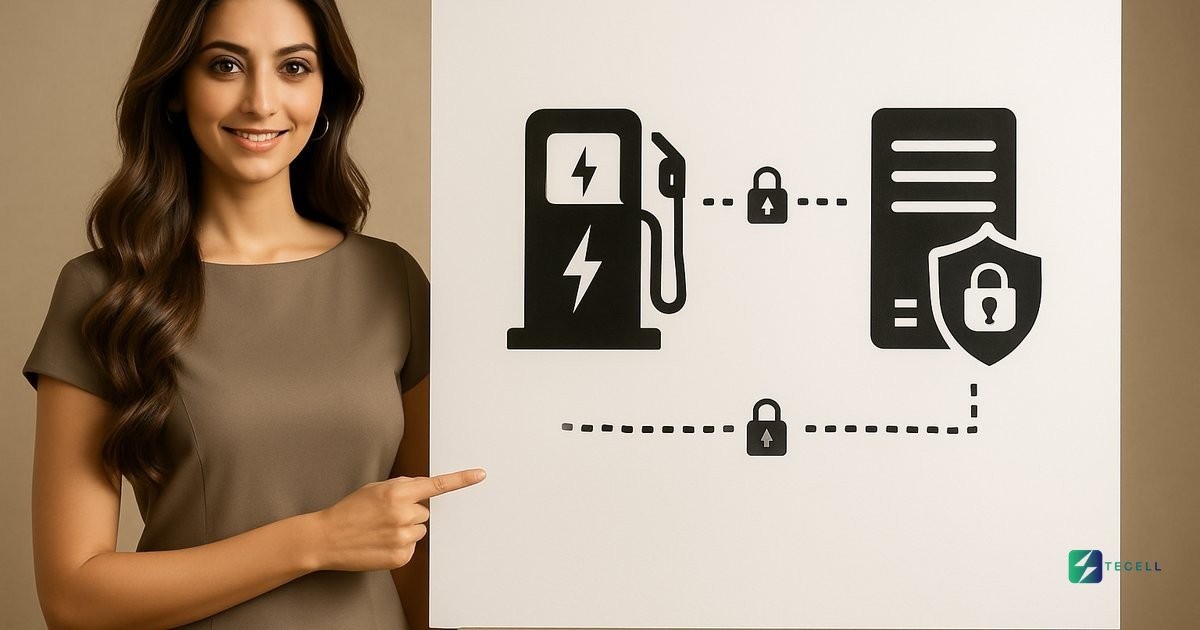
PKI-based certificate management at the edge is a critical component for securing distributed EV charging networks. It ensures that each Saha-Edge node can authenticate itself and communicate securely with other devices and systems, even when operating offline or with limited connectivity. This approach eliminates the need for constant cloud dependency, which is essential for maintaining consistent service in remote or high-density installations.
For a logistics company managing 40 vehicles across multiple depots, this means reliable charging operations without relying on continuous internet access. Each charging station must be able to validate its identity and encrypt communications independently, ensuring that unauthorized access or tampering is prevented.
Traditional methods often require centralized certificate authorities and cloud-based validation. But in real-world deployments, this can lead to bottlenecks, latency, and single points of failure. PKI-based edge management addresses these issues by enabling local trust and validation mechanisms.
This setup allows operators to scale their networks confidently, knowing that each node maintains its own secure identity and can function autonomously when needed.
Why Edge-Based PKI Matters for Charging Infrastructure
Edge computing in EV charging infrastructure brings processing power closer to the point of use. When combined with PKI-based certificate management, it enables secure, decentralized operations that are resilient to network disruptions.
For instance, a fleet operator deploying charging stations in rural areas may experience intermittent connectivity. With edge-based PKI, each station can still authenticate and authorize transactions without relying on cloud services. This ensures that charging remains available even during outages.
The key benefit lies in reducing latency and increasing availability. Instead of waiting for cloud validation, each Saha-Edge node can make decisions based on locally stored certificates and policies. This is especially important for real-time operations like payment processing or load balancing.
By managing certificates at the edge, operators also reduce the risk of man-in-the-middle attacks or unauthorized access. Each device maintains a unique identity that is cryptographically verified, making the entire network more secure.
How Saha-Edge Implements PKI-Based Certificate Management
Saha-Edge leverages a distributed PKI architecture to manage certificates across its network of charging nodes. Each node is provisioned with a unique digital certificate that is generated and signed by a trusted authority, typically hosted in a secure, offline environment.
These certificates are stored locally on each Saha-Edge device, allowing it to perform authentication and encryption without needing to reach out to a central server. This design supports offline operations and ensures that even if the network connection is lost, the charging process continues securely.
When a new node is deployed, it receives its certificate through a secure provisioning process. This ensures that only authorized devices can join the network, maintaining integrity and preventing rogue nodes from infiltrating the system.
The system also supports certificate renewal and revocation. If a device is compromised or retired, its certificate can be invalidated, ensuring that it can no longer participate in the network. This process is handled automatically, minimizing administrative overhead.
Benefits of Decentralized Certificate Management
One major advantage of decentralized certificate management is improved scalability. As networks grow, adding new nodes doesn’t require additional cloud infrastructure or complex coordination. Each new device simply receives its certificate and integrates into the existing system.
Another benefit is enhanced security. Since certificates are stored locally, they are less vulnerable to interception or theft. Even if an attacker gains access to the network, they cannot easily impersonate a valid node without the corresponding certificate.
Operational resilience is also improved. In scenarios where cloud connectivity is unreliable or unavailable, the network continues to function normally. This is particularly valuable for public charging stations or those in remote locations.
Finally, this approach reduces operational costs. There’s no need for expensive cloud-based certificate management systems or ongoing subscription fees. The infrastructure handles everything locally, making it more cost-effective for large-scale deployments.
Real-World Application: A Fleet Operator’s Perspective
A logistics company managing 40 vehicles faces the challenge of ensuring consistent charging across various depots, some of which have limited or unreliable internet access. Using Saha-Edge with PKI-based certificate management allows them to deploy charging stations that operate independently.
Each charging station is provisioned with a unique certificate, enabling secure communication and transaction processing without relying on cloud services. If one depot experiences a network outage, charging continues uninterrupted at that location.
This setup also simplifies compliance. The company can track and audit each node’s activity using its certificate, ensuring that all operations are logged and verifiable. This is especially important for fleet operators who must meet strict regulatory requirements.
With this approach, the company can scale its charging infrastructure confidently, knowing that security and reliability are built into every node.
Challenges and Considerations
Implementing PKI-based certificate management at the edge does come with challenges. One is ensuring that all devices are properly provisioned with valid certificates from the start. This requires a robust onboarding process and secure handling of certificate keys.
Another challenge is managing certificate lifecycles. Certificates have expiration dates, and if not renewed, they can cause service disruptions. Automated renewal processes help, but they must be carefully designed to avoid conflicts or failures.
Security is also a concern. While local certificates improve resilience, they must still be protected from physical tampering or unauthorized access. This means implementing secure storage mechanisms and access controls.
Lastly, interoperability with existing systems can be tricky. Legacy charging infrastructure may not support edge-based PKI, requiring careful planning and potentially hybrid solutions.
Future Trends in Edge PKI for EV Charging
As EV charging networks continue to expand, the demand for secure, scalable solutions will only grow. PKI-based certificate management at the edge is expected to become a standard feature in next-generation charging systems.
Advancements in hardware security modules (HSMs) and secure enclaves will further enhance the protection of certificates. These technologies ensure that private keys never leave the device, making them virtually impossible to steal or replicate.
Additionally, integration with AI-driven operations will allow for more intelligent certificate management. For example, predictive analytics could identify when a certificate is about to expire or when a device might be compromised, triggering automatic actions.
The trend toward open standards and interoperability will also support wider adoption. As more vendors adopt edge-based PKI, it becomes easier to build integrated networks that span multiple platforms and technologies.
Conclusion
PKI-based certificate management at the edge is a powerful enabler for secure, scalable EV charging networks. It allows operators to deploy reliable infrastructure that functions independently, even in challenging environments.
For companies like Tecell, this technology is foundational to the Saha-Edge platform. It ensures that every node in a distributed charging network can operate securely and autonomously, without relying on cloud connectivity.
As the EV ecosystem evolves, the importance of decentralized security will only increase. Operators who invest in edge-based PKI today will be better positioned to handle future growth and complexity.
Frequently Asked Questions
- What is PKI-based certificate management? PKI-based certificate management uses public key infrastructure to issue, store, and validate digital certificates. These certificates ensure secure communication and authentication between devices in a network.
- How does edge-based PKI differ from cloud-based PKI? Edge-based PKI stores and manages certificates locally on each device, enabling secure operations without cloud dependency. Cloud-based PKI requires constant connectivity to a central authority.
- Why is PKI important for EV charging networks? PKI ensures that only authorized devices can join a network and that communications are encrypted. This prevents unauthorized access and maintains the integrity of charging operations.
- Can Saha-Edge work offline with PKI certificates? Yes, Saha-Edge nodes use locally stored certificates to authenticate and communicate securely, even when offline or with limited connectivity.
- What are the benefits of decentralized certificate management? Benefits include improved scalability, enhanced security, operational resilience, and reduced reliance on cloud infrastructure.
Related Reading
For more on related topics, see: PKI certificate authentication in EV charging networks.
📣 Join our Telegram channel for EV charging technology insights and product updates.
Also find us on: LinkedIn · X · Bluesky · Mastodon · DEV.to.