Understanding Real-Time Cross-Protocol Session Synchronization
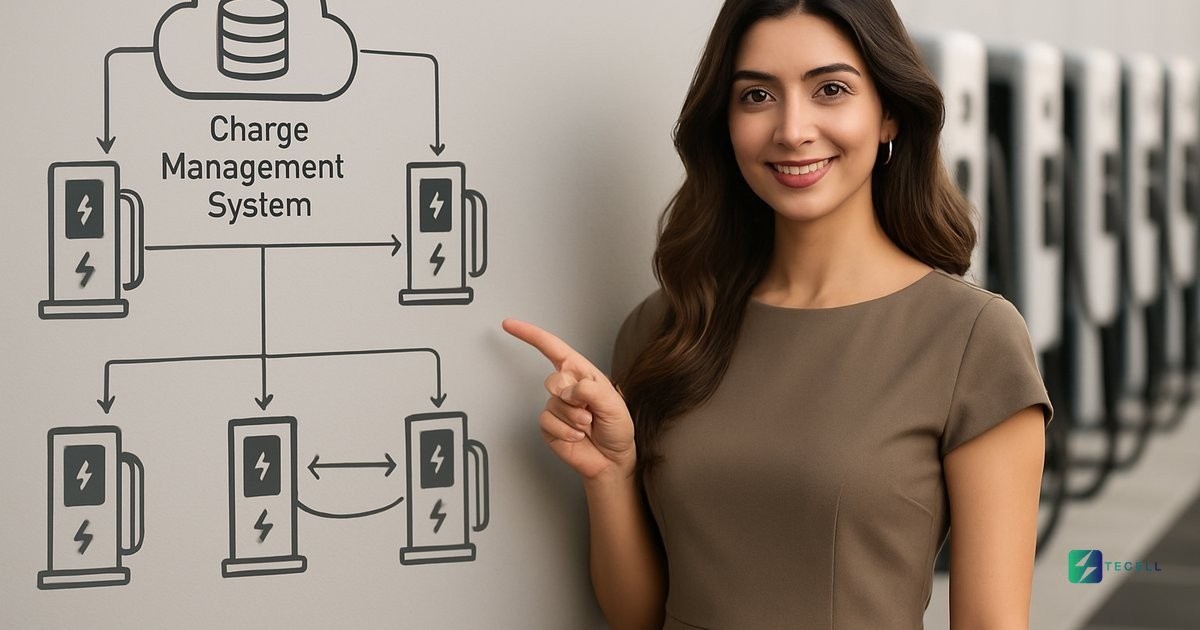
Real-time cross-protocol session synchronization is a critical capability for modern EV charging networks. It ensures that charging sessions are managed seamlessly across different communication protocols, such as OCPP 1.6 and OCPP 2.0.1, without disruption. This becomes especially important in hybrid environments where multiple charging technologies coexist. Saha-Edge, Tecell’s edge computing platform, delivers this functionality through its AI-driven architecture.
When a vehicle connects to a charger using one protocol, and the system needs to switch to another for operational reasons, maintaining session continuity is essential. Without proper synchronization, users may experience delays, failed transactions, or inconsistent data states. Saha-Edge addresses these challenges by enabling localized decision-making and real-time coordination.
For example, a logistics company managing 40 vehicles faces the challenge of integrating chargers from different vendors, each using varying communication standards. Saha-Edge ensures that all sessions are synchronized across protocols, allowing fleet managers to monitor and control charging operations from a single interface.
Why Hybrid Charging Environments Demand Advanced Synchronization
Hybrid charging environments are becoming more common as networks evolve. These setups often include chargers that support multiple protocols, legacy systems, and newer smart charging technologies. The complexity increases when these systems must interoperate without relying on centralized cloud infrastructure.
Traditional cloud-based solutions can introduce latency and dependency issues, especially in remote or low-connectivity areas. In such cases, local processing becomes essential. Saha-Edge’s edge computing capabilities allow for immediate session handling, reducing the risk of errors or delays.
For instance, a commercial building with both legacy and modern chargers must maintain consistent session data across all devices. Saha-Edge ensures that even if one part of the network loses connectivity, local synchronization continues, preserving user experience and operational integrity.
The Role of Edge-AI in Session Management
Edge-AI plays a pivotal role in enabling real-time session synchronization. By processing data locally, Saha-Edge can make decisions faster than traditional cloud-based systems. This is particularly useful when dealing with high-frequency transactions or time-sensitive operations.
The platform uses machine learning models trained on charging behavior patterns to predict and respond to session changes. These models help identify potential conflicts or inconsistencies before they impact the user experience. The AI also learns from past interactions, improving performance over time.
Consider a scenario where a fleet operator uses a mix of fast and standard chargers. Saha-Edge’s AI can dynamically adjust session priorities based on vehicle battery levels, charging speed, and user preferences, all without requiring cloud intervention.
Localized Data Consistency Without Cloud Dependency
Localized data consistency is a core feature of Saha-Edge’s architecture. It ensures that all charging data remains accurate and up-to-date, even when network connectivity is limited or unavailable. This is achieved through distributed data management and local validation mechanisms.
When a charging session begins, Saha-Edge records and validates data at the edge. If communication with the central system is lost, the platform continues to manage the session locally. Once connectivity is restored, it synchronizes the data seamlessly, ensuring no loss of information or user inconvenience.
This capability is especially valuable for remote installations or areas with unreliable internet access. A rural charging station, for example, can operate independently and still maintain accurate session records, thanks to local data handling.
Seamless Handover Between Protocols
Seamless handover between protocols is another key benefit of Saha-Edge’s approach. It allows for smooth transitions when a vehicle moves between chargers or when a system upgrade occurs. This is particularly important in large-scale deployments where protocol compatibility is a concern.
The platform supports both OCPP 1.6 and OCPP 2.0.1, ensuring compatibility with a wide range of charging equipment. When a session needs to switch protocols, Saha-Edge handles the transition automatically, preserving session state and user data.
A real-world example involves a utility company deploying a new charging network that includes both older and newer chargers. Saha-Edge ensures that all devices can communicate effectively, regardless of their protocol version, enabling a unified charging experience.
Benefits for Charge Point Operators and Fleet Managers
For Charge Point Operators (CPOs), Saha-Edge’s real-time synchronization capabilities simplify network management. It reduces the need for manual intervention and improves overall system reliability. Operators can monitor and control charging sessions from a centralized dashboard, even when dealing with diverse hardware.
Fleet managers benefit from improved visibility and control over their charging operations. The platform’s AI-driven insights help optimize charging schedules and reduce downtime. This leads to better resource allocation and cost efficiency.
For instance, a fleet operator managing a large number of electric delivery vans can rely on Saha-Edge to ensure that all charging sessions are synchronized across different protocols. This allows for real-time adjustments and predictive maintenance, improving operational performance.
Technical Implementation and Scalability
Saha-Edge’s implementation is designed for scalability and adaptability. It can be deployed across small installations or large, complex networks. The platform’s modular architecture allows for easy integration with existing systems and future upgrades.
The edge computing infrastructure ensures that performance remains consistent, even under high load. This is crucial for environments with many simultaneous charging sessions. The system’s ability to handle multiple protocols simultaneously makes it suitable for diverse charging environments.
As charging networks continue to grow, Saha-Edge’s scalable design ensures that synchronization capabilities remain effective. Whether managing a few chargers or thousands, the platform maintains its performance and reliability.
Future-Proofing EV Charging Infrastructure
With the rapid evolution of EV technology, future-proofing charging infrastructure is essential. Saha-Edge’s edge-AI approach positions networks to adapt to new protocols and technologies without major overhauls.
The platform’s flexibility allows it to support emerging standards and innovations in EV charging. This ensures that networks remain relevant and efficient as the industry evolves. It also supports the integration of renewable energy sources and smart grid technologies.
By investing in a solution that can grow with the industry, operators and fleet managers can avoid costly upgrades and ensure long-term operational success.
Frequently Asked Questions
- What is real-time cross-protocol session synchronization? It refers to the ability of a charging system to manage and synchronize charging sessions across different communication protocols in real time, ensuring no disruption to the user experience.
- How does Saha-Edge enable seamless protocol handover? Saha-Edge uses edge computing and AI to automatically manage transitions between protocols, preserving session data and user experience during changes.
- Why is localized data consistency important? It ensures that charging data remains accurate and available even when cloud connectivity is lost, maintaining system reliability and user trust.
- Can Saha-Edge work in hybrid charging environments? Yes, it is specifically designed to handle hybrid setups with multiple protocols and technologies, ensuring smooth operation across all devices.
- What are the benefits for fleet operators? Fleet operators benefit from improved visibility, predictive maintenance, and optimized charging schedules, leading to better resource management and cost efficiency.
Related Reading
For more on related topics, see: Edge-Cloud Co-Design for Smart Charging: Reducing Latency and Improving Load Balancing.
📣 Join our Telegram channel for EV charging technology insights and product updates.
Also find us on: LinkedIn · X · Bluesky · Mastodon · DEV.to.