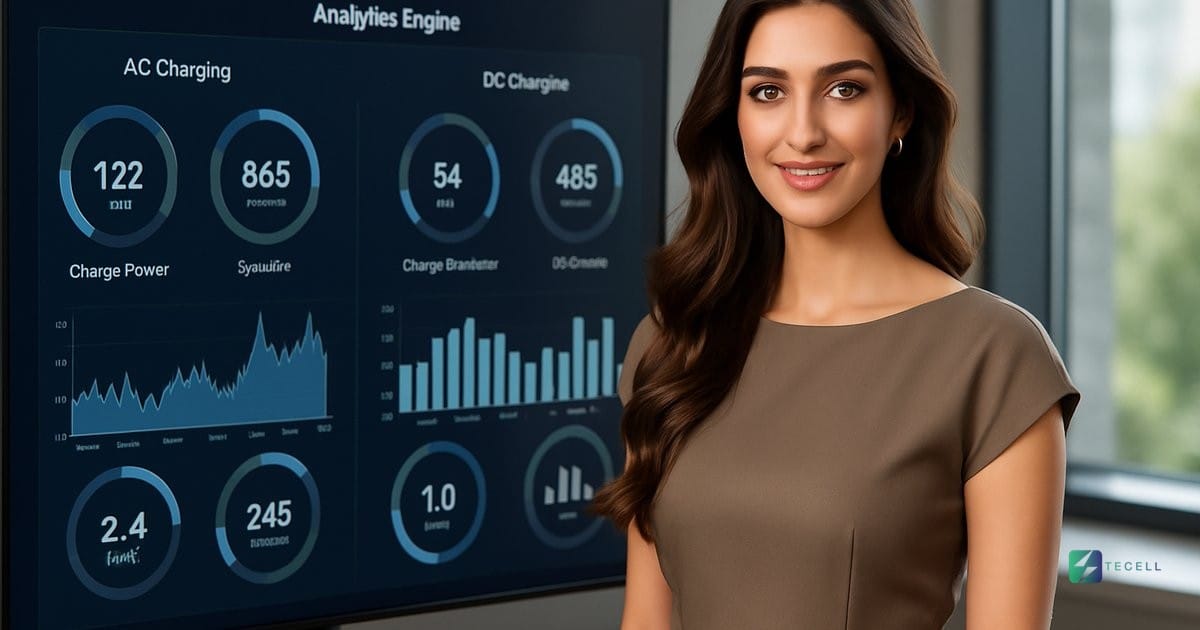
Tecell’s analytics engine ingests real-time data from both AC and DC charging stations through standardized communication protocols like OCPP 1.6 and 2.0.1. It correlates this data by station ID, session timestamps, and power metrics to generate unified insights across charging types. The system normalizes voltage, current, and energy consumption data to provide consistent performance comparisons and usage patterns. This unified view enables operators to optimize fleet performance and identify inefficiencies across their entire charging network.
How data correlation works in practice
The engine uses a centralized data warehouse that stores raw telemetry from each charging point. It applies time-series algorithms to match AC and DC sessions based on user behavior patterns and charging preferences. For example, if a user frequently switches between AC and DC charging, the system tracks this behavior to predict future usage. The correlation process also accounts for environmental factors like temperature and grid load that affect charging speeds.
What this means for fleet operators
Fleet managers benefit from unified reporting that shows how different vehicle types perform across charging infrastructure. The system flags underperforming DC stations or inefficient AC charging patterns that may indicate maintenance needs. Operators can also compare energy costs between AC and DC charging methods to optimize their fleet’s total cost of ownership. This visibility helps in making informed decisions about infrastructure upgrades and resource allocation.
Related Reading
For more on related topics, see: EV Charging Software & Management Platforms | Tecell.
Further reading: Tecell CMS – EV Charging Software for Fleets, Apartments & Workplaces
📣 Join our Telegram channel for EV charging technology insights and product updates.
Also find us on: LinkedIn · X · Bluesky · Mastodon · DEV.to.