
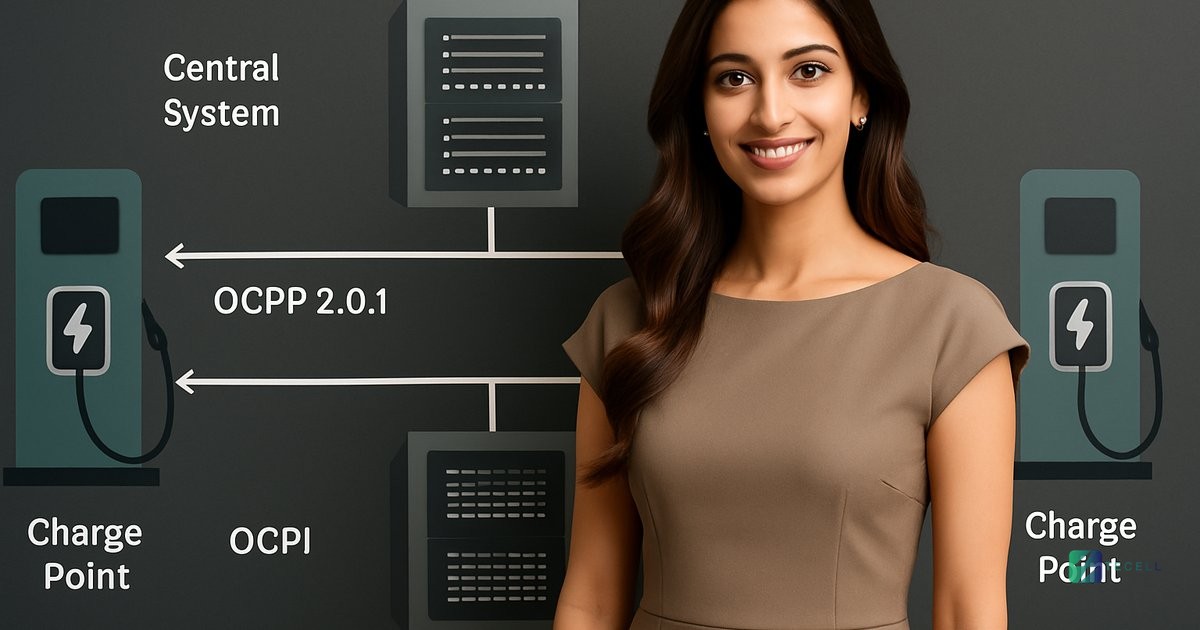
Understanding OCPP 2.0.1 and OCPI for Charge Point Operators
Charge Point Operators (CPOs) managing EV charging infrastructure face a complex ecosystem of communication protocols. Two key standards—OCPP 2.0.1 and OCPI—define how charging stations interact with central systems. While both are essential, they serve different roles in the charging infrastructure stack. This article explores how OCPP 2.0.1 and OCPI differ in session management, data exchange, and interoperability. It also highlights practical implications for CPOs deploying scalable charging networks.
What is OCPP 2.0.1?
OCPP 2.0.1, or Open Charge Point Protocol version 2.0.1, is a communication standard developed by the Open Charge Point Protocol Working Group. It defines how charging stations (charge points) communicate with Charge Point Operators (CPOs) through a central system. This protocol ensures that charging stations can exchange data like session details, energy consumption, and payment information.
OCPP 2.0.1 is an evolution from earlier versions, offering enhanced security, improved session handling, and better support for dynamic pricing. It also supports both OCPP 1.6 and 2.0.1, allowing for smoother transitions in legacy systems.
For CPOs, OCPP 2.0.1 provides a robust framework for managing charging sessions, especially in environments with high transaction volumes. It allows for real-time updates, remote configuration, and secure communication between devices and backend systems.
What is OCPI?
OCPI, or Open Charge Point Interface, is a standard for enabling roaming between different EV charging networks. Unlike OCPP, which focuses on communication between a charge point and a single operator, OCPI allows multiple operators to share charging data across platforms.
OCPI is particularly useful for CPOs who want to offer their charging stations to a broader user base. It enables interoperability between networks, allowing users to charge at any compatible station using a single account or payment method.
OCPI defines how charging data is exchanged between different systems, including session start, stop, and payment details. It also supports roaming profiles, which help ensure consistent user experiences across networks.
Key Differences in Session Management
Session Initiation and Control
OCPP 2.0.1 handles session initiation directly between the charging station and the central system. It allows for detailed control over how sessions are started, monitored, and stopped. This includes features like remote start, stop, and pause commands.
OCPI, on the other hand, focuses on session data exchange between systems. It doesn’t control how sessions are initiated but ensures that session data is shared accurately across networks. This makes it ideal for roaming scenarios where multiple operators are involved.
For example, a logistics company managing 40 vehicles faces challenges when each vehicle needs to be charged at different stations. OCPP 2.0.1 ensures that each charging session is managed locally, while OCPI ensures that the session data is shared with the company’s central billing system.
Session Data Handling
OCPP 2.0.1 provides detailed session data, including energy consumption, charging rates, and payment status. This data is stored locally and can be accessed by the CPO’s backend system for billing and analytics.
OCPI, in contrast, standardizes how session data is shared between systems. It ensures that session details are consistent and accessible across different platforms. This is especially important for users who charge at stations outside their home network.
For instance, a CPO might use OCPP 2.0.1 to track charging sessions in real time, while OCPI ensures that those sessions are visible to other networks for billing and compliance purposes.
Data Exchange and Communication Protocols
Communication Methods
OCPP 2.0.1 uses a WebSocket-based communication method, allowing for real-time data exchange between charge points and central systems. This method supports both push and pull communication, making it flexible for various use cases.
OCPI, however, relies on RESTful APIs for data exchange. It uses HTTP methods to send and receive session data, making it easier to integrate with web-based systems. This approach is more suitable for cross-network communication.
For a CPO managing a fleet of electric delivery vans, OCPP 2.0.1 ensures that each van’s charging session is tracked in real time, while OCPI ensures that the data is shared with the fleet management system for billing and compliance.
Security and Authentication
OCPP 2.0.1 includes enhanced security features such as TLS encryption and certificate-based authentication. These features ensure that communication between charge points and central systems is secure and tamper-proof.
OCPI also supports secure communication, but it focuses more on data integrity and access control. It ensures that only authorized systems can access session data, which is critical for compliance and privacy.
Both protocols are designed to meet the security needs of modern charging networks. However, OCPP 2.0.1 offers more granular control over device-level security, while OCPI ensures secure data sharing between operators.
Interoperability and Network Integration
Support for Roaming
OCPI is specifically designed to support roaming between networks. It allows users to charge at stations outside their home network using a single account. This is essential for public charging networks and fleet operators who need to provide flexibility to users.
OCPP 2.0.1, while not designed for roaming, supports integration with multiple systems. It can be used to manage sessions across different networks, but it requires additional configuration to support roaming.
For example, a CPO offering public charging services must ensure that their stations are compatible with OCPI to allow users from other networks to charge. OCPP 2.0.1 ensures that sessions are managed locally, but OCPI ensures that the data is shared across networks.
Scalability and Flexibility
OCPP 2.0.1 is highly scalable and supports a wide range of charging station types and configurations. It allows for dynamic updates and remote configuration, making it ideal for large-scale deployments.
OCPI, while scalable, is more focused on data exchange. It ensures that session data is consistent and accessible, but it doesn’t manage the charging process itself. This makes it ideal for integrating with existing systems.
A CPO deploying a network of 100 charging stations must consider both protocols. OCPP 2.0.1 ensures that each station communicates effectively with the central system, while OCPI ensures that the data can be shared with other networks for roaming.
Practical Implications for Charge Point Operators
Implementation Considerations
Implementing OCPP 2.0.1 requires a robust backend system capable of handling real-time communication and session management. It also requires support for secure communication protocols and device-level authentication.
OCPI implementation, on the other hand, requires integration with external systems. This includes setting up APIs and ensuring that session data is shared securely and accurately.
For a CPO managing a mixed fleet of charging stations, both protocols may be necessary. OCPP 2.0.1 handles local session management, while OCPI ensures that data is shared with external networks.
Compliance and Standards
Both OCPP 2.0.1 and OCPI are widely adopted in the EV charging industry. They are recognized standards that help ensure interoperability and compliance with regulatory requirements.
Using these protocols helps CPOs avoid vendor lock-in and ensures that their systems can integrate with other charging networks. This is especially important for companies that operate across multiple regions or countries.
For example, a CPO deploying charging stations in Europe must ensure compliance with local regulations. OCPP 2.0.1 and OCPI help meet these requirements by providing standardized communication methods.
Conclusion
OCPP 2.0.1 and OCPI are both essential for modern EV charging infrastructure. OCPP 2.0.1 focuses on communication between charge points and central systems, while OCPI enables data sharing between different networks. Understanding their differences helps CPOs make informed decisions about system design and implementation.
For CPOs managing large networks, both protocols are necessary. OCPP 2.0.1 ensures local session management, while OCPI supports roaming and data sharing. Together, they provide a comprehensive solution for managing EV charging infrastructure.
Frequently Asked Questions
- What is the main difference between OCPP 2.0.1 and OCPI? OCPP 2.0.1 is used for communication between charge points and a central system, while OCPI enables data sharing between different charging networks for roaming.
- Which protocol is better for session management? OCPP 2.0.1 is better for session management within a single network, while OCPI is better for sharing session data across networks.
- Can OCPP 2.0.1 and OCPI be used together? Yes, they complement each other. OCPP 2.0.1 handles local communication, while OCPI ensures data is shared across networks.
- How do these protocols impact fleet charging? OCPP 2.0.1 ensures real-time session tracking, while OCPI allows fleet operators to share charging data with external systems for billing and compliance.
- What are the security features of OCPP 2.0.1 and OCPI? Both protocols support secure communication, but OCPP 2.0.1 focuses on device-level security, while OCPI ensures secure data sharing between systems.
Related Reading
For more on related topics, see: What is a Charge Point Operator (CPO)? | Tecell.
Further reading: EV Charging Software Features | Tecell CMS (UnityCharge) – OCPP, Billing, Mobile
📣 Join our Telegram channel for EV charging insights and product updates.
Also find us on: LinkedIn · X · Bluesky · Mastodon · DEV.to.