
Understanding OCPP vs OCPI in Real-World Charging Operations
Charge Point Operators (CPOs) often struggle to distinguish between OCPP and OCPI, two protocols that are essential for managing EV charging infrastructure. While both enable communication between charging stations and back-end systems, they serve different roles in the charging ecosystem. This practical comparison explores how each protocol functions in real-world scenarios, helping CPOs make informed decisions about their infrastructure.
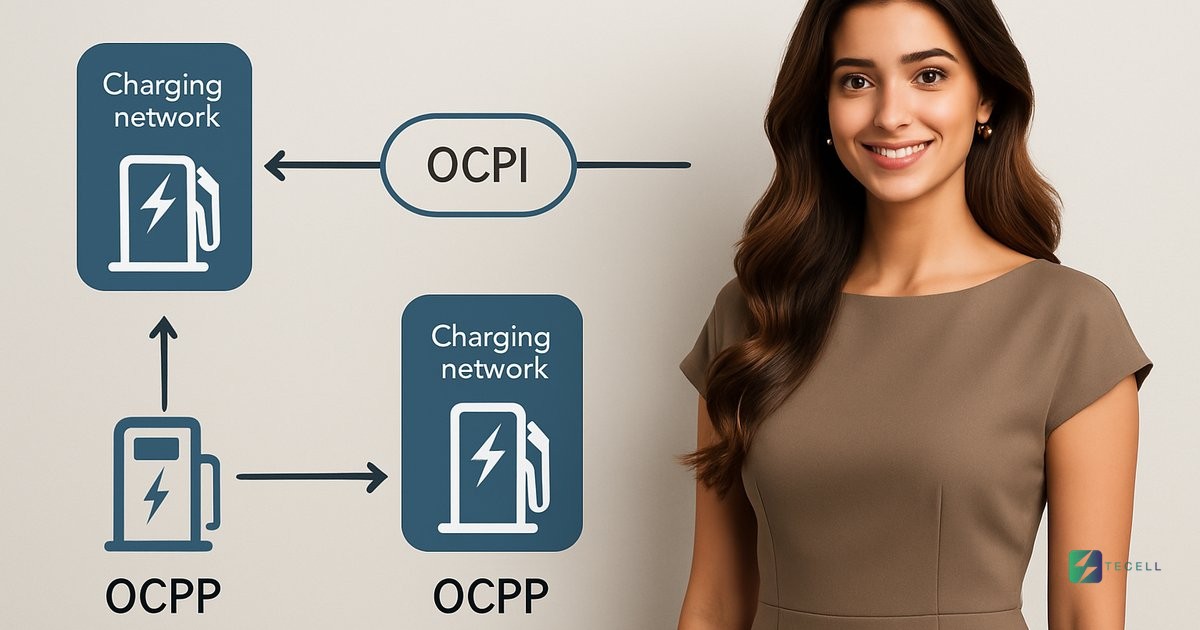
OCPP and OCPI are not interchangeable. OCPP is a communication standard for individual charging stations, while OCPI focuses on roaming and data exchange between different providers. Understanding their differences is crucial for CPOs aiming to scale efficiently and maintain compliance.
For example, a logistics company managing 40 vehicles faces challenges when integrating new charging stations. If they use OCPP for station communication and OCPI for roaming, they can ensure seamless operations across multiple providers and locations.
What Is OCPP and How Does It Work?
OCPP, or Open Charge Point Protocol, is a communication standard developed for charging stations and Charge Point Operators. It defines how charging stations interact with central systems, enabling features like remote monitoring, firmware updates, and transaction management.
OCPP operates on a client-server model, where the charging station acts as the client and the central system as the server. This setup allows operators to manage multiple stations from a single interface, streamlining operations.
For instance, a CPO using OCPP can remotely update firmware on charging stations, monitor real-time usage, and enforce policies like time-based pricing. These capabilities are essential for maintaining efficient and secure charging networks.
OCPP supports both OCPP 1.6 and OCPP 2.0.1, with the latter offering enhanced security and scalability. Operators should consider upgrading to OCPP 2.0.1 for better performance and future-proofing their systems.
What Is OCPI and How Does It Enable Roaming?
OCPI, or Open Charge Point Interface, is a protocol designed for roaming between different charging networks. It allows operators to share data and enable users to charge at stations outside their own network.
OCPI works by standardizing the exchange of information between different providers. This includes user authentication, transaction details, and pricing data. It ensures that a user can charge at any compliant station, regardless of the provider.
For example, a fleet manager using a roaming app can charge vehicles at stations across multiple networks. OCPI ensures that the transaction is processed correctly, even if the stations are managed by different operators.
OCPI is particularly valuable for CPOs who want to expand their reach beyond their own infrastructure. It enables interoperability and supports the growing demand for seamless charging experiences.
Key Differences Between OCPP and OCPI
The main difference between OCPP and OCPI lies in their scope and purpose. OCPP focuses on internal communication within a single network, while OCPI enables communication between different networks.
OCPP is used for managing charging stations directly, including monitoring, control, and transaction handling. OCPI, on the other hand, is used for sharing data across networks, particularly for roaming.
For example, a CPO might use OCPP to manage their own charging stations and ensure they are functioning correctly. At the same time, they might use OCPI to allow users to charge at partner stations, expanding their service offerings.
These protocols complement each other. OCPP handles the internal operations, while OCPI ensures that those operations can be extended to other providers. This dual approach is essential for modern charging infrastructure.
OCPP vs OCPI in Practice: A Real-World Scenario
A real-world example of OCPP and OCPI in action involves a CPO who operates a network of charging stations in a metropolitan area. They use OCPP to manage their stations, ensuring that each one is properly configured and monitored.
Meanwhile, they also support OCPI to allow users to charge at partner stations. This means that a user can start a charge at one station and finish it at another, even if they are managed by different operators.
This scenario highlights how OCPP and OCPI work together to provide a comprehensive charging solution. OCPP ensures internal efficiency, while OCPI enables broader access and interoperability.
By leveraging both protocols, the CPO can offer a seamless experience to users while maintaining control over their own infrastructure.
Why CPOs Should Understand Both Protocols
Charge Point Operators must understand both OCPP and OCPI to operate effectively in today’s charging landscape. OCPP is essential for managing internal systems, while OCPI is necessary for supporting roaming and expanding service reach.
For example, a CPO who only uses OCPP may miss opportunities to offer roaming services. Similarly, a CPO who only uses OCPI may struggle with internal management and control.
Understanding both protocols allows CPOs to make informed decisions about their infrastructure and service offerings. It also helps them comply with industry standards and regulations.
As the EV charging market continues to grow, the ability to integrate both OCPP and OCPI becomes increasingly important for long-term success.
Choosing the Right Protocol for Your Infrastructure
When selecting protocols for their infrastructure, CPOs should consider their specific needs and goals. If the focus is on managing internal stations, OCPP is the primary choice.
For CPOs who want to support roaming, OCPI becomes essential. Many operators choose to implement both protocols to maximize flexibility and service offerings.
For example, a CPO managing a fleet of charging stations in a commercial area might use OCPP for internal operations and OCPI for roaming. This approach ensures that they can manage their own stations effectively while also supporting external users.
Ultimately, the decision depends on the operator’s business model and target market. A clear understanding of both protocols helps in making the right choice.
Future Trends in OCPP and OCPI
The future of OCPP and OCPI is shaped by evolving industry needs and technological advancements. As charging networks become more complex, both protocols are expected to evolve to meet new challenges.
For instance, the growing use of AI and automation in charging operations may lead to enhancements in OCPP and OCPI. These improvements could include better data handling and more efficient communication.
Additionally, as more countries adopt standardized charging protocols, the role of OCPI in enabling cross-border roaming will become even more significant.
Operators who stay informed about these trends and adapt their systems accordingly will be better positioned to succeed in the evolving EV charging landscape.
How OCPP and OCPI Support Smart Charging
Smart charging relies on efficient communication between charging stations and central systems. OCPP and OCPI play a key role in enabling this communication, especially in scenarios involving dynamic pricing and load management.
For example, a CPO using smart charging might adjust pricing based on grid demand. OCPP allows them to implement these changes in real-time, while OCPI ensures that users can access these services across different networks.
This integration supports more efficient use of energy resources and enhances the user experience. It also helps operators optimize their infrastructure and reduce costs.
As smart charging becomes more common, the importance of OCPP and OCPI will continue to grow. Operators who invest in understanding these protocols will be better prepared for future developments.
FAQ
- What is the main difference between OCPP and OCPI? OCPP is used for internal communication between charging stations and central systems, while OCPI enables data exchange between different charging networks for roaming.
- Can a CPO use OCPP without OCPI? Yes, OCPP is sufficient for managing internal charging infrastructure, but OCPI is needed for supporting roaming and cross-network access.
- Which protocol is better for fleet management? Both protocols are valuable for fleet management. OCPP handles internal operations, while OCPI supports roaming and broader access.
- How do OCPP and OCPI work together? OCPP manages individual charging stations, while OCPI allows those stations to be part of a larger, interoperable network for roaming.
- Is OCPI required for all EV charging networks? OCPI is not required for all networks, but it is essential for those that want to support roaming and cross-provider access.
Related Reading
For more on related topics, see: What is a Charge Point Operator (CPO)? | Tecell.
Further reading: EV Charge Management Software Global | Europe, UK, US | Tecell CMS
📣 Join our Telegram channel for EV charging technology insights and product updates.
Also find us on: LinkedIn · X · Bluesky · Mastodon · DEV.to.