Understanding Real-Time Dynamic Power Allocation in EV Charging
Real-time dynamic power allocation represents a critical evolution in how electric vehicle (EV) charging infrastructure manages energy distribution. In complex environments like mixed-fleet bus depots, where multiple vehicle types and charging needs coexist, this capability becomes essential for operational efficiency and grid stability. Tecell’s Saha-Edge platform demonstrates how localized AI-driven systems can enable seamless, intelligent power management without relying on cloud connectivity.
For fleet operators managing diverse EVs—such as electric buses, delivery trucks, and passenger vehicles—power allocation must be both responsive and predictive. Traditional charging systems often struggle with these demands, especially when dealing with varying battery capacities, charging speeds, and operational schedules. Real-time dynamic power allocation addresses these challenges by continuously adjusting power distribution based on live conditions and forecasts.
This approach ensures that charging operations remain efficient, safe, and aligned with energy availability. It also supports compliance with evolving standards like ISO 15118 and OCPP 2.0.1, which are increasingly important for interoperability and smart grid integration.
How Saha-Edge Enables Localized Load Management
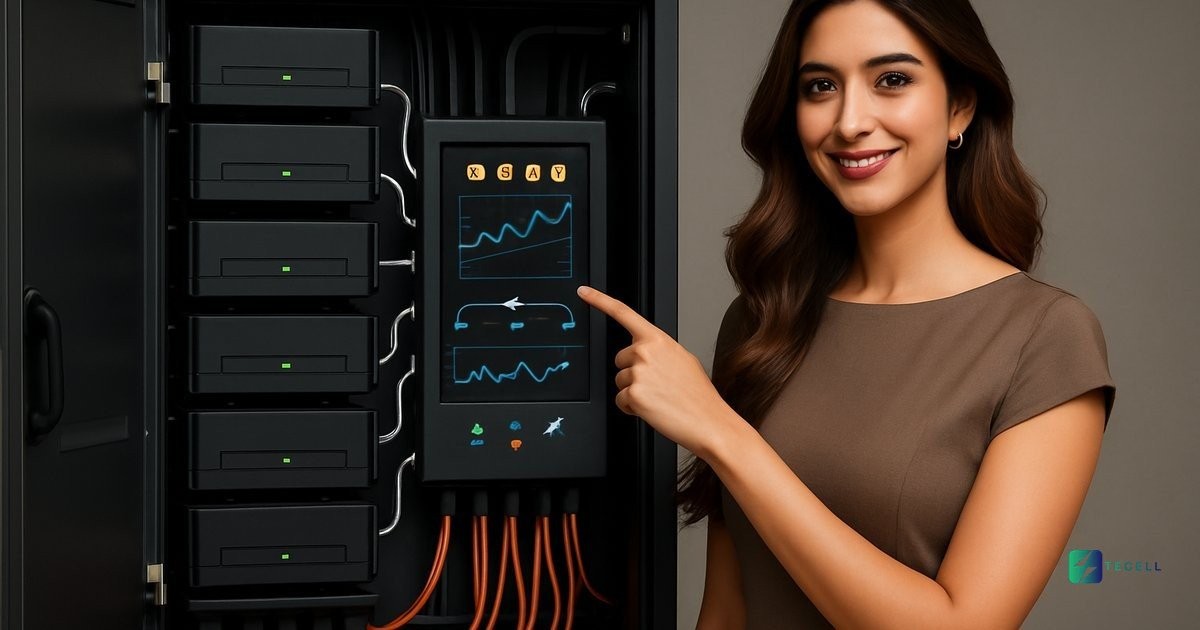
Saha-Edge is an edge computing platform designed to bring intelligent control directly to the charging point. Unlike centralized systems that depend on cloud connectivity, Saha-Edge operates autonomously, making decisions based on real-time data from connected chargers and vehicles.
In a mixed-fleet bus depot, this localized approach allows each charger to respond dynamically to the charging needs of different vehicle types. For example, a high-capacity electric bus may require more power than a smaller delivery van, and Saha-Edge ensures that power is allocated accordingly without manual intervention.
The system uses AI algorithms to monitor and predict charging behavior, enabling it to optimize energy use even during peak demand periods. This is particularly valuable in environments where grid stability is a concern, such as urban transit hubs or remote facilities with limited power infrastructure.
Integrating ChargeSphere for Roaming and Interoperability
ChargeSphere, Tecell’s open roaming and interoperability platform, complements Saha-Edge by ensuring that charging networks can communicate seamlessly across different providers and systems. This integration allows for consistent power allocation policies, regardless of which charging network a vehicle is connected to.
For instance, a transit authority using ChargeSphere can manage charging across multiple networks, ensuring that their fleet receives optimal power allocation even when vehicles are charged at third-party stations. This interoperability is crucial for scaling EV infrastructure and reducing operational complexity.
Together, Saha-Edge and ChargeSphere create a robust framework for managing complex charging environments. They support both local decision-making and broader network coordination, making them ideal for large-scale deployments like public transit systems or commercial fleets.
Power Allocation Without Cloud Dependency
One of the most significant advantages of Saha-Edge is its ability to function without cloud connectivity. In many real-world scenarios, such as rural depots or areas with unreliable internet, this independence is critical for maintaining service continuity.
By processing data locally, Saha-Edge reduces latency and eliminates the risk of service disruptions due to network issues. This is especially important in high-demand environments where even a brief delay in power allocation can impact vehicle availability or operational schedules.
For example, a logistics company managing 40 vehicles faces challenges when charging infrastructure is not always available or reliable. With Saha-Edge, the system can continue to allocate power efficiently even if the network connection is temporarily lost, ensuring that operations remain uninterrupted.
Predictive Scheduling and Vehicle Integration
Predictive scheduling is another key feature of Saha-Edge that enhances real-time dynamic power allocation. By analyzing historical data and operational patterns, the system can anticipate when and how much power will be needed.
This predictive capability is particularly useful in mixed-fleet environments where vehicles have different charging profiles. For instance, a transit authority might know that certain buses arrive early in the morning and need to be fully charged by a specific time. Saha-Edge can pre-allocate power to ensure this happens, even if other vehicles are also charging.
Vehicle integration plays a role here too. When vehicles are equipped with smart charging capabilities, they can communicate directly with the charging infrastructure, providing real-time updates on battery status and charging preferences. This information helps Saha-Edge make more informed decisions about power distribution.
ISO 15118 Compliance and OCPP 2.0.1 Support
As EV charging becomes more sophisticated, compliance with international standards is essential. Saha-Edge supports both ISO 15118 and OCPP 2.0.1, ensuring that it can operate within a wide range of charging ecosystems.
ISO 15118 defines the communication protocols for vehicle-to-grid (V2G) interactions, enabling vehicles to not only receive power but also return it to the grid when needed. This is a powerful feature for fleet operators looking to optimize energy use and participate in grid services.
OCPP 2.0.1, on the other hand, provides a standardized way for charging stations to communicate with charging management systems. By supporting this protocol, Saha-Edge ensures that it can integrate smoothly with existing infrastructure and future-proof its deployments.
Practical Applications in Mixed-Fleet Environments
Consider a public transit system managing a fleet of electric buses, some with fast-charging capabilities and others with standard charging. During peak hours, the system must balance the need for rapid recharging with the overall energy load on the grid.
Saha-Edge allows this system to dynamically adjust power allocation based on real-time conditions. If one bus is nearly full and another is low on charge, the system can prioritize the latter, ensuring that all vehicles are ready for service on time.
This kind of flexibility is essential for maintaining service quality and operational efficiency. It also supports sustainability goals by optimizing energy use and reducing waste.
Benefits for Fleet Operators and Infrastructure Providers
Fleet operators benefit from real-time dynamic power allocation through improved scheduling, reduced downtime, and better energy management. For infrastructure providers, it offers a scalable solution that can adapt to changing demands without requiring constant upgrades or manual oversight.
The localized nature of Saha-Edge also reduces the risk of system-wide failures. If one part of the network experiences an issue, the rest of the system can continue to function, maintaining service availability.
Additionally, the platform’s support for multiple protocols and standards makes it easier to integrate with existing systems, reducing the complexity and cost of deployment.
Future-Proofing EV Charging Infrastructure
As EV adoption continues to grow, the need for intelligent, adaptive charging solutions will only increase. Saha-Edge’s approach to real-time dynamic power allocation positions it well for future developments in the industry.
With support for emerging technologies like V2G and advanced AI algorithms, the platform can evolve alongside the needs of fleet operators and infrastructure providers. This adaptability ensures that investments in charging infrastructure remain relevant and effective over time.
By focusing on localized control and intelligent decision-making, Saha-Edge helps build a more resilient and efficient charging ecosystem. It’s a step toward a future where charging infrastructure is not just reactive but proactive in managing energy use.
Related Reading
For more on related topics, see: Edge-Cloud Co-Design for Smart Charging: Reducing Latency and Improving Load Balancing.
Further reading: EV Charging Energy Management | OCPP Smart Charging CMS | Tecell India
📣 Join our Telegram channel for EV charging technology insights and product updates.
Also find us on: LinkedIn · X · Bluesky · Mastodon · DEV.to.