
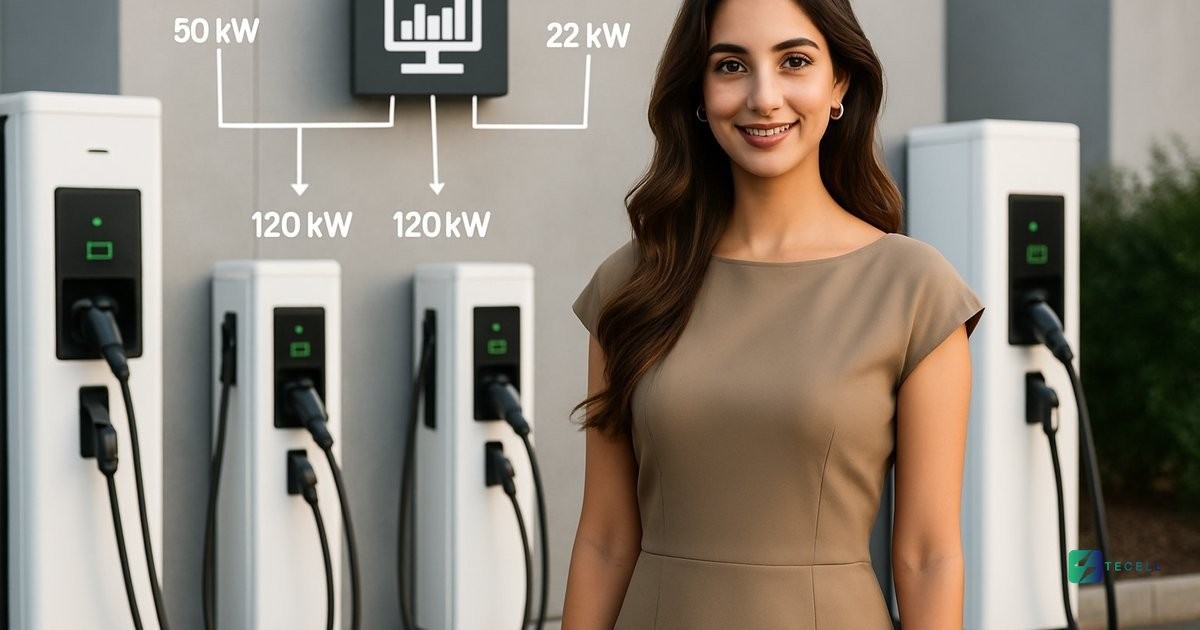
Understanding Real-Time Dynamic Power Redistribution in EV Charging
Real-time dynamic power redistribution is a critical capability for modern charging networks, especially in multi-site environments. It allows operators to shift energy loads between charging stations based on real-time conditions, such as grid capacity, demand, or renewable energy availability. This approach ensures efficient use of available power while maintaining service quality for users.
For operators managing multiple charging locations, the ability to redistribute power dynamically can mean the difference between a fully functional network and one that struggles with congestion or underutilization. Saha-Edge, Tecell’s edge computing platform, enables this functionality through intelligent local control and predictive forecasting.
By combining edge computing with AI-driven algorithms, Saha-Edge allows charging infrastructure to make decisions autonomously, without relying on constant cloud connectivity. This is particularly valuable in remote or low-bandwidth environments where network reliability is a concern.
This post explores how Saha-Edge facilitates real-time dynamic power redistribution, the benefits it brings to fleet operators and utilities, and practical examples of its application in real-world deployments.
How Saha-Edge Enables Local AI and Predictive Load Forecasting
Saha-Edge operates at the edge of the network, bringing processing power directly to the charging station. This design eliminates latency issues that can occur when relying on centralized cloud systems for decision-making.
With local AI capabilities, Saha-Edge can analyze usage patterns, predict demand, and adjust power distribution accordingly. These models are trained using historical data and continuously updated based on new inputs, ensuring accuracy over time.
For instance, a logistics company managing 40 electric vehicles across three sites might use Saha-Edge to predict peak charging times and shift load to off-peak hours. This not only reduces strain on the grid but also lowers operational costs.
The platform’s predictive load forecasting helps operators anticipate when demand will spike, allowing them to proactively redistribute energy before congestion occurs.
Offline Operation and Resilience Without Cloud Dependency
One of the standout features of Saha-Edge is its ability to function effectively even when cloud connectivity is limited or unavailable. This resilience is essential for maintaining service in areas with unreliable internet or during network outages.
Offline operation ensures that charging stations continue to operate efficiently, using pre-configured rules and learned behaviors to manage power distribution. This capability is especially important for remote installations or emergency response scenarios.
Operators benefit from consistent performance regardless of network conditions. They can trust that their charging infrastructure will respond appropriately to changing demands, even without real-time cloud input.
By reducing dependency on cloud services, Saha-Edge also enhances cybersecurity. Sensitive data remains local, and communication with external systems is minimized, lowering the risk of breaches or unauthorized access.
Multi-Site Charging Network Management
Managing multiple charging sites presents unique challenges, particularly when it comes to balancing load and optimizing energy use. Saha-Edge addresses these challenges by enabling centralized coordination while maintaining local autonomy.
Each site can operate independently, making real-time decisions based on local conditions. At the same time, the system allows for cross-site communication and coordination, enabling operators to optimize power usage across the entire network.
For example, a utility company deploying charging infrastructure across several neighborhoods might use Saha-Edge to balance load between sites. If one area experiences high demand, the system can redirect power from less busy locations, ensuring no single site becomes overwhelmed.
This approach improves overall network efficiency and reduces the need for costly upgrades to grid infrastructure. It also supports the integration of renewable energy sources, as the system can prioritize clean energy when available.
Energy Optimization and Integration with On-Site Devices
Saha-Edge’s edge-cloud co-design allows for seamless integration with on-site energy systems, such as solar panels, battery storage, and smart meters. This integration enables more sophisticated energy management strategies.
By connecting to these devices, the platform can monitor energy production and consumption in real time. It then adjusts charging schedules and power distribution to maximize the use of renewable energy and minimize reliance on the grid.
For instance, a commercial building with rooftop solar panels can use Saha-Edge to charge electric vehicles during peak solar production hours. When solar output drops, the system can reduce charging rates or switch to grid power, all without manual intervention.
This level of automation supports sustainability goals while reducing operational costs. It also provides valuable insights into energy usage patterns, helping operators make informed decisions about future infrastructure investments.
Benefits for Fleet Operators and Utilities
Fleet operators benefit significantly from real-time dynamic power redistribution. Managing a large number of vehicles requires careful planning and efficient resource allocation. Saha-Edge helps streamline this process by automating load balancing and optimizing charging schedules.
Utilities, on the other hand, can leverage this technology to manage grid stability and reduce peak demand. By shifting charging loads to off-peak hours, they can avoid overloading the system and reduce the need for expensive infrastructure upgrades.
Both groups gain from improved reliability and cost savings. The system’s ability to operate autonomously means fewer disruptions and less need for manual oversight. This is particularly valuable in large-scale deployments where human intervention is impractical.
Additionally, the platform supports compliance with regulatory requirements by providing detailed logs and reports on energy usage and distribution. These records are essential for demonstrating adherence to environmental and operational standards.
Case Study: A Logistics Company’s Experience
A logistics company managing 40 electric delivery vehicles across three facilities faced challenges with uneven charging demand. During peak hours, some charging stations would become saturated, while others remained underused.
After implementing Saha-Edge, the company was able to redistribute power dynamically between sites. The system’s predictive models helped anticipate demand spikes, allowing for proactive adjustments to charging schedules.
The result was a more balanced load across all charging points, reduced wait times for drivers, and improved overall efficiency. The company also saw a noticeable decrease in energy costs due to better alignment with renewable energy availability.
This case demonstrates how real-time dynamic power redistribution can transform fleet operations, especially in multi-site environments where traditional approaches fall short.
Future Implications and Scalability
As EV adoption continues to grow, the need for intelligent, scalable charging solutions becomes more pressing. Saha-Edge’s edge-cloud co-design model positions it well for future expansion and integration with emerging technologies.
The platform’s modular architecture allows for easy scaling, whether adding new charging stations or integrating additional energy systems. This flexibility ensures that operators can adapt to changing needs without overhauling their entire infrastructure.
Looking ahead, the system could support advanced features such as vehicle-to-grid (V2G) capabilities, where electric vehicles themselves become part of the energy grid. This would further enhance the value of real-time dynamic power redistribution.
By staying at the forefront of AI and edge computing, Saha-Edge ensures that charging networks remain efficient, resilient, and aligned with evolving energy demands.
Conclusion
Real-time dynamic power redistribution is a powerful tool for modern charging networks. Saha-Edge’s edge-cloud co-design enables this capability through local AI, predictive forecasting, and offline operation. These features are essential for managing multi-site deployments efficiently and sustainably.
Whether for fleet operators, utilities, or enterprise deployments, the platform offers a robust solution that enhances performance, reduces costs, and supports long-term scalability. As the EV ecosystem continues to evolve, technologies like Saha-Edge will play a crucial role in shaping its future.
Related Reading
For more on related topics, see: Edge-Cloud Co-Design for Smart Charging: Reducing Latency and Improving Load Balancing.
Further reading: EV Charging Energy Management | OCPP Smart Charging CMS | Tecell India
📣 Join our Telegram channel for EV charging technology insights and product updates.
Also find us on: LinkedIn · X · Bluesky · Mastodon · DEV.to.