
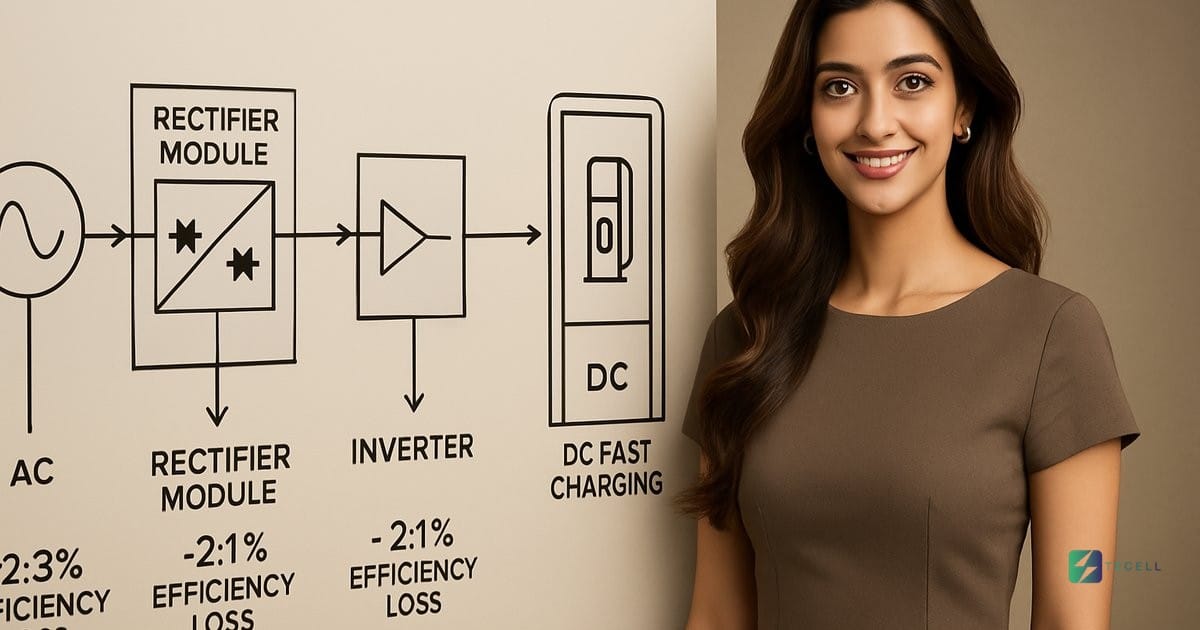
Understanding Real-Time Power Conversion Efficiency in DC Fast Charging
Real-time power conversion efficiency in DC fast charging is a critical factor that determines how effectively energy moves from the grid to an electric vehicle’s battery. This efficiency directly impacts charging speed, system costs, and grid stability. As EV adoption accelerates, understanding these dynamics becomes essential for operators and infrastructure planners.
At its core, power conversion efficiency refers to how much of the input electrical energy is successfully transferred to the vehicle’s battery. In DC fast charging systems, this involves converting AC power from the grid into DC power suitable for fast charging. The process includes several stages, each with potential losses that reduce overall efficiency.
Efficiency losses occur in various components, including rectifier modules, power electronics, transformers, and cooling systems. These losses manifest as heat, which not only reduces performance but also affects system longevity and maintenance requirements. For operators managing multiple charging stations, optimizing this efficiency can significantly impact operational costs and customer satisfaction.
Consider a logistics company managing 40 electric delivery vehicles. If each vehicle requires 80 kW of charging power and the system operates at 90% efficiency, then 8.9 kW of power is lost during conversion. Over time, these losses compound, affecting both energy consumption and the lifespan of charging equipment.
Key Components of Power Conversion in DC Fast Charging
Rectifier modules are among the most critical components in DC fast charging systems. They convert alternating current (AC) from the grid into direct current (DC) needed for vehicle charging. These modules often use silicon carbide (SiC) or gallium nitride (GaN) semiconductors to improve efficiency and reduce heat generation.
The efficiency of rectifier modules depends on several factors, including switching frequency, thermal management, and component quality. Higher switching frequencies can reduce the size of passive components but may increase switching losses. Effective cooling systems are essential to maintain optimal operating temperatures and prevent thermal degradation.
Power electronics, including inverters and DC-DC converters, also play a significant role in overall efficiency. These systems manage voltage and current levels to match the vehicle’s requirements. Modern designs often incorporate wide bandgap semiconductors to minimize conduction and switching losses.
Transformer efficiency is another important consideration. Transformers step up or step down voltage levels as needed. Losses in transformers include copper losses from current flow and iron losses from magnetic hysteresis. These losses contribute to the total system inefficiency and must be minimized for optimal performance.
Impact of Conversion Losses on Charging Speed and Grid Stability
Conversion losses directly affect charging speed by reducing the amount of usable power available for vehicle charging. When losses are high, more energy must be drawn from the grid to achieve the same charging outcome. This can lead to longer charging times and increased energy costs.
For fleet operators, this translates into reduced vehicle availability and higher operational expenses. A logistics company with 40 vehicles may find that inefficient charging systems require more frequent maintenance and longer downtime for repairs. These inefficiencies can also impact scheduling and route planning, especially during peak usage periods.
Grid stability is another crucial concern. High conversion losses can cause voltage fluctuations and power quality issues, particularly in areas with limited grid capacity. These issues can affect other users and strain the overall power system. Operators must balance charging demands with grid constraints to maintain stability.
Real-time monitoring of conversion efficiency allows operators to identify and address inefficiencies quickly. This proactive approach helps maintain consistent performance and prevents cascading problems that could affect multiple charging stations.
Factors Affecting Real-Time Efficiency
Temperature plays a significant role in determining real-time efficiency. As components heat up during operation, their resistance increases, leading to higher losses. Effective thermal management is essential to maintain performance under varying conditions.
Load conditions also influence efficiency. At low loads, some components may operate below their optimal range, resulting in reduced efficiency. Conversely, high loads can push systems beyond their design limits, causing overheating and performance degradation.
Component aging is another factor that affects long-term efficiency. Over time, semiconductors and other materials degrade, increasing resistance and losses. Regular maintenance and component replacement are necessary to sustain high efficiency levels.
Environmental conditions, such as humidity and dust, can also impact performance. These factors may affect cooling systems and increase the risk of component failure. Proper enclosure design and regular cleaning help maintain optimal conditions.
Strategies for Improving Real-Time Power Conversion Efficiency
Advanced power electronics design is one of the most effective ways to improve efficiency. Modern systems use wide bandgap semiconductors like SiC and GaN, which offer lower conduction and switching losses compared to traditional silicon devices.
Efficient thermal management systems are equally important. These include active cooling solutions, such as liquid cooling or forced air systems, and passive methods like heat sinks and thermal interface materials. Proper design ensures components operate within their optimal temperature range.
Smart control algorithms can optimize power conversion in real-time. These systems adjust parameters like switching frequency and duty cycle based on load conditions and component status. This dynamic approach maximizes efficiency across varying operating conditions.
Regular maintenance and monitoring are essential for sustaining high efficiency. This includes checking for component wear, verifying cooling system performance, and updating firmware to incorporate the latest optimization algorithms.
Monitoring and Diagnostics for Efficiency Optimization
Real-time monitoring systems provide valuable insights into power conversion performance. These systems track parameters like voltage, current, temperature, and efficiency metrics to identify potential issues before they become critical.
Diagnostic tools can pinpoint specific components contributing to efficiency losses. For example, if a rectifier module shows higher than normal temperatures, it may indicate a problem with cooling or component degradation. Early detection allows for timely intervention.
Data logging capabilities enable operators to analyze trends over time. This historical data helps identify patterns and optimize system performance. It also supports predictive maintenance planning, reducing unexpected downtime.
Integration with charging management platforms allows for centralized monitoring and control. Operators can adjust settings remotely and receive alerts when efficiency drops below acceptable levels.
Case Study: Fleet Charging Operations and Efficiency
A logistics company managing 40 electric delivery vehicles faced challenges with charging efficiency and vehicle availability. The company’s charging infrastructure included multiple DC fast charging stations with varying levels of efficiency.
Initial analysis revealed that some stations were operating at 85% efficiency, while others reached 92%. The lower-efficiency stations were causing longer charging times and increased maintenance costs. The company implemented a monitoring system to track real-time efficiency and identify problem areas.
By upgrading to more efficient rectifier modules and improving thermal management, the company was able to increase average efficiency to 94%. This improvement translated into shorter charging times and reduced maintenance requirements. The enhanced efficiency also allowed for better scheduling and route planning.
The case demonstrates how real-time efficiency monitoring and targeted improvements can significantly impact operational performance. It also highlights the importance of regular maintenance and component upgrades in maintaining optimal performance.
Future Trends in Power Conversion Efficiency
Emerging technologies promise to further improve real-time power conversion efficiency. New semiconductor materials and designs continue to reduce losses and increase power density. These advances will enable smaller, more efficient charging systems.
Artificial intelligence and machine learning are being integrated into charging systems to optimize performance in real-time. These systems can predict optimal operating conditions and adjust parameters automatically to maximize efficiency.
Grid integration technologies are also evolving to support higher efficiency. Smart grid capabilities allow charging systems to respond to grid conditions and optimize power usage accordingly. This bidirectional communication helps maintain grid stability while maximizing charging efficiency.
As EV adoption continues to grow, the demand for efficient charging infrastructure will increase. Future systems will need to balance high efficiency with cost-effectiveness and reliability to meet growing demands.
Conclusion
Real-time power conversion efficiency in DC fast charging is a complex but crucial aspect of modern EV infrastructure. Understanding the factors that influence efficiency and implementing strategies to improve it can significantly impact operational performance and customer satisfaction.
Operators who invest in efficient systems, regular monitoring, and proactive maintenance will see better performance and lower costs over time. As technology continues to evolve, staying informed about new developments will be essential for maintaining competitive advantages.
The future of DC fast charging lies in systems that not only deliver fast, reliable charging but also operate with maximum efficiency. This approach ensures sustainable growth in EV infrastructure while supporting grid stability and reducing environmental impact.
Frequently Asked Questions
What is real-time power conversion efficiency in DC fast charging?
Real-time power conversion efficiency measures how effectively AC power from the grid is converted to DC power for vehicle charging. It accounts for losses in components like rectifier modules, transformers, and power electronics during the conversion process.
How do conversion losses affect charging speed?
Conversion losses reduce the amount of usable power available for charging. Higher losses mean longer charging times and increased energy consumption. This impacts vehicle availability and operational costs for fleet operators.
What factors influence real-time efficiency in charging systems?
Temperature, load conditions, component aging, and environmental factors all influence efficiency. Effective thermal management and regular maintenance help maintain optimal performance.
How can operators improve conversion efficiency?
Operators can improve efficiency through better component selection, advanced thermal management, smart control algorithms, and regular monitoring. Upgrading to wide bandgap semiconductors and implementing real-time diagnostics are effective strategies.
Why is real-time monitoring important for charging infrastructure?
Real-time monitoring allows operators to detect inefficiencies quickly and take corrective action. It supports predictive maintenance and helps maintain consistent performance across charging stations.
Related Reading
For more on related topics, see: Fast Charger 60/120/240 kW – Tecell.
📣 Join our Telegram channel for EV charging insights and product updates.
Also find us on: LinkedIn · X · Bluesky · Mastodon · DEV.to.