
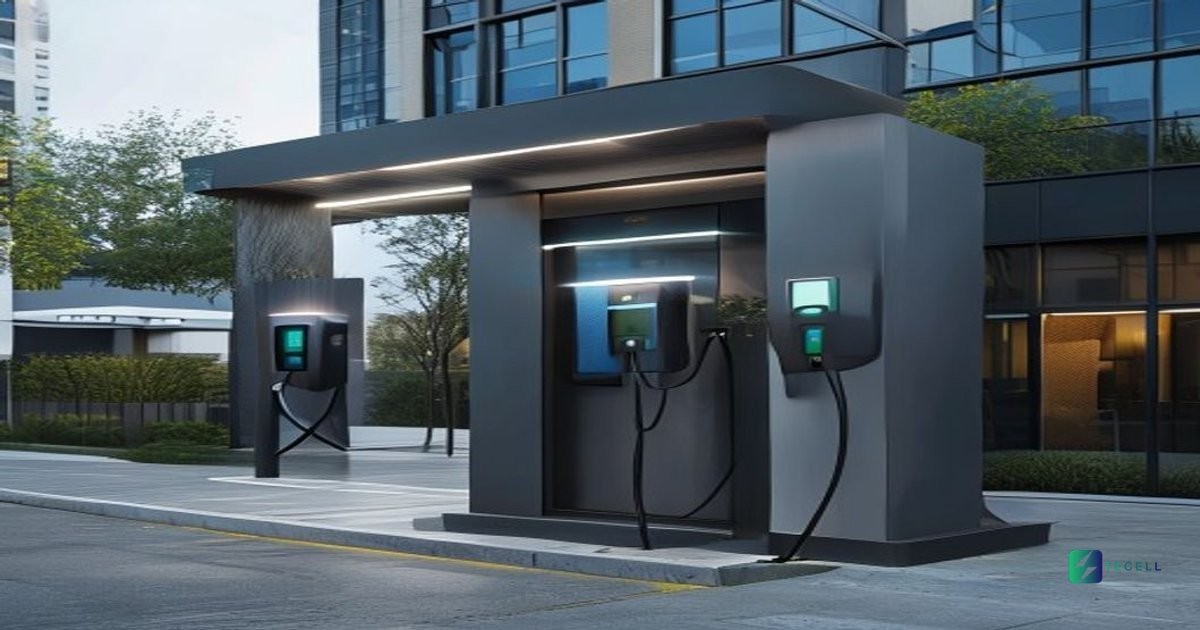
Building a Resilient Charging Network Using Saha-Edge and ChargeSphere
Designing a resilient charging network requires more than just reliable hardware. It demands intelligent software that can manage operations during disruptions, maintain service continuity, and adapt to changing conditions in real time. This is where the architectural design of a resilient charging network using Saha-Edge and ChargeSphere becomes critical. These technologies work together to ensure that even during grid outages or network failures, charging operations continue seamlessly.
For fleet operators, utility companies, and infrastructure providers, maintaining uptime is not just a technical challenge—it’s a business imperative. A logistics company managing 40 vehicles, for example, cannot afford extended downtime. If their charging infrastructure fails during peak hours, it impacts delivery schedules and customer satisfaction. The solution lies in a hybrid approach that combines local control with cloud-based management.
This article explores how Saha-Edge and ChargeSphere enable such resilience. We’ll examine how edge computing powers local decision-making, while ChargeSphere ensures interoperability and centralized oversight. Together, they form a robust framework for managing EV charging networks under stress.
Understanding the Need for Resilient Charging Infrastructure
Modern EV charging networks face increasing pressure from unpredictable grid conditions, cyber threats, and operational demands. A resilient charging network must be able to operate independently when needed, without relying on constant connectivity to central systems.
Consider a scenario where a regional power outage affects a major urban charging hub. Traditional systems may go offline, leaving vehicles stranded. But with a resilient design, local control mechanisms kick in to manage charging based on available energy sources, ensuring minimal disruption to users.
Resilience isn’t just about backup power—it’s about intelligent automation, predictive behavior, and adaptive control. It’s about systems that learn from past events and respond proactively to future challenges.
Role of Saha-Edge in Localized Control and AI Automation
Saha-Edge plays a pivotal role in enabling localized control within charging networks. It acts as an intelligent edge computing platform that processes data locally, reducing latency and increasing responsiveness.
By deploying Saha-Edge at the point of use, charging stations can make real-time decisions without waiting for cloud-based instructions. This is especially valuable during network outages or high-traffic periods when bandwidth is limited.
For instance, a commercial charging station equipped with Saha-Edge can dynamically adjust charging rates based on local solar generation or battery storage levels. It can also prioritize charging for vehicles with urgent needs, all without requiring a connection to the central CMS.
ChargeSphere’s Contribution to Cross-Network Roaming
While Saha-Edge handles local operations, ChargeSphere ensures that these operations remain interoperable across different networks. This is essential for users who rely on roaming services to access charging stations outside their primary network.
ChargeSphere supports open standards like OCPI, allowing seamless integration between various charging networks, payment systems, and mobility platforms. This means that even if a user’s home network is down, they can still access charging through another compatible network.
For example, a fleet manager using multiple charging networks can rely on ChargeSphere to maintain consistent access and billing across all providers. This eliminates the complexity of managing separate accounts and payment methods.
Integrating Saha-Edge and ChargeSphere for Seamless Operations
The true strength of this architecture lies in the integration between Saha-Edge and ChargeSphere. While Saha-Edge manages local operations, ChargeSphere provides a unified view of the entire network, enabling centralized monitoring and control.
This dual-layer approach allows operators to maintain full visibility into their charging infrastructure, even when individual stations are offline. It also enables predictive maintenance, remote diagnostics, and automated scaling based on demand.
Imagine a utility company overseeing hundreds of charging points across a city. With this integrated system, they can monitor performance in real time, detect anomalies, and dispatch support teams only when necessary. This reduces operational overhead and improves service quality.
Real-World Application: Fleet Charging During Disruptions
A logistics company managing 40 electric delivery vehicles faces a unique challenge: ensuring consistent access to charging while minimizing downtime. During a regional storm that knocks out power to several charging stations, the company’s network must remain functional.
With Saha-Edge deployed at each station, the system can continue operating using stored energy or alternative power sources. Meanwhile, ChargeSphere ensures that the company’s drivers can still access other compatible networks, maintaining their ability to complete deliveries.
This scenario highlights how resilient charging network design supports not just technical continuity but also business resilience. Operators can maintain service levels even under adverse conditions.
Benefits of Resilient Charging Network Architecture
Implementing a resilient charging network using Saha-Edge and ChargeSphere offers several key benefits. First, it enhances reliability by reducing dependence on centralized systems. Second, it improves user experience through consistent access and minimal interruptions.
Third, it supports energy optimization by enabling smart load balancing and dynamic pricing. Finally, it provides a scalable foundation for future expansion, whether that involves adding more stations or integrating new technologies.
These advantages make the architecture particularly attractive for utilities, fleet operators, and infrastructure developers who need to build robust, future-proof charging ecosystems.
Future-Proofing Charging Infrastructure with AI and Edge Computing
As EV adoption grows, so does the complexity of managing charging networks. AI-driven automation and edge computing are becoming essential tools for handling this complexity efficiently.
Saha-Edge’s AI capabilities allow charging stations to learn from usage patterns, optimize energy consumption, and predict maintenance needs. This proactive approach helps prevent failures before they occur, further enhancing resilience.
ChargeSphere complements this by providing a global perspective on network performance. It aggregates data from multiple sources, enabling operators to identify trends and optimize operations at scale.
Conclusion: Designing for Reliability and Scalability
Building a resilient charging network using Saha-Edge and ChargeSphere is more than a technical exercise—it’s a strategic decision that impacts long-term success. These technologies offer a powerful combination of local intelligence and global coordination, ensuring that charging infrastructure remains functional and efficient under any condition.
Whether you’re a fleet operator, utility provider, or infrastructure developer, investing in this kind of architecture is a step toward a more reliable and scalable EV ecosystem. The integration of edge computing and cloud-based management creates a foundation that can adapt to evolving needs and challenges.
Frequently Asked Questions
- What is a resilient charging network? A resilient charging network is designed to maintain functionality and service continuity even during disruptions like power outages or network failures.
- How does Saha-Edge contribute to network resilience? Saha-Edge enables local decision-making and AI automation, allowing charging stations to operate independently when needed.
- What role does ChargeSphere play in cross-network roaming? ChargeSphere ensures interoperability between different charging networks, enabling seamless access and billing across providers.
- Can this architecture support large-scale deployments? Yes, the combination of Saha-Edge and ChargeSphere supports scalable deployments, making it suitable for utilities, fleet operators, and infrastructure developers.
- How does AI improve charging operations? AI enables predictive maintenance, dynamic pricing, and energy optimization, improving efficiency and reducing downtime.
Related Reading
For more on related topics, see: Charging Network Resilience Through Edge AI.
Further reading: ChargeSphere – EV Roaming Hub | Tecell
📣 Join our Telegram channel for EV charging technology insights and product updates.
Also find us on: LinkedIn · X · Bluesky · Mastodon · DEV.to.