Understanding Real-Time Cross-Protocol Dynamic Battery Swapping Optimization
Real-time cross-protocol dynamic battery swapping optimization is a complex but essential capability for modern urban delivery networks. It allows fleet operators to manage diverse battery types and charging protocols in real time, without relying on cloud connectivity. This approach is especially valuable in environments where network reliability is uncertain or where latency must be minimized. Saha-Edge, Tecell’s edge computing platform, enables this functionality by processing data locally and making intelligent decisions based on battery health, protocol compatibility, and operational needs.
For fleet managers, this means more efficient operations, reduced downtime, and better control over battery lifecycle management. The system operates under the premise that local decision-making is faster and more reliable than cloud-based alternatives, particularly in high-density urban areas where network congestion is common.
By integrating with ChargeSphere and leveraging OCPP 2.0.1, Saha-Edge ensures that battery swapping decisions are not only fast but also compliant with industry standards. This combination allows for seamless coordination between charging infrastructure, fleet management systems, and battery exchange protocols.
Let’s explore how this works in practice, starting with the core components and moving into real-world applications.
How Saha-Edge Works with ChargeSphere and OCPP 2.0.1
Saha-Edge is designed to function as a local intelligence hub for EV charging networks. It processes data from charging stations, battery systems, and fleet management tools in real time. This local processing eliminates the need for constant cloud communication, which is especially important in environments with unreliable or limited connectivity.
ChargeSphere, Tecell’s roaming and interoperability platform, connects multiple charging networks and ensures that vehicles can charge using any compatible network. When combined with Saha-Edge, ChargeSphere becomes a powerful tool for managing cross-protocol operations, especially in mixed-fleet environments.
OCPP 2.0.1, the latest version of the Open Charge Point Protocol, supports advanced features like dynamic pricing, remote diagnostics, and battery health monitoring. Saha-Edge leverages these capabilities to make intelligent decisions about battery swapping, ensuring that each vehicle is matched with the optimal battery type and charging protocol.
This integration allows for a fully autonomous system that can adapt to changing conditions without human intervention. It’s particularly useful for urban delivery fleets that operate in unpredictable environments.
Localized Battery Exchange Scheduling
Localized battery exchange scheduling is a key feature of Saha-Edge’s architecture. Instead of relying on centralized planning, the system schedules battery swaps based on real-time data from each vehicle and charging station. This approach reduces delays and improves efficiency.
For example, a logistics company managing 40 vehicles faces challenges in coordinating battery swaps across multiple depots. With Saha-Edge, each vehicle’s battery status, location, and charging needs are evaluated locally. The system then schedules the most efficient swap based on battery health, vehicle route, and depot availability.
This method ensures that vehicles are always ready for their next trip, even in situations where cloud connectivity is limited. It also reduces the need for manual oversight, which is especially valuable in large-scale operations.
The scheduling algorithm considers factors like battery degradation, charging speed, and vehicle usage patterns. This data-driven approach helps fleet operators extend battery life and reduce operational costs.
Predictive Degradation Modeling
Predictive degradation modeling is a powerful tool for extending battery life and optimizing performance. Saha-Edge uses machine learning algorithms to predict how quickly a battery will degrade based on usage patterns, environmental conditions, and charging behavior.
By analyzing historical data and real-time inputs, the system can identify potential issues before they become critical. This allows fleet operators to proactively replace or service batteries, reducing unexpected downtime.
For instance, a delivery company using electric vans might notice that certain batteries degrade faster in high-temperature conditions. Saha-Edge can flag these batteries early, allowing operators to adjust routes or charging schedules to preserve battery health.
This predictive capability is especially valuable in urban delivery networks, where vehicles are often exposed to varying conditions and high usage. It helps operators make informed decisions about battery maintenance and replacement.
ISO 15118 Compliance and Its Role in Battery Swapping
ISO 15118 is a critical standard for vehicle-to-grid (V2G) communication and battery swapping. It defines how electric vehicles interact with charging infrastructure, ensuring that different systems can communicate effectively regardless of manufacturer or protocol.
Saha-Edge ensures that all battery swapping operations comply with ISO 15118, which is essential for interoperability in mixed-fleet environments. This compliance allows vehicles from different manufacturers to use the same charging infrastructure, increasing flexibility and reducing costs.
For example, a delivery fleet might include vehicles from multiple manufacturers, each with different battery types and charging protocols. Saha-Edge ensures that all vehicles can be serviced using the same infrastructure, as long as they meet ISO 15118 standards.
This standardization is crucial for scaling battery swapping networks, especially in urban areas where multiple operators may be involved.
Real-World Application: Urban Delivery Fleet Management
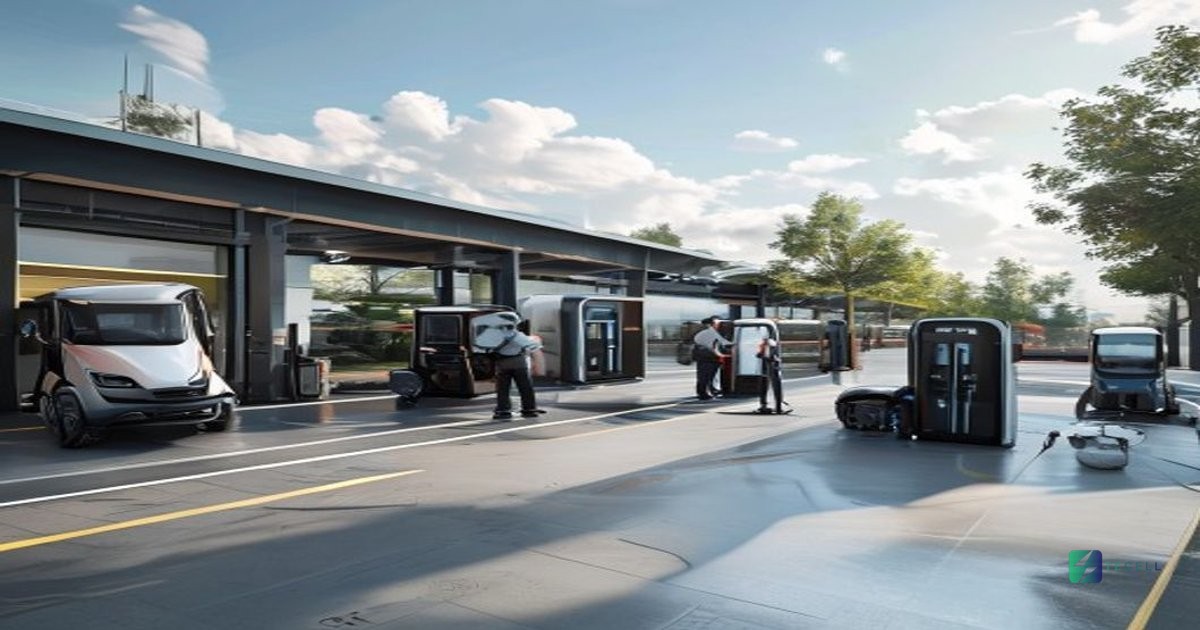
A logistics company managing 40 electric delivery vans faces a complex challenge: how to maintain a consistent fleet of vehicles without frequent downtime. Each van has a different battery type and charging protocol, and the company operates in a city with unreliable network connectivity.
With Saha-Edge, the company can manage battery swaps locally, ensuring that each vehicle is always ready for its next delivery. The system evaluates battery health, charging needs, and vehicle routes in real time, scheduling swaps that minimize downtime and maximize efficiency.
By using ChargeSphere, the company can also integrate with multiple charging networks, allowing vehicles to charge at any compatible station. This flexibility is essential for a fleet that operates across a city with varying infrastructure.
The predictive degradation model helps the company identify which batteries are approaching the end of their life, allowing for proactive replacement. This approach reduces unexpected breakdowns and keeps the fleet running smoothly.
Benefits of Localized Battery Management
Localized battery management offers several advantages over cloud-based systems. First, it reduces latency, which is critical for real-time decision-making. Second, it increases reliability, especially in areas with poor network connectivity.
For fleet operators, this means fewer delays and more predictable operations. It also reduces the risk of system failures due to network outages or connectivity issues. Saha-Edge’s local processing ensures that battery swapping decisions are always made, even when the cloud is unreachable.
Additionally, localized systems can be more secure. Sensitive data about vehicle operations and battery health remains within the local network, reducing exposure to external threats.
This approach also supports scalability. As more vehicles are added to a fleet, the system can handle the increased load without requiring additional cloud resources.
Future of Battery Swapping in Urban Mobility
The future of battery swapping in urban mobility is bright, especially with technologies like Saha-Edge. As cities continue to grow and EV adoption increases, the need for efficient, reliable battery management systems will only become more critical.
With real-time cross-protocol optimization, predictive modeling, and ISO 15118 compliance, Saha-Edge is positioned to support the next generation of urban delivery networks. These systems will be able to adapt to changing conditions, optimize battery usage, and reduce operational costs.
As more cities implement policies to reduce emissions, battery swapping will play a key role in supporting electric mobility. Saha-Edge’s ability to operate without cloud dependency makes it a valuable tool for cities that want to deploy scalable, resilient charging infrastructure.
By combining edge computing with intelligent battery management, Tecell is helping to shape the future of urban mobility. This technology is not just about charging vehicles—it’s about enabling smarter, more efficient transportation systems.
Conclusion
Saha-Edge’s real-time cross-protocol dynamic battery swapping optimization is a game-changing capability for urban delivery fleets. By enabling localized decision-making, predictive modeling, and ISO 15118 compliance, it provides a robust solution for managing diverse battery types and charging protocols.
When combined with ChargeSphere and OCPP 2.0.1, Saha-Edge creates a powerful ecosystem for fleet operators. It ensures that battery swapping is efficient, reliable, and compliant with industry standards. This approach is especially valuable in environments where network connectivity is limited or unreliable.
As cities continue to invest in electric mobility, technologies like Saha-Edge will be essential for supporting scalable, resilient charging networks. The ability to manage battery health, optimize scheduling, and operate without cloud dependency makes this solution a critical part of the future of urban delivery.
Related Reading
For more on related topics, see: Edge-Cloud Co-Design for Smart Charging: Reducing Latency and Improving Load Balancing.
Further reading: EV Charging Energy Management | OCPP Smart Charging CMS | Tecell India
📣 Join our Telegram channel for EV charging technology insights and product updates.
Also find us on: LinkedIn · X · Bluesky · Mastodon · DEV.to.